













Blodgett Open Space
Located on the northwest side of Colorado Springs, Blodgett Open Space is a rugged foothills landscape that protects critical wildlife habitat, scenic views, and long term trail connectivity between the city and adjacent public lands. The open space is managed to balance conservation with carefully planned recreation in a challenging and ecologically sensitive environment.
Recreation and Access
Blodgett Open Space offers a steep, backcountry style experience close to the city and is best suited for experienced hikers, trail runners, and mountain users. Trails climb quickly through foothills terrain and are often rocky, narrow, and physically demanding. Elevation gain is significant, and trail conditions can vary widely depending on weather and season.
Trail access is provided through designated trailheads, and users are expected to remain on approved routes. Due to the steep terrain and sensitive resources, Blodgett Open Space is not intended for casual use, and visitors should be prepared for changing conditions and limited amenities.
Landscape and Wildlife
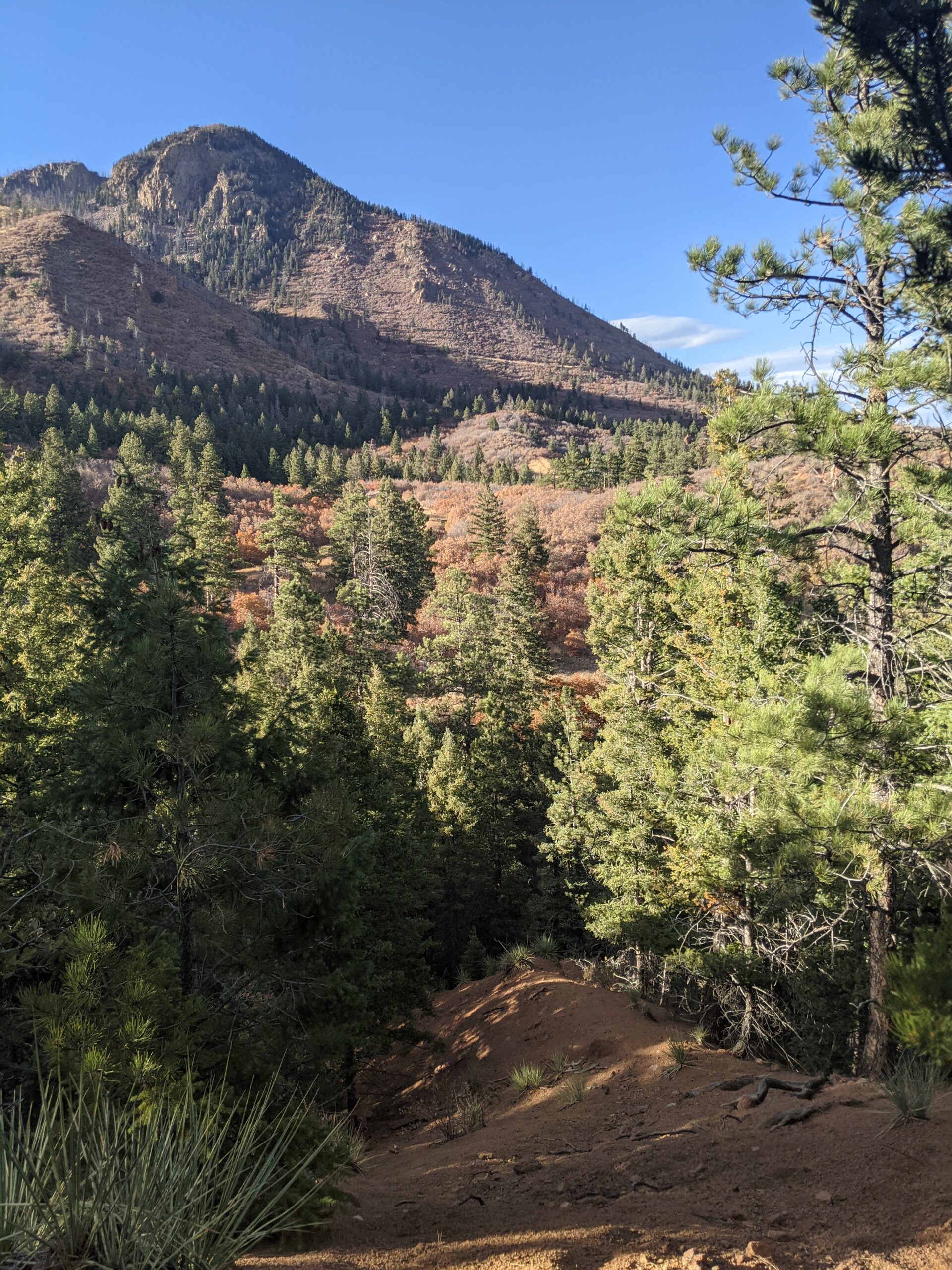
Blodgett Open Space supports a diverse mix of foothills ecosystems, including grasslands, scrub oak, and ponderosa pine forest. The area provides important habitat and movement corridors for mule deer, black bear, mountain lion, and a wide variety of bird species.
The landscape includes steep slopes, drainage corridors, and prominent ridgelines that offer expansive views of Colorado Springs and the eastern plains. These natural features contribute to both the ecological value of the open space and the challenging nature of recreation in the area.
History and Conservation
Blodgett Open Space consists of multiple parcels acquired by the City of Colorado Springs through the Trails, Open Space, and Parks (TOPS) program over more than two decades. Together, these acquisitions total 384 acres of protected open space.
The original Blodgett Open Space parcel was purchased in 2001 using TOPS funds and includes 167 acres with a designated trailhead along Woodmen Road. This parcel was master planned in 2003 and later guided by a forest management plan adopted in 2006.
In 2018, the City acquired an additional 64 acres known as the South Blodgett property. This parcel includes previously constructed access roads, designated trails, and areas impacted by user created trails. The property is protected by three conservation easements held by El Paso County, preserving scenic, open space, trail connection, wildlife, and ecological values. An interim use plan was developed in 2019 to allow public access while long term planning continued.
Between 2020 and 2021, the City expanded Blodgett Open Space through the acquisition of 153 additional acres known as the Pikeview frontage property. This land lies south of the original open space and west of the Oak Valley neighborhood. Portions of the property reflect historic disturbance associated with stormwater facilities and adjacent quarry operations, and include areas subject to reclamation requirements. These parcels strengthen regional connectivity while supporting long term restoration and conservation goals.
Additional dedicated open space parcels include the 5 acre Peregrine Open Space near the North Blodgett Trailhead and the nearly 10 acre Oak Valley Ranch Open Space along the North Douglas Creek corridor. Together, these lands provide important ecological connections, protect drainageways, and support future trail and habitat planning.
Plan Your Visit
Location: Northwest Colorado Springs, near Woodmen Road and Centennial Boulevard
Parking: Limited parking at designated trailheads
Hours: Open daily, dawn to dusk
Fees: No entry fee
Tips:
-
Be prepared for steep terrain and limited amenities
-
Stay on designated trails to protect sensitive resources
-
Carry adequate water and plan for changing weather
Blodgett Open Space reflects a long term community investment in conserving Colorado Springs’ foothills landscapes. Through thoughtful acquisition, conservation easements, and ongoing management planning, the open space protects critical natural resources while allowing for carefully managed recreation close to the city.