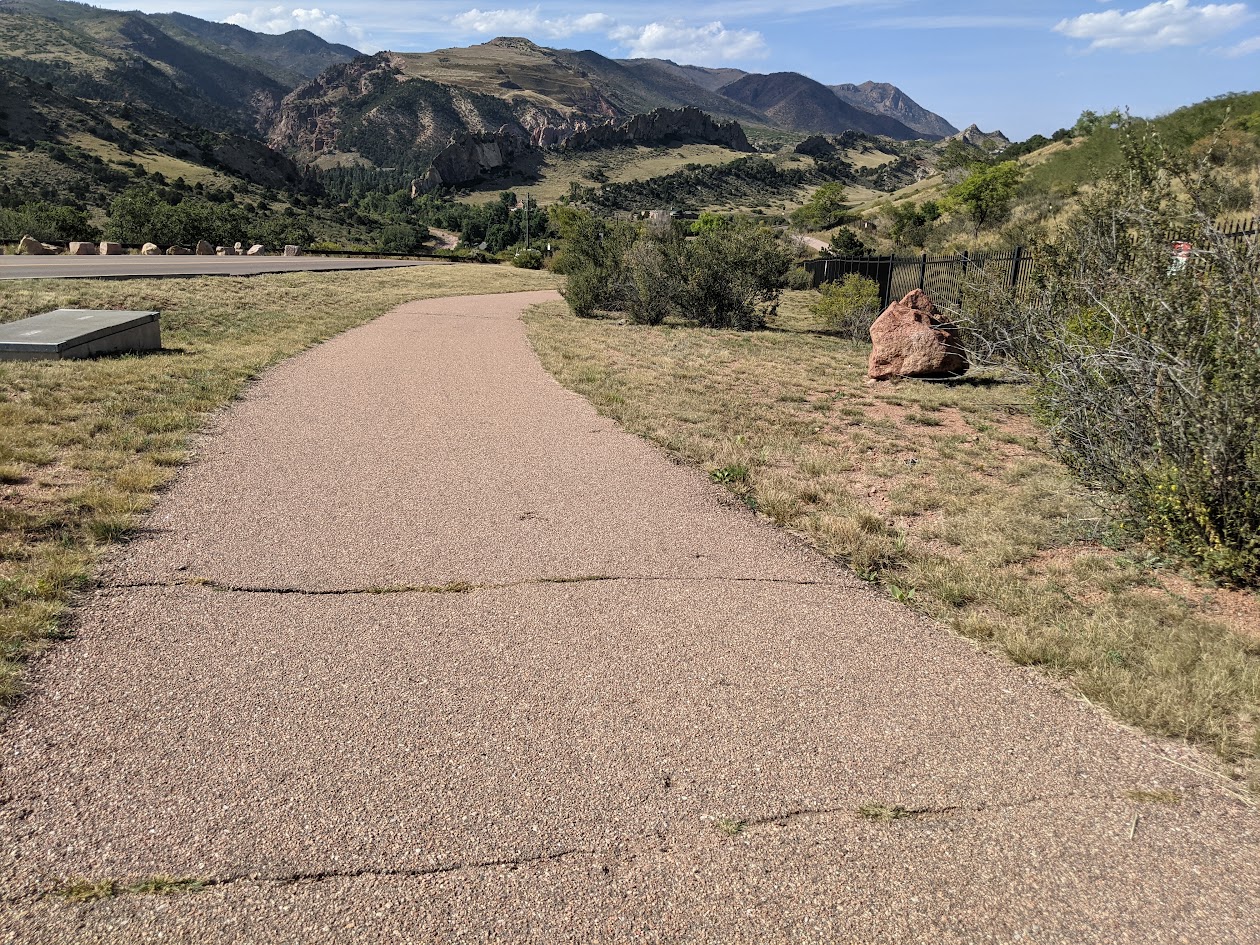
Pancake Rocks Trail

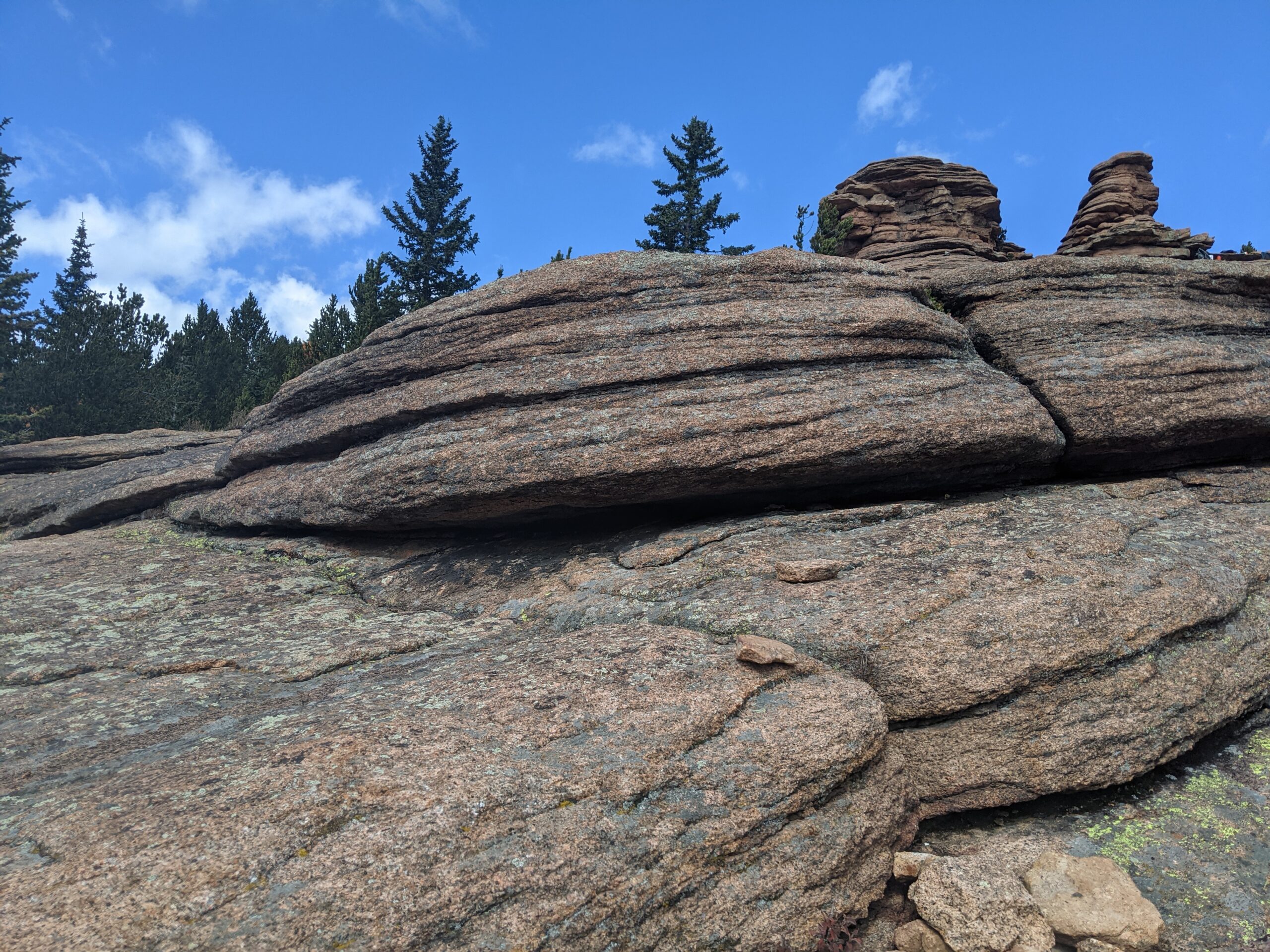
The Pancake Rocks Trail near Cripple Creek is one of the most beloved high-country hikes in the Pikes Peak region, famous for its unusual, layered rock formations that resemble a towering stack of pancakes. At over 10,000 feet in elevation, this hike combines geological wonders, sweeping views, and a true alpine adventure.
Trails and Hiking

The trail to Pancake Rocks begins from Horsethief Park and climbs steadily through spruce and fir forest. Hikers can expect about 6 miles round trip with roughly 1,200 feet of elevation gain, making it a moderate-to-challenging trek. The highlight is reaching the natural sandstone and granite formations, where the rock has weathered into stacked, flat shelves that look like giant pancakes tipped on their side.

Wildlife and Scenery

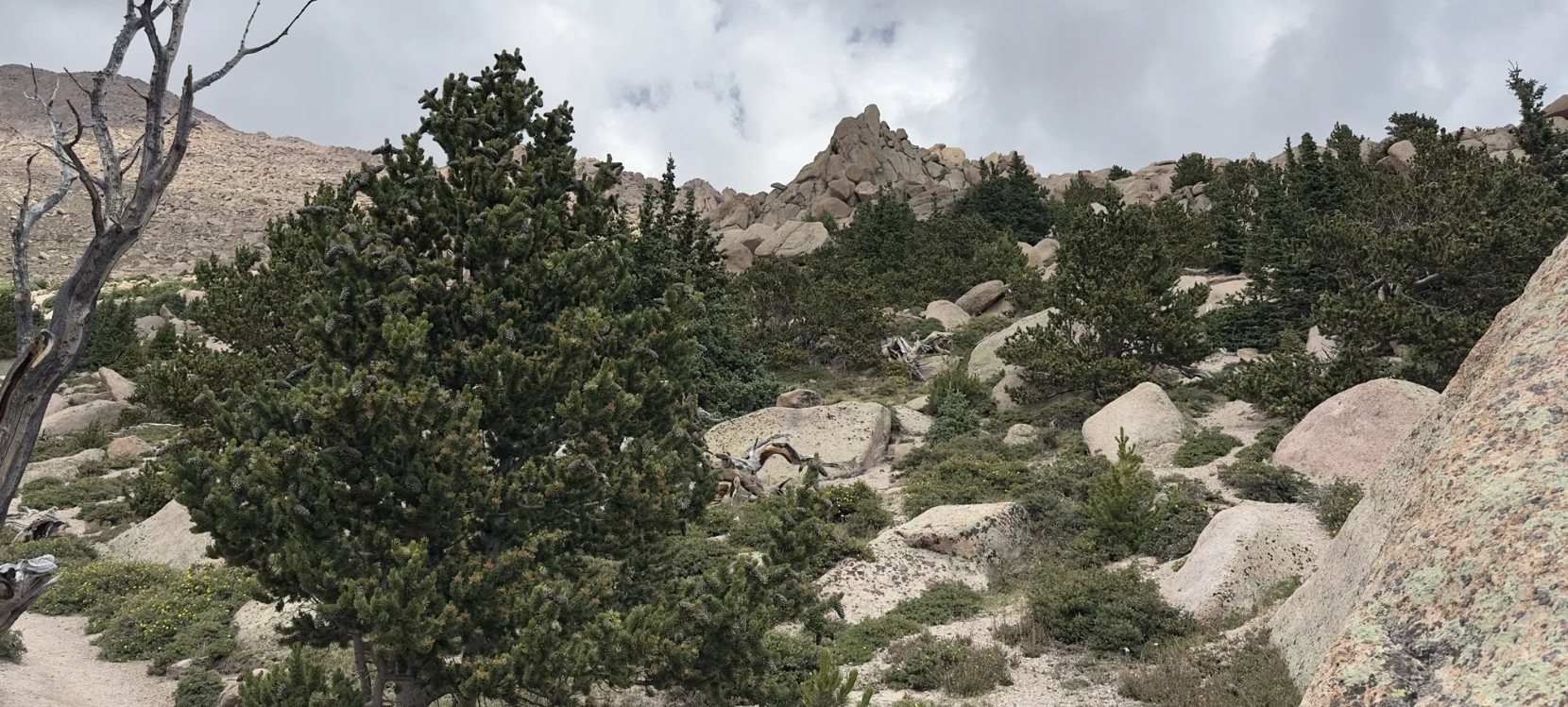
Along the way, hikers are treated to dense forest, alpine meadows, and breathtaking views of Pikes Peak’s south slopes and the surrounding Teller County high country. Wildlife sightings often include marmots, pikas, mule deer, and a variety of alpine birds. In late summer, wildflowers add splashes of color to the meadows, while fall brings golden aspen groves.

History

The Pancake Rocks area has long been a favorite local hike, with its unique formations formed over millions of years by erosion and uplift. Once traveled by miners and early settlers moving between Cripple Creek and Divide, today it is a treasured recreational destination managed by the Pike National Forest.

Plan Your Visit

Location: Access off CO Highway 67 between Divide and Cripple Creek.  The Horsethief Park Trailhead is closest.
Parking: Parking strip along HWY with various pulloffs further away.
Hours: Open year-round, though snow and ice can make the trail difficult outside of summer and fall.
Tips:

  • At high elevation, weather changes quickly—dress in layers and be prepared for storms.

  • Bring plenty of water; there are no reliable water sources on the trail.

  • Dogs are allowed but should be leashed to protect wildlife and fellow hikers.

  • Start early to avoid afternoon thunderstorms common in summer.

With its striking rock formations and spectacular alpine views, Pancake Rocks is a one-of-a-kind hike that rewards every step of the climb.

Seven Bridges Trail (#622)

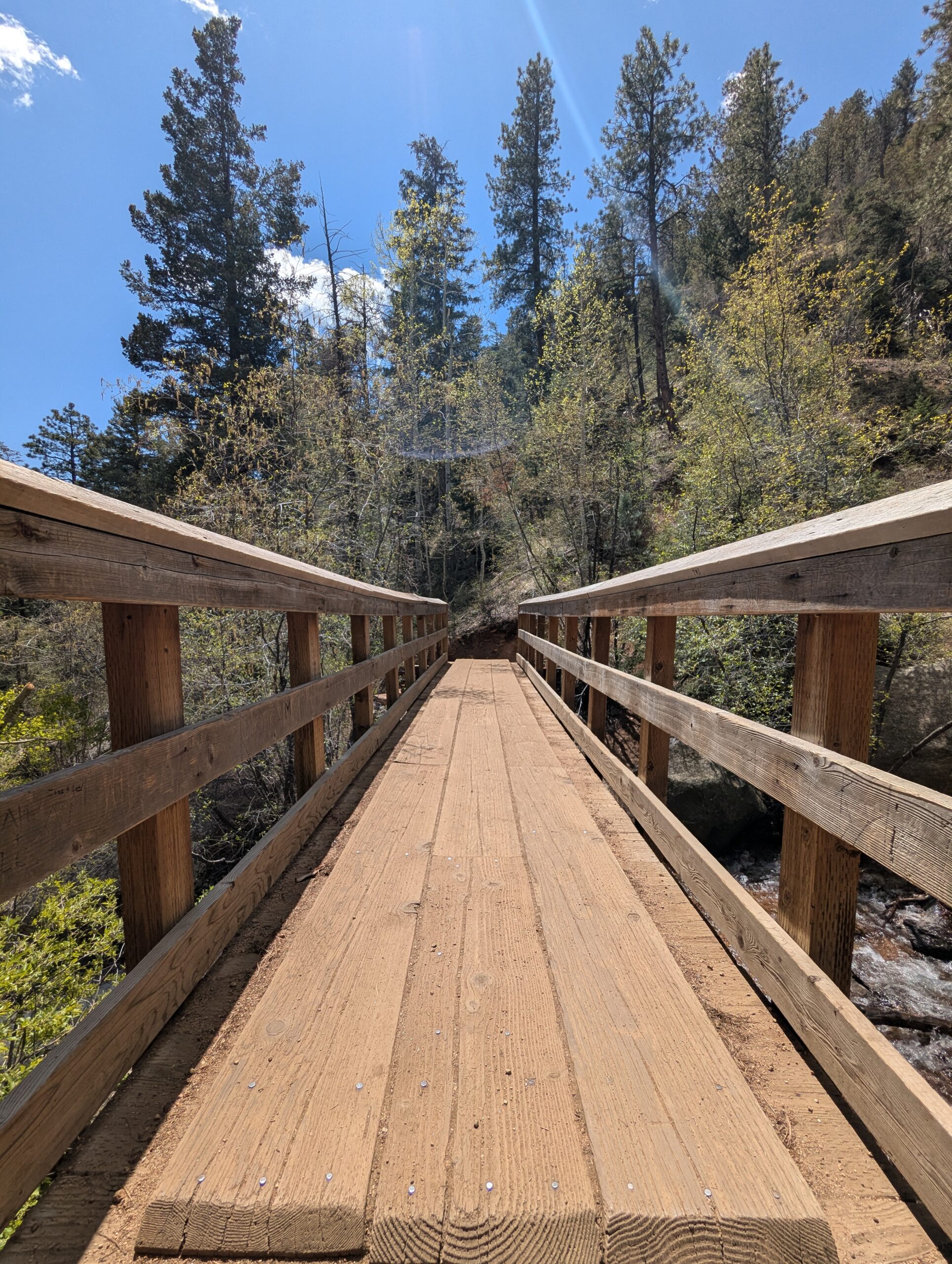
The Seven Bridges Trail, also known as Trail #622, is one of the most popular hikes in North Cheyenne Cañon. This moderate trail is about 3.7 miles round trip and gains roughly 1,000 feet in elevation as it follows North Cheyenne Creek. Its charm comes from crossing seven rustic wooden bridges that give the trail its name, making it a family-friendly adventure with plenty of photo opportunities.
Trails and Recreation

The trail begins at the end of North Cheyenne Canyon Road near the parking area for the Upper Gold Camp Road. From there, hikers follow a steady incline along a shaded canyon trail, crossing over seven picturesque wooden bridges. Beyond the seventh bridge, the path continues into steeper terrain and can be extended to connect with higher trails like Jones Park or Mount Rosa for those looking for a longer trek.

Wildlife and Scenery

Surrounded by towering evergreens, mountain streams, and granite walls, the Seven Bridges Trail offers classic Front Range beauty. Depending on the season, hikers may encounter wildflowers, colorful autumn foliage, or sparkling ice formations along the creek. Wildlife is common in the area—mule deer, songbirds, and the occasional black bear may be spotted in the canyon.

History

The trail follows an old pipeline route that once carried water from the mountains into Colorado Springs in the early 20th century. The bridges were originally constructed to maintain access along the pipeline, and today they remain a beloved feature of this historic route.

Plan Your Visit

Location: Trailhead parking is located at the end of North Cheyenne Canyon Road, just past the closed Gold Camp Road tunnel.
Parking: A paved lot is available, but it fills quickly—arrive early, especially on weekends. Additional parking may be available further down the road.
Hours: Open daily, 5:00 a.m. – 9:00 p.m.
Tips:

  • The trail is well-shaded, making it a great summer hike.

  • Dogs are welcome but must be leashed.

  • Wear sturdy shoes, as the path can be rocky and icy in colder months.

  • Continue past the seventh bridge if you want to extend your hike into the higher country of Pike National Forest.

Barr Trail

Barr Trail is one of Colorado’s most iconic and challenging hikes, climbing from the base of Manitou Springs to the 14,115-foot summit of Pikes Peak. Stretching about 13 miles one way, this legendary route is a favorite for experienced hikers, trail runners, and those seeking to follow in the footsteps of Katherine Lee Bates, who wrote “America the Beautiful” after visiting the summit. With nearly 7,400 feet of elevation gain, Barr Trail is considered one of the most demanding long-distance trails in the Pikes Peak region.
Trails and Recreation

Barr Trail begins near the Cog Railway Depot in Manitou Springs and winds through diverse terrain, from foothill forests to high-alpine tundra. Many hikers split the journey by stopping overnight at Barr Camp, a rustic backcountry lodge about 6.5 miles up the trail. Others use the trail for training runs or as a route to complete the famous Pikes Peak Ascent and Marathon. Whether you tackle a section or the entire summit, Barr Trail delivers a one-of-a-kind adventure.

Wildlife and Scenery

Along the way, hikers pass through lush ponderosa pine forests, groves of aspen, and wildflower-filled meadows before entering the rocky alpine zone. Wildlife sightings may include mule deer, marmots, pikas, black bear, and a wide range of bird species. The higher you climb, the more expansive the views become—eventually opening up to sweeping panoramas of the Front Range, Colorado Springs, and the eastern plains.

History

Barr Trail was built in the early 1900s by Fred Barr, who envisioned a route that would allow hikers and equestrians to reach the summit of Pikes Peak. Barr also established Barr Camp as a stopping point along the way, which continues to serve outdoor enthusiasts today. The trail’s connection to the region’s cultural and recreational history has made it a cornerstone of Colorado hiking.

Plan Your Visit

Location: Trailhead located near 540 Ruxton Avenue, Manitou Springs, CO, adjacent to the Cog Railway Depot.
Parking: Limited parking is available near the trailhead; many visitors use Manitou Springs public lots or shuttle systems. Fees may apply.
Hours: Open year-round, but conditions can be extreme—check weather forecasts before starting.
Tips:

  • Expect a strenuous hike—be physically prepared and start early.

  • Carry layers, food, and plenty of water (refills available at Barr Camp).

  • Afternoon storms are common in summer; plan to be below tree line by midday.

  • Dogs are allowed but should be kept leashed and acclimated to long climbs.

Vindicator Valley Trail

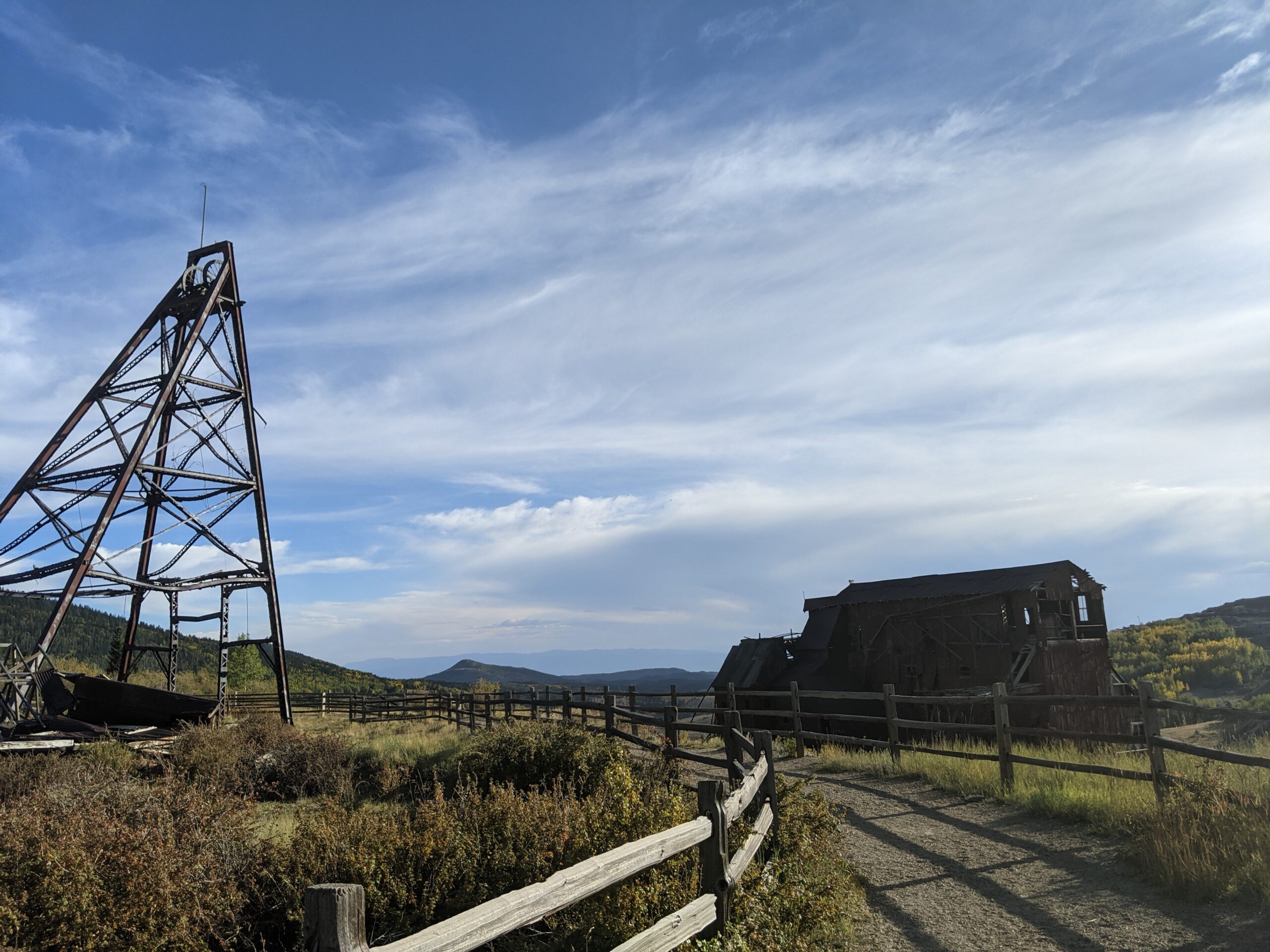
Vindicator Valley Trail in Victor, Colorado, offers a fascinating blend of outdoor recreation, mining history, and scenic beauty in the heart of the Cripple Creek & Victor Mining District. This interpretive loop trail winds through historic mining structures and reclaimed landscapes, giving visitors a glimpse into Colorado’s Gold Rush era while showcasing views of Pikes Peak and the rugged hills of Teller County.

Trails and Recreation

The Vindicator Valley Trail is a 2-mile loop that is rated easy to moderate, making it accessible for most hikers, families, and history enthusiasts. Along the way, you’ll find interpretive signs explaining the mining operations, equipment, and the lives of the people who once worked the area. The trail is popular year-round for hiking, snowshoeing, and photography.

Wildlife and Scenery

While the mining remnants are the highlight, the surrounding landscape is equally striking. Wildflowers bloom in summer, while fall brings golden aspens and crisp mountain air. Mule deer, elk, foxes, and a variety of bird species can often be spotted along the trail. Panoramic views of the Sangre de Cristo and Sawatch mountain ranges add to the experience.

History

Vindicator Valley sits in the heart of the Cripple Creek & Victor Gold Mining District, one of the most productive gold mining areas in the United States during the late 1800s and early 1900s. The trail passes by the historic Vindicator Mine and other structures that once fueled Colorado’s mining boom. Many of these wooden headframes and buildings have been stabilized to preserve them as open-air museums, allowing visitors to connect directly with the region’s past.

Plan Your Visit

Location: Trailhead located just north of Victor, CO off County Road 831 (about 45 minutes west of Colorado Springs).
Parking: A gravel lot is available at the trailhead. Parking is free but limited.
Hours: Open daily, year-round, from dawn to dusk.
Tips:

  • Interpretive signage is plentiful—allow time to read and explore.

  • Bring water and sun protection; shade is limited.

  • Winter visits may require traction devices or snowshoes.

  • Respect historic structures by staying on designated trails.

Woodmen Trail – Colorado Springs, CO

Woodmen Trail is a neighborhood focused urban trail in northern Colorado Springs that provides an important east west connection through the Briargate area. Following a powerline corridor, this paved trail offers a convenient option for walking, running, biking, and everyday recreation for nearby residents.


Trail Experience

Woodmen Trail is approximately 2.5 miles long and is constructed of smooth concrete. The trail runs east to west between Woodmen Road and Briargate Boulevard, beginning just west of Austin Bluffs Parkway and extending to just past Union Boulevard. Rolling hills along the corridor create noticeable elevation gain and loss, giving the trail a moderate rating despite its relatively short length.

The trail is popular with local users, is stroller friendly, and includes several benches along the route for resting and enjoying the surroundings.  Wildflowers fill the fields around the trail in late summer.


Road Crossings and Safety

Users should expect a mix of neighborhood street crossings and larger roadway crossings along Woodmen Trail. Major crossings include Union Boulevard, Rangewood Drive, and Lexington Drive. The Union Boulevard crossing is accessed via the signalized intersection at Briargate Boulevard. Rangewood Drive includes a marked crosswalk, though vehicles may not consistently yield. Lexington Drive features a signalized pedestrian crossing.


Connections

Woodmen Trail transitions into Skyline Trail near the intersection of Briargate Boulevard and Union Boulevard, where the route shifts north. An unmarked connection to Briargate Trail occurs near Yellowwood Drive, allowing users to continue north. Multiple neighborhood access points are available along the length of the trail.


Management

Woodmen Trail is managed by the City of Colorado Springs Parks, Recreation and Cultural Services Department.
Phone: 719 385 5940

Skyline Trail – Colorado Springs, CO

Skyline Trail is a neighborhood focused urban trail in northern Colorado Springs that provides an important north south connection through the Briargate area. Often referred to locally as the Powerline Trail due to its alignment with overhead powerlines, Skyline Trail is well used by nearby residents for walking, running, and biking.


Location: Briargate area, northern Colorado Springs


Trail Experience

Skyline Trail is approximately 2 miles long and features a mix of wide concrete and dirt trail surfaces. South of Research Parkway, the trail is smooth concrete, while the segment north of Research Parkway transitions to a dirt surface. Rolling terrain creates noticeable elevation gain and loss, giving the trail a moderate difficulty rating.

The trail includes several distinctive switchbacks near Mirage Drive that offer views across the surrounding neighborhoods and open spaces. Despite its urban setting, the corridor provides a sense of separation from nearby roads and is popular for short neighborhood outings as well as longer connected trips.


Road Crossings and Navigation

Skyline Trail includes several street crossings and users should proceed with caution at all crosswalks. Major crossings occur at Briargate Boulevard and Research Parkway. When crossing Research Parkway, users should use the signalized intersection at Chapel Hills Drive for improved safety. Trail signage varies by segment, and awareness is recommended when navigating transitions between surfaces.


Connections

Skyline Trail transitions into Woodmen Trail at Briargate Boulevard, allowing users to continue east west through northern Colorado Springs. A spur trail provides access to Rampart Community Park, which includes a disc golf course, sports courts and fields, and a dog park. The trail passes near High Plains Elementary School and offers views of Reflection Pond, which can be accessed via sidewalks on Parliament Drive.

Sidewalk connections along Briargate Parkway allow access to John Venezia Community Park and the Briargate Trail. Multiple neighborhood access points along the route make Skyline Trail easy to reach from surrounding residential areas.


Skyline Trail plays an important role in connecting neighborhoods, parks, and trails across northern Colorado Springs while offering a moderately challenging route with varied terrain and strong local use.


The Manitou Incline is one of the most popular hiking trails in Colorado. The base of the Incline sits at 6,600 feet. It is, perhaps, the most unique and challenging trail in the country, attracting runners, military, Olympic athletes, and hiking enthusiasts from around the world. It is steep, gaining over 2,011 feet of elevation in 0.88 mile. There are approximately 2,750 steps, although the top step is numbered “2768”; the number of steps changes occasionally with trail maintenance and deterioration. While some athletes can conquer the Incline in 30 minutes or less, it takes most people 1-3 hours to make it to the top.  Plus, an additional 1-2 hours to return down the Barr Trail. After you crest the false summit, there are approximately 300 steps to go before reaching the top.

The base of the Incline is located in Manitou Springs near the Cog Railroad. The Inline is free and open to the public, but expect to pay for parking. Even with paid parking, finding a spot can be difficult. In the summer, plan to park in the lot at 10 Old Man’s Trail or in Manitou Springs and take the free shuttle.

PLEASE NOTE: Starting in 2020, users are required to make a FREE reservation online, at coloradosprings.gov/parks/page/manitou-incline.  Pets are NOT allowed on the Incline. Remember to bring plenty of water!! This is an extremely difficult climb at high altitude, and the return route on Barr Trail is about 3 miles, it’s about 4 miles round trip.  You should be in good physical shape and acclimated to Colorado altitude before attempting this trail.

Connections: The Northern Incline Return Trail offers two new return options for hikers, both located in the bottom half of the Incline. The first return is located at railroad tie #395 and the second is at #1300, approximate halfway point. From tie #1300, the trail to return down to the trailhead is roughly 1.5 miles.  From tie #395, it is about a half a mile hike down.  About three-quarters of the way up the Incline, around step #1800 there is a turnoff to the Barr Trail, locally called “The Bailout.” If you don’t have it in you to take on another 1000 steps, this is where you should exit. The top of the Incline also connects to Barr Trail allowing hikers to trek to the summit of Pikes Peak or return to the base of the Incline.

History: Completed in 1907, the Manitou Incline was once a cable tram built to support the construction of a hydroelectric plant and its waterline. After performing this service the railway was then purchased by Dr. Brumbach and turned into a tourist attraction. The Incline boasted a 16-minute ride to “scenic splendors”, 10 miles of hiking trails in Mount Manitou Park, and claimed to be the “longest and highest incline on the globe.” Spencer Penrose bought the Incline in 1923 and made it part of his tourist attraction empire, the cars were upgraded to allow for a retractable roof and more safety. The summit station was again rebuilt in 1958 and lasted until it was dismantled upon closure of the Incline in 1990. A rock slide damaged a section of track in 1990, so the Manitou Springs Incline was closed down. The rails were removed, but the railroad ties remained in the form of a massive staircase.

Nearly 20 years of unmanaged trespass and use of the Incline resulted in significant erosion on the mountainside, dangerous trail conditions, traffic congestion and uncontrolled parking. In 2010, the City of Colorado Springs negotiated pursing legal access to the Incline corridor, and both Colorado Springs and Manitou Springs entered into an Intergovernmental Agreement to plan for formally opening the Incline for public recreation. In 2011, the Manitou Incline Site Development and Management Plan was drafted. After many years of wrangling and an actual Act of Congress, the Incline was made legal in February of 2013.

Volunteer: Contact the Incline Friends to see how you can help, inclinefriends@gmail.com.

The Homestead Trail is about 7 miles in length, with a couple disconnects. The northern segment is about 2 miles long, it feeds off of the Cottonwood Creek Trail heading southeast, ending abruptly at Templeton Gap Rd, from there users can travel by sidewalk to the southern segment which begins at the High Chaparral Open Space Parking lot off Stetson Hills Blvd (accessible only when driving east on Stetson Hills).

This is the more commonly known portion of the Homestead Trail. It stretches for 5 miles, encountering several major street crossings and a handful of neighborhood parks. The Homestead Trail is not an easy ride, it has rolling hills and the trail surface ranges from dirt to concrete, but it is mostly asphalt (some sections are very rough and deteriorated).  Homestead trail terminates at Radiant Dr.

This trail is managed by City of Colorado Springs Parks, Recreation and Cultural Services: (719) 385-5940.  For more info visit coloradosprings.gov/parks.

Connections: Homestead Trail connects to Cottonwood Creek Trail, about a mile south of Woodmen Rd. The trail travels though or next to several parks including Old Farm, Rudy, Homestead, Villa Loma and Penrose. With some street/sidewalk use it is possible to access Palmer Park and the Rock Island Trail. Homestead share a trailhead/parking lot with High Chaparral Open Space.

Future Plans: Eventually Homestead Trail should connect to the Rock Island Trail. The gap between Templeton Rd and Stetson Hills Blvd will be connected with a new trail segment. View COS Park System Master Plan, which includes trail networks.

The Foothills Trail spans approximately 6.5 miles and plays a crucial role in connecting the west side of Colorado Springs. Running primarily in a north/south direction parallel to Flying W Ranch Rd and 30th Street, the trail commences in the north near Oak Valley Ranch Park, following south along an irrigation channel (Flying Ranch Rd). At Garden of the Gods, a small spur connects to the Sinton Trail, while the main trail continues along 30th Street.

Upon reaching Chambers Way (near Garden of the Gods Dog Park), the trail transitions into a sidewalk along 31st. Its southern terminus is at Colorado Blvd. The surface along 30th is smooth concrete, whereas along Flying Ranch Rd, the trail is mostly dirt with occasional pavement sections. There are several street crossings.
In general, the trail offers a moderate experience with rolling hills and breathtaking views. Managed by the City of Colorado Springs Parks, Recreation, and Cultural Services, inquiries can be directed to (719) 385-5940. For additional information, visit coloradosprings.gov/UrbanTrails.

Connections: The Foothills Trail links with the Sinton Trail on Garden of the Gods Rd. At the southern end, it connects to sidewalks and bike lanes on 31st St, leading to Red Rock Canyon Open Space on the opposite side of Hwy 24. The trail traverses Mountain Shadows Park, Blair Bridge Open Space, passes under N 30th St, skirts the edge of Garden of the Gods Park and its dog park, providing convenient access to the Garden for the Pleasant Valley neighborhood. On the east side of 30th St, it connects to the Palmer-Mesa Trail.

Future Plans: As part of the Camp Creek drainage reconfiguration down the center of 31st, a multi-use path will be added, connecting to the Foothills Trail. Refer to the COS Park System Master Plan for additional details, including trail networks.

Colorado Front Range Trail – El Paso County, CO

The Colorado Front Range Trail is a long term vision for a continuous multi use trail system that will one day extend from Wyoming to New Mexico, following the Front Range of Colorado for approximately 876 miles. In El Paso County, this vision is already taking shape through a connected network of regional trails that provide important recreation and transportation opportunities across the Pikes Peak region.


Trail Experience

In El Paso County, the Colorado Front Range Trail consists of roughly 43 continuous miles of multi use trail. The surface varies by segment and includes dirt, gravel, asphalt, and concrete. When traveling south, the route generally follows a gradual downhill slope, making it accessible for a wide range of users.

Because the Front Range Trail is made up of multiple existing trails, it is known by different names depending on location.


Trail Segments

New Santa Fe Regional Trail
The northernmost segment begins in Palmer Lake, north of Monument, and extends approximately 17 miles south through open landscapes and natural areas. This section is primarily gravel, about six feet wide, and is generally straight and level. A critical 6.9 mile portion crosses U.S. Air Force Academy property via a designated trail easement. Visitors must remain on the trail at all times while on Academy land.

Pikes Peak Greenway
Near Woodman Road, the route transitions into the Pikes Peak Greenway, which runs north to south through the heart of Colorado Springs for approximately 16 miles. This largely paved corridor follows Monument Creek and Fountain Creek alongside I 25 and serves as the spine of the city’s urban trail system. Investments from Great Outdoors Colorado and the Trails Open Space Coalition TOPS program helped create an eight foot wide concrete commuter trail between Monument Valley Park and Highway 24. The Greenway connects to dozens of east west trails and passes near popular destinations such as Pikeview Reservoir, Monument Valley Park, America the Beautiful Park, and El Pomar Youth Sports Park.

Fountain Creek Regional Trail
South of El Pomar Youth Sports Park, the trail becomes the Fountain Creek Regional Trail. This segment follows Fountain Creek south toward Fountain Creek Regional Park, terminating near Bandley Drive. The trail is approximately 10 miles long, with an additional three mile disconnected segment within Clear Springs Ranch Open Space. This section features a dirt surface and more elevation changes than the northern segments.


History

The foundation of the Front Range Trail in El Paso County began in April 1982 with the formal opening of the New Santa Fe Regional Trail, which originally extended from Palmer Lake to the U.S. Air Force Academy. In 2013, a generous donation from REI Colorado Springs supported a partnership between the Trails and Open Space Coalition, the City of Colorado Springs, the Greenway Fund, and Leadership Pikes Peak to establish 15 adopter groups along the Pikes Peak Greenway, strengthening long term stewardship and community involvement.


Plan Your Visit

Location: Palmer Lake to Fountain, following the Front Range through El Paso County
Length: Approximately 43 continuous miles
Surface: Gravel, dirt, asphalt, and concrete depending on segment
Amenities: Multiple trailheads, connections to local parks and neighborhoods
Tips: Stay on designated trails, especially on U.S. Air Force Academy property. Check segment specific conditions before heading out.


The Colorado Front Range Trail in El Paso County represents decades of collaboration, investment, and community stewardship. As connections continue to improve, this regional corridor will play an increasingly important role in linking communities, supporting active transportation, and expanding access to outdoor recreation across the Pikes Peak region.

Translate »