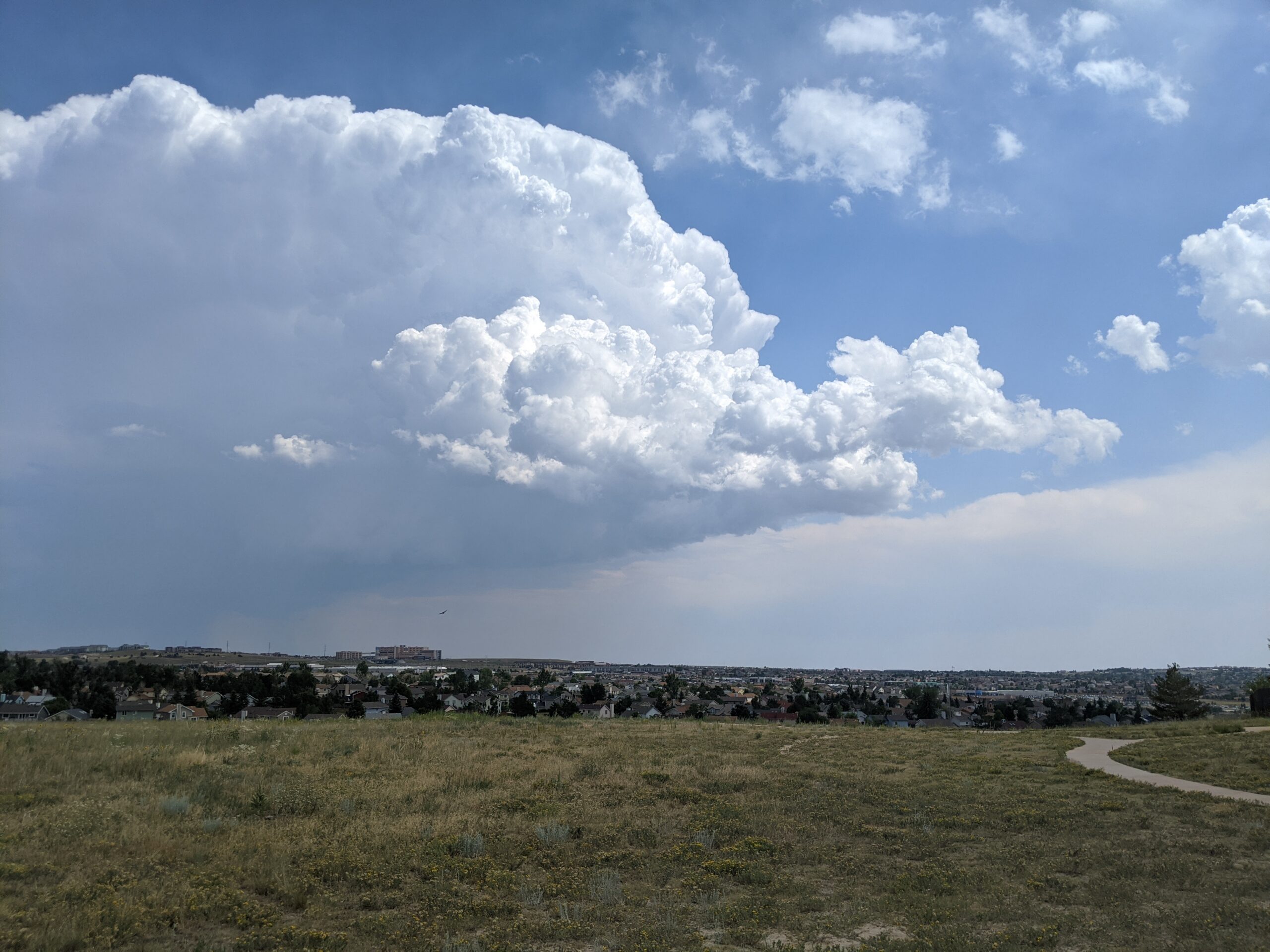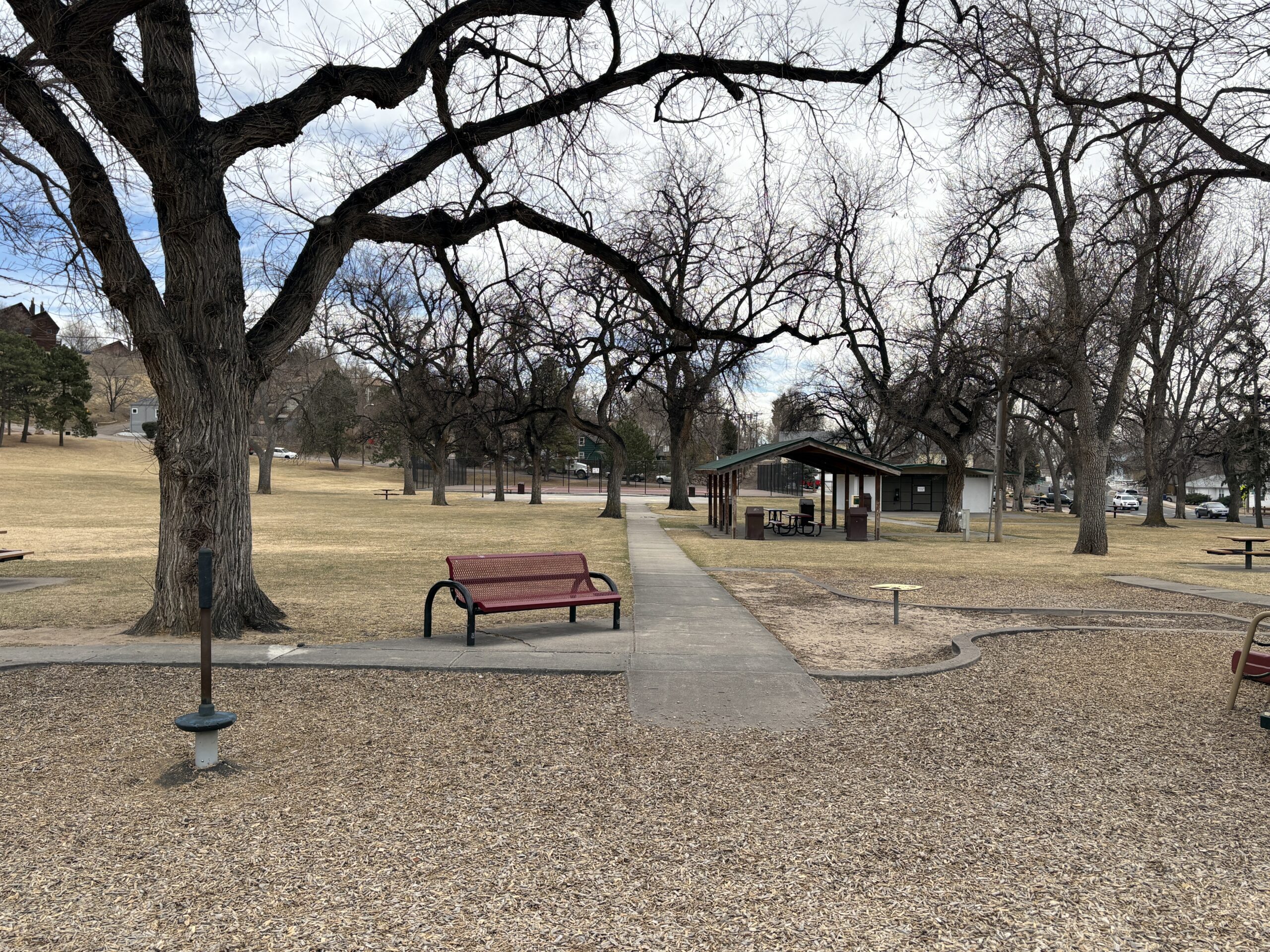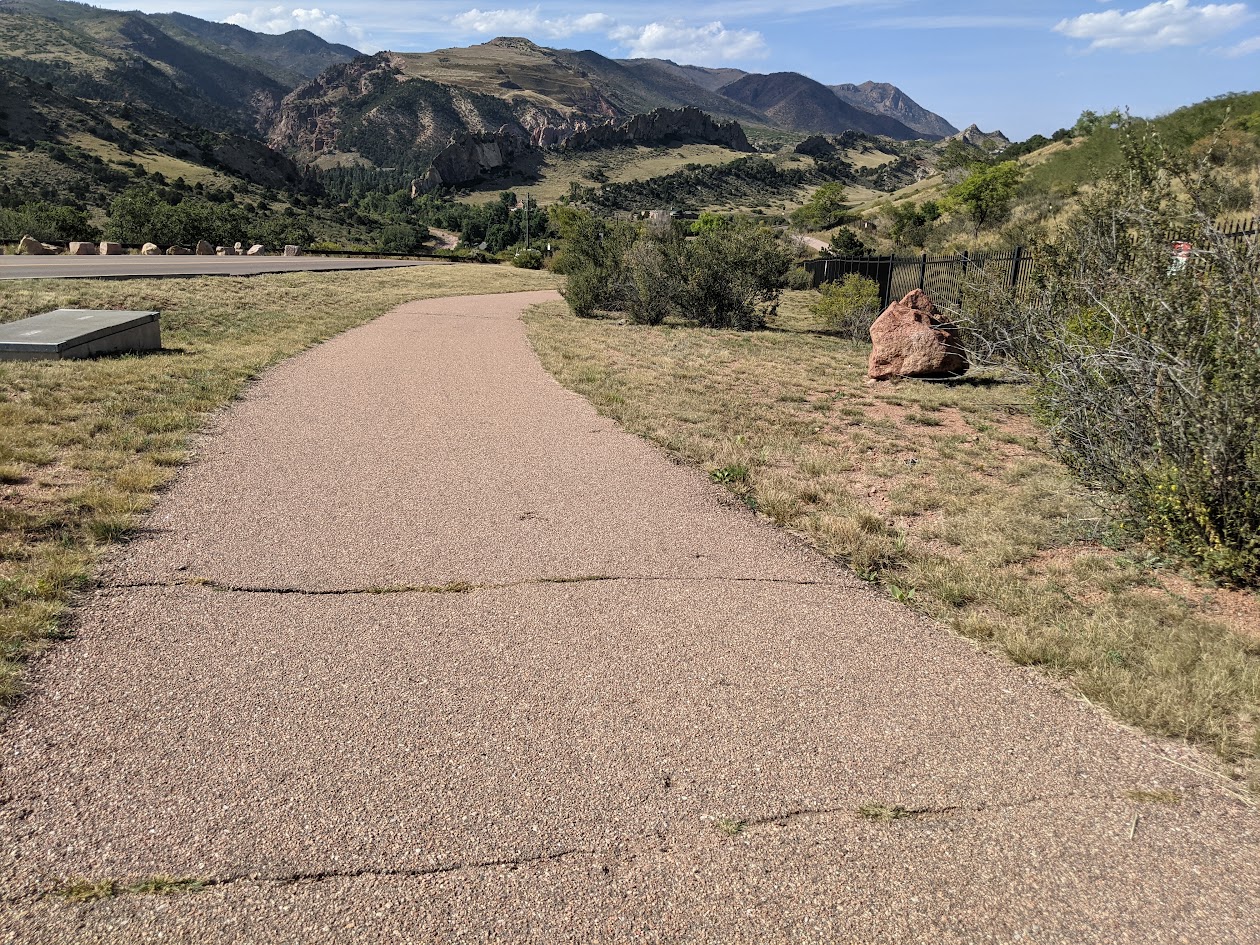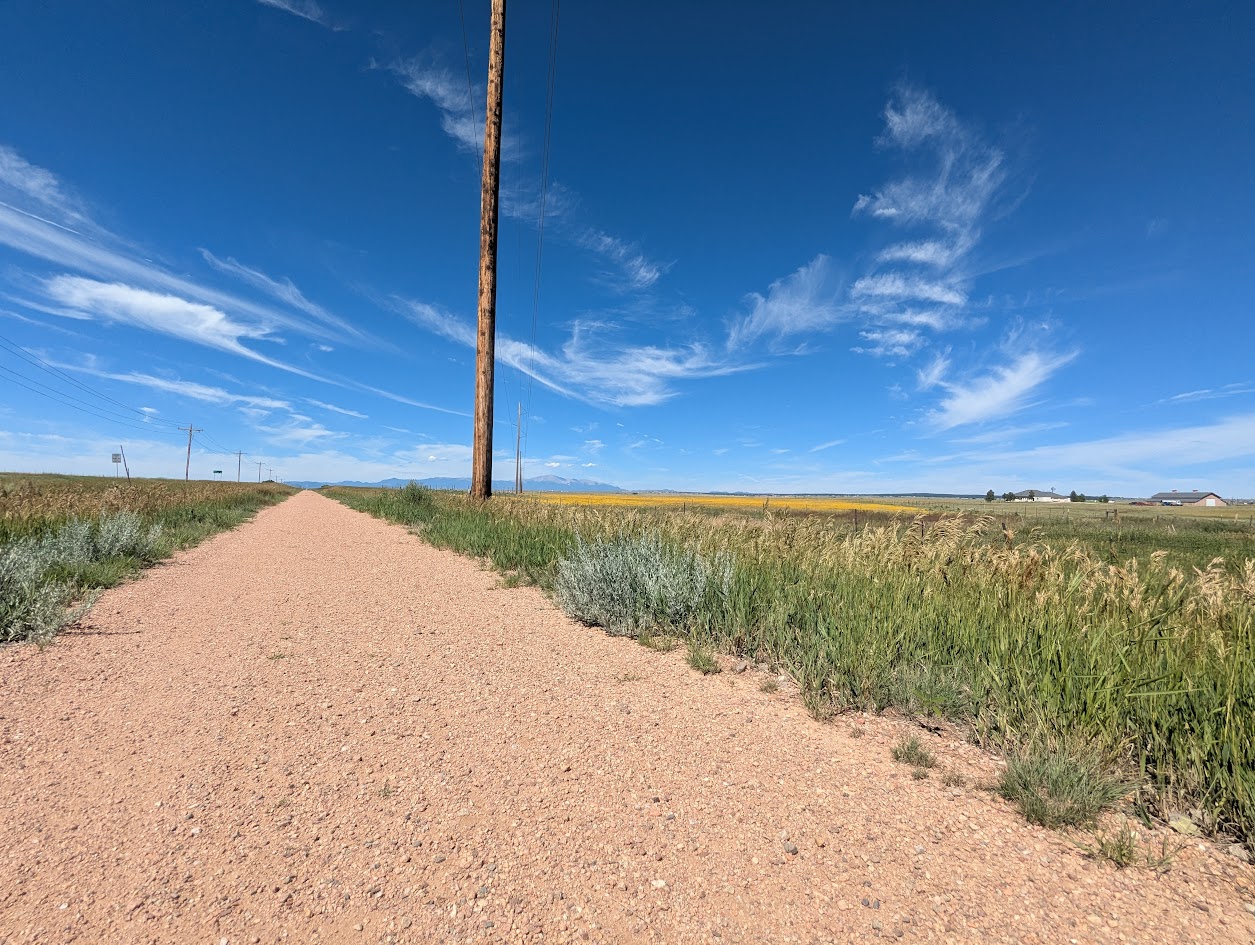
East of Colorado Springs, the Rock Island Trail continues through Falcon and Peyton along the same historic railroad alignment. This segment provides a more rural experience, connecting growing communities and open landscapes while preserving the legacy of the former rail corridor.
Location: Eastern El Paso County, between Falcon and Peyton along the former Rock Island Railroad corridor
Trail Experience
The Falcon and Peyton segment of the Rock Island Trail offers a quieter, more open setting compared to the urban Colorado Springs portion. The trail follows the historic rail bed through prairie landscapes and developing residential areas, creating opportunities for walking, biking, and horseback riding depending on surface conditions.
As development continues in eastern El Paso County, this segment plays an increasingly important role in providing off street trail access and connecting communities to regional recreation opportunities.
Connections
The Falcon and Peyton portion of the Rock Island Trail connects local neighborhoods and open spaces while supporting long term plans for expanded trail connectivity across eastern El Paso County. Future trail extensions and connections are expected to further link this corridor to parks, schools, and regional trail systems.
The Rock Island Trail reflects Colorado Springs’ rail history while serving as a vital recreation and transportation corridor today. Together, the urban and eastern segments illustrate how historic infrastructure continues to shape access, connectivity, and community across the region.
America the Beautiful Park
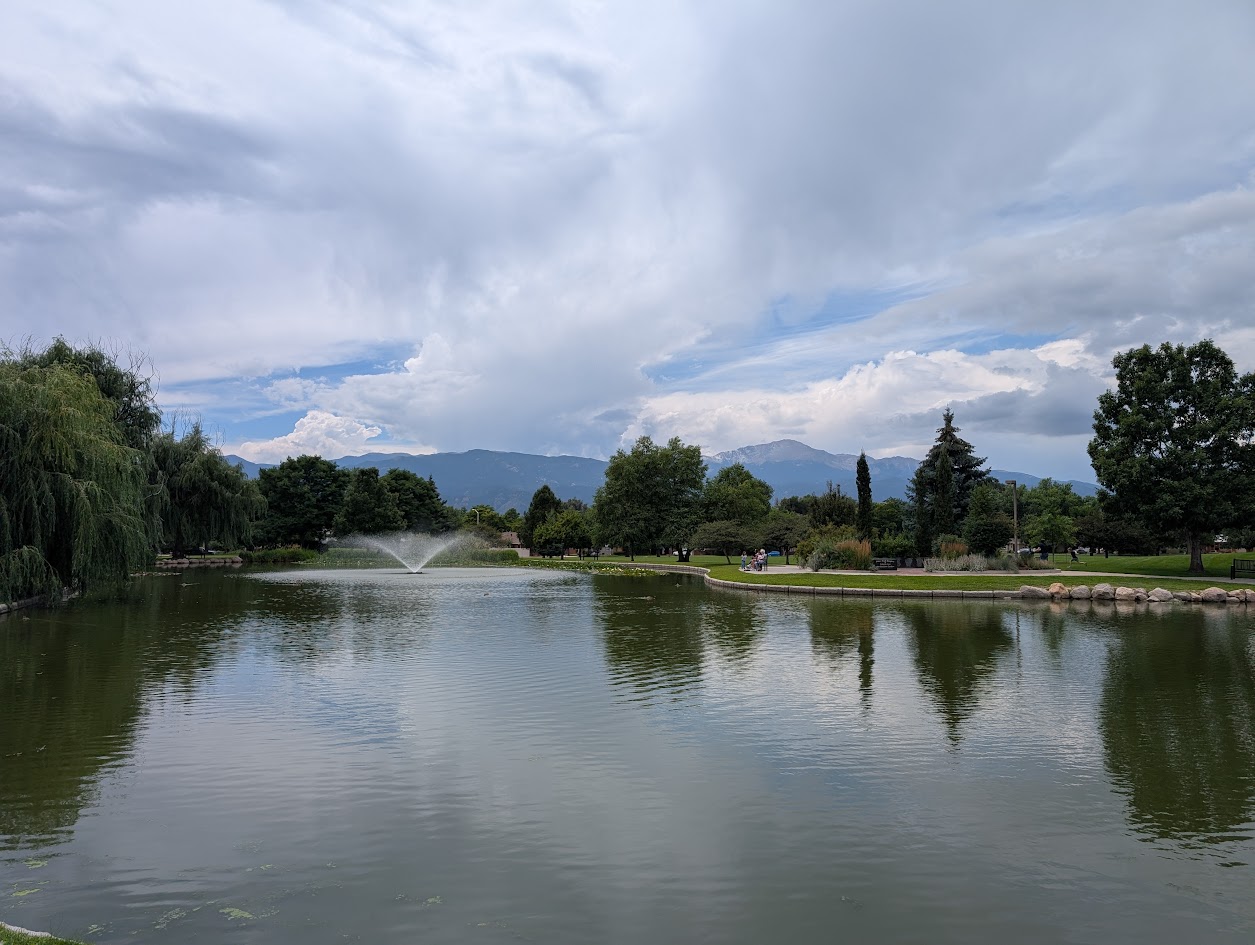
Nestled at the base of Pikes Peak and just steps from downtown Colorado Springs, America the Beautiful Park is a vibrant urban green space that combines recreation, art, and community. The park’s name honors Katharine Lee Bates, who penned the song “America the Beautiful” after visiting the summit of Pikes Peak in 1893.
Recreation and Amenities
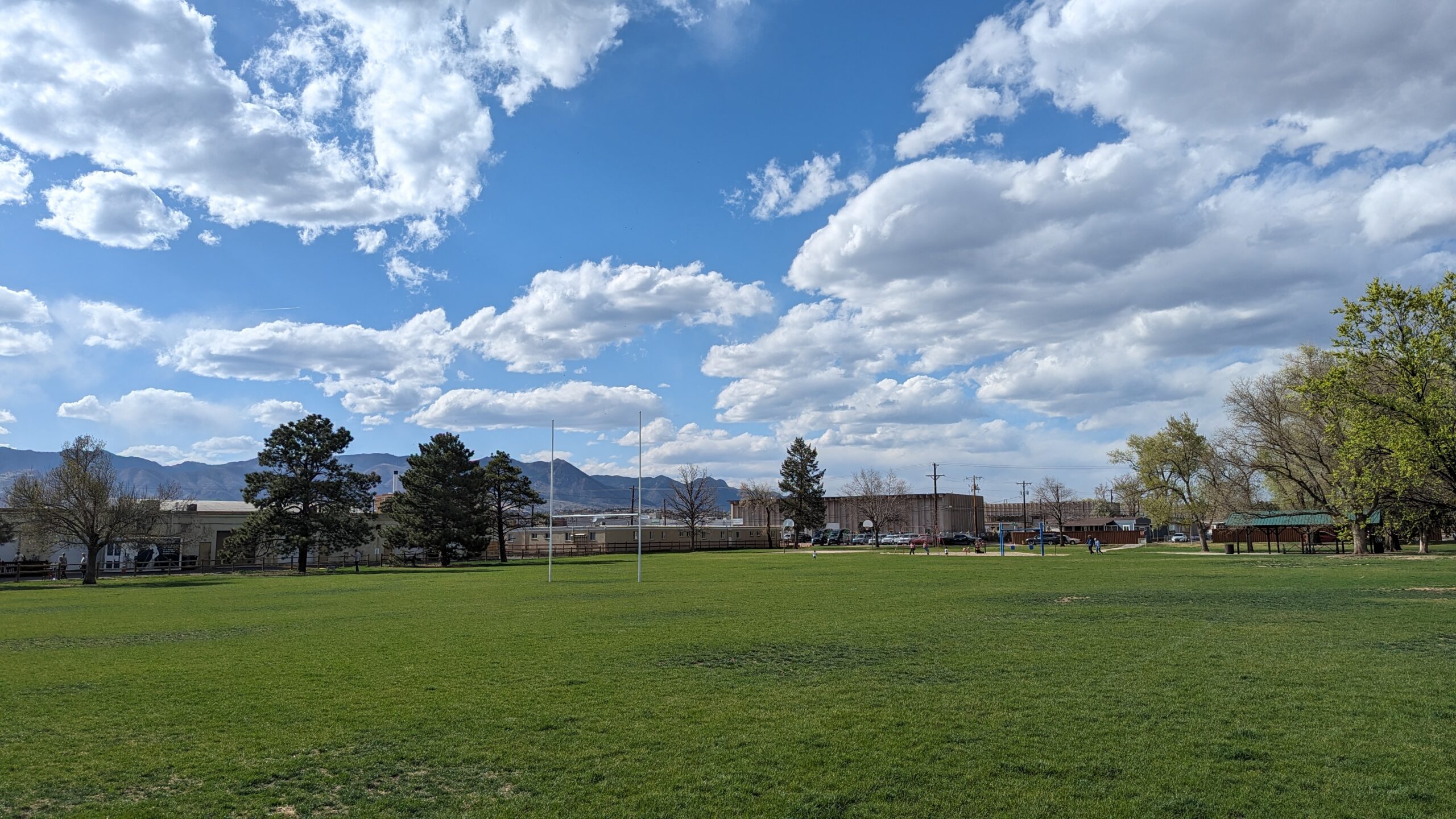
The 30-acre park is designed for families, gatherings, and outdoor fun. It features large open lawns perfect for picnics and games, a universally accessible playground that welcomes children of all abilities, and plenty of paved trails for walking, running, and cycling. The park also connects directly to the Pikes Peak Greenway Trail, making it a popular hub for commuters and recreationists.
Iconic Features
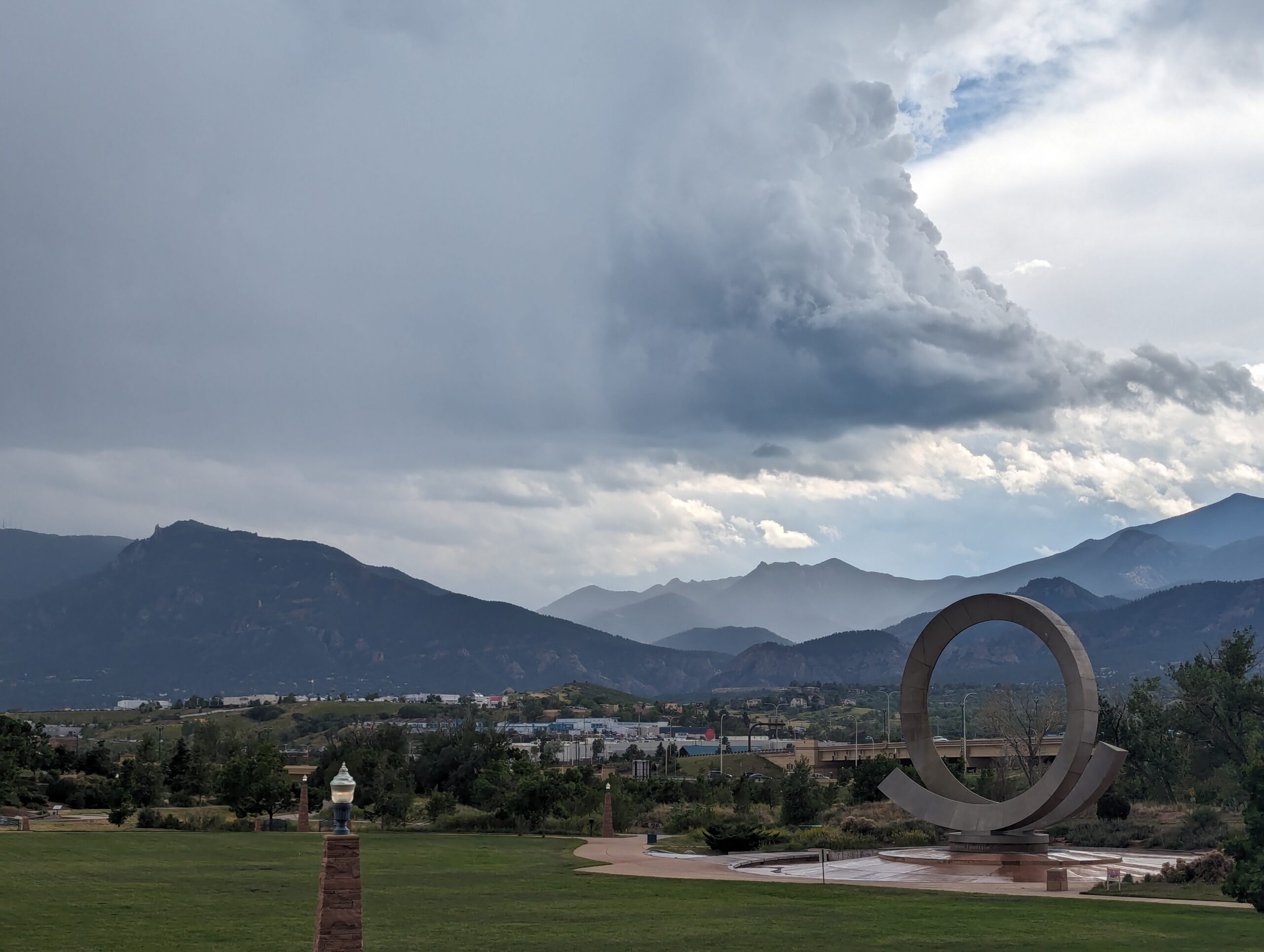
The centerpiece of the park is the “Continuum” sculpture and Julie Penrose Fountain, a 60-foot circular structure that sprays water high into the air, creating a refreshing play space in summer and a striking landmark year-round. Its design represents the continuous motion of water and life, making it one of the city’s most recognized symbols.
Wildlife and Scenery
While the park sits in the heart of the city, visitors can still enjoy views of Pikes Peak and the Front Range, along with the chance to spot urban wildlife along the trails and nearby Fountain Creek. Its open design offers both green lawns and mountain vistas, making it a scenic gathering place.
History
Created in the early 2000s, America the Beautiful Park was envisioned as a community centerpiece, blending public art, accessible play, and trail connections into one landmark park. It has since become a favorite spot for festivals, concerts, and family outings while honoring the region’s deep connection to the iconic song.
Plan Your Visit
Location: 126 Cimino Drive, Colorado Springs, CO 80903 Parking: Free parking is available on-site, though spaces can fill quickly during events. Hours: Open daily, 5:00 a.m. – 9:00 p.m. Tips:
Bring kids in summer to enjoy the splash fountain.
Walk or bike to the park via the Pikes Peak Greenway for a car-free adventure.
Check the city events calendar—many community festivals and cultural events take place here.
With its combination of art, recreation, and breathtaking views of the mountains, America the Beautiful Park truly lives up to its name as one of Colorado Springs’ most iconic gathering spaces.
Pancake Rocks Trail
The Pancake Rocks Trail near Cripple Creek is one of the most beloved high-country hikes in the Pikes Peak region, famous for its unusual, layered rock formations that resemble a towering stack of pancakes. At over 10,000 feet in elevation, this hike combines geological wonders, sweeping views, and a true alpine adventure.

Trails and Hiking
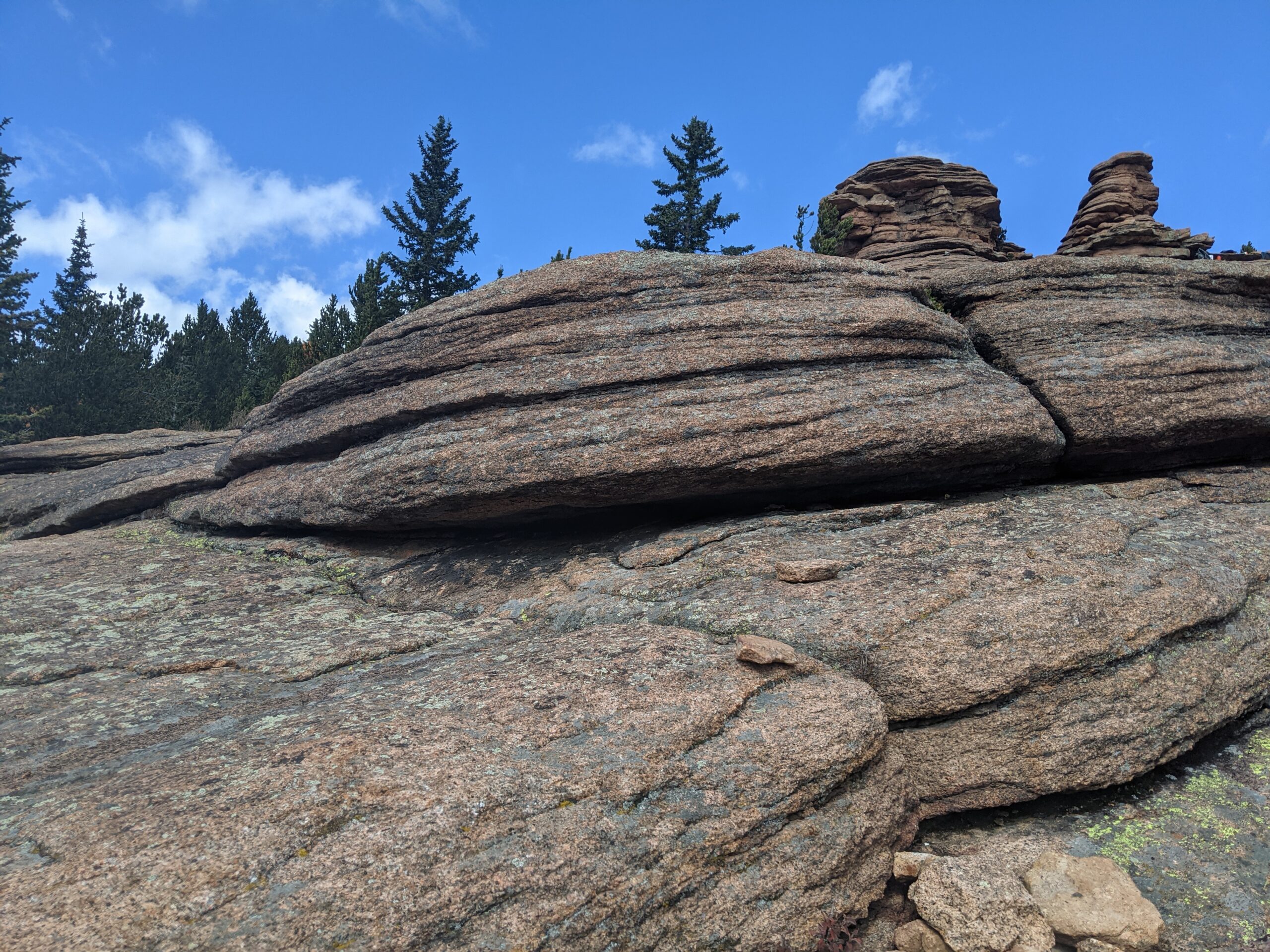
The trail to Pancake Rocks begins from Horsethief Park and climbs steadily through spruce and fir forest. Hikers can expect about 6 miles round trip with roughly 1,200 feet of elevation gain, making it a moderate-to-challenging trek. The highlight is reaching the natural sandstone and granite formations, where the rock has weathered into stacked, flat shelves that look like giant pancakes tipped on their side.
Wildlife and Scenery
Along the way, hikers are treated to dense forest, alpine meadows, and breathtaking views of Pikes Peak’s south slopes and the surrounding Teller County high country. Wildlife sightings often include marmots, pikas, mule deer, and a variety of alpine birds. In late summer, wildflowers add splashes of color to the meadows, while fall brings golden aspen groves.
History
The Pancake Rocks area has long been a favorite local hike, with its unique formations formed over millions of years by erosion and uplift. Once traveled by miners and early settlers moving between Cripple Creek and Divide, today it is a treasured recreational destination managed by the Pike National Forest.
Plan Your Visit
Location: Access off CO Highway 67 between Divide and Cripple Creek. The Horsethief Park Trailhead is closest. Parking: Parking strip along HWY with various pulloffs further away. Hours: Open year-round, though snow and ice can make the trail difficult outside of summer and fall. Tips:
At high elevation, weather changes quickly—dress in layers and be prepared for storms.
Bring plenty of water; there are no reliable water sources on the trail.
Dogs are allowed but should be leashed to protect wildlife and fellow hikers.
Start early to avoid afternoon thunderstorms common in summer.
With its striking rock formations and spectacular alpine views, Pancake Rocks is a one-of-a-kind hike that rewards every step of the climb.
Seven Bridges Trail (#622)
The Seven Bridges Trail, also known as Trail #622, is one of the most popular hikes in North Cheyenne Cañon. This moderate trail is about 3.7 miles round trip and gains roughly 1,000 feet in elevation as it follows North Cheyenne Creek. Its charm comes from crossing seven rustic wooden bridges that give the trail its name, making it a family-friendly adventure with plenty of photo opportunities.
Trails and Recreation
The trail begins at the end of North Cheyenne Canyon Road near the parking area for the Upper Gold Camp Road. From there, hikers follow a steady incline along a shaded canyon trail, crossing over seven picturesque wooden bridges. Beyond the seventh bridge, the path continues into steeper terrain and can be extended to connect with higher trails like Jones Park or Mount Rosa for those looking for a longer trek.
Wildlife and Scenery
Surrounded by towering evergreens, mountain streams, and granite walls, the Seven Bridges Trail offers classic Front Range beauty. Depending on the season, hikers may encounter wildflowers, colorful autumn foliage, or sparkling ice formations along the creek. Wildlife is common in the area—mule deer, songbirds, and the occasional black bear may be spotted in the canyon.
History
The trail follows an old pipeline route that once carried water from the mountains into Colorado Springs in the early 20th century. The bridges were originally constructed to maintain access along the pipeline, and today they remain a beloved feature of this historic route.
Plan Your Visit
Location: Trailhead parking is located at the end of North Cheyenne Canyon Road, just past the closed Gold Camp Road tunnel. Parking: A paved lot is available, but it fills quickly—arrive early, especially on weekends. Additional parking may be available further down the road. Hours: Open daily, 5:00 a.m. – 9:00 p.m. Tips:
The trail is well-shaded, making it a great summer hike.
Dogs are welcome but must be leashed.
Wear sturdy shoes, as the path can be rocky and icy in colder months.
Continue past the seventh bridge if you want to extend your hike into the higher country of Pike National Forest.
Vindicator Valley Trail
Vindicator Valley Trail in Victor, Colorado, offers a fascinating blend of outdoor recreation, mining history, and scenic beauty in the heart of the Cripple Creek & Victor Mining District. This interpretive loop trail winds through historic mining structures and reclaimed landscapes, giving visitors a glimpse into Colorado’s Gold Rush era while showcasing views of Pikes Peak and the rugged hills of Teller County.
Trails and Recreation
The Vindicator Valley Trail is a 2-mile loop that is rated easy to moderate, making it accessible for most hikers, families, and history enthusiasts. Along the way, you’ll find interpretive signs explaining the mining operations, equipment, and the lives of the people who once worked the area. The trail is popular year-round for hiking, snowshoeing, and photography.
Wildlife and Scenery
While the mining remnants are the highlight, the surrounding landscape is equally striking. Wildflowers bloom in summer, while fall brings golden aspens and crisp mountain air. Mule deer, elk, foxes, and a variety of bird species can often be spotted along the trail. Panoramic views of the Sangre de Cristo and Sawatch mountain ranges add to the experience.
History
Vindicator Valley sits in the heart of the Cripple Creek & Victor Gold Mining District, one of the most productive gold mining areas in the United States during the late 1800s and early 1900s. The trail passes by the historic Vindicator Mine and other structures that once fueled Colorado’s mining boom. Many of these wooden headframes and buildings have been stabilized to preserve them as open-air museums, allowing visitors to connect directly with the region’s past.
Plan Your Visit
Location: Trailhead located just north of Victor, CO off County Road 831 (about 45 minutes west of Colorado Springs). Parking: A gravel lot is available at the trailhead. Parking is free but limited. Hours: Open daily, year-round, from dawn to dusk. Tips:
Interpretive signage is plentiful—allow time to read and explore.
Bring water and sun protection; shade is limited.
Winter visits may require traction devices or snowshoes.
Respect historic structures by staying on designated trails.
Rainbow Falls Historic Site
Rainbow Falls Historic Site in Manitou Springs is a one of a kind destination that blends natural beauty with local history and art. Known locally as “Graffiti Falls,” this spot features a dramatic waterfall dropping beneath a historic 1930s highway bridge, surrounded by steep canyon walls decorated with colorful community art. Managed by El Paso County Parks, Rainbow Falls has become both a scenic stop and a cultural landmark.
Trails and Recreation
A short, family friendly trail leads directly from the parking area to the base of the falls, making it an easy walk for visitors of all ages. While the trail is less than a quarter mile long, the views of the waterfall and the unique bridge structure make it worth the visit. Benches and interpretive signs along the way provide information about the site’s history, geology, and restoration efforts.
Wildlife and Scenery
The falls are framed by rugged red rock formations typical of the Manitou Springs area. Visitors can often spot small birds, squirrels, and other wildlife along the creek. In winter, ice formations around the falls create another stunning natural display. The sound of rushing water and the backdrop of Pikes Peak Country make Rainbow Falls a memorable stop.
History
Rainbow Falls has been a local gathering spot for decades, with a history that includes Native American heritage, 20th century road construction, and its more recent identity as an urban art space. The bridge spanning the falls was constructed in 1932 as part of Highway 24 and remains a prominent feature today. In recent years, El Paso County Parks has worked to restore and protect the site, balancing its natural character with its role as a space for community expression.
Plan Your Visit
Location: Accessed via Serpentine Drive, just off Highway 24 at the west end of Manitou Springs. Hours: Open seasonally, typically Memorial Day through Labor Day, on weekends and holidays. Hours may vary, so check with El Paso County Parks. Parking: A small parking area is available off Serpentine Drive with a fee required. Parking is limited, so carpooling is recommended. Tips:
The trail is short but uneven in places—sturdy shoes are helpful.
Graffiti is part of the site’s identity, but defacing natural features is prohibited.
The area can be busy on summer weekends; mornings and weekdays are quieter times to visit.
Offsite parking at 101 Higginbotham Road, Manitou Springs, CO 80829, $20 per vehicle.
Bear Creek Regional Park is a sprawling 545 acre park nestled in the foothills of Colorado Springs, operated by El Paso County. It offers a rich mix of active recreation and natural spaces, making it a unique destination for both community gatherings and nature escapes.
Trails and Recreation
Ten miles of multi purpose, non motorized trails traverse the park, linking its various sectors. Visitors can jog, bike, hike, or ride horseback on these trails, many of which wind through prairie, riparian zones, and gentle hills. The park also includes picnic pavilions, playing fields, tennis courts, basketball courts, an archery range, volleyball areas, horseshoe pits, and playgrounds across its different areas.
Bear Creek Dog Park
Within the park lies a 25 acre fenced off leash dog area, one of El Paso County’s most visited facilities, drawing over 100,000 visitors each year. The dog park includes open prairie, wooded hills, a third mile stretch of Bear Creek, walking trails with a primary three quarter mile loop, and secondary paths. A separate two acre section is reserved for small and senior dogs. Amenities include creek access, water fountains, a dog wash area, restrooms, bag dispensers, shade, and benches.
Bear Creek Nature Center
The Bear Creek Nature Center (245 Bear Creek Road) serves as the educational hub of the park. It offers interpretive programs, guided and self guided tours, interactive nature exhibits, and seasonal events for families and school groups. Trails around the center highlight the area’s natural beauty and habitat but may have restrictions to protect sensitive wildlife.
Charmaine Nymann Community Garden
The Charmaine Nymann Community Garden is a two acre organic garden maintained by the Bear Creek Garden Association. It features 104 full size plots, underground water delivery, and secure fencing. Gardeners pay annual fees that cover soil tilling, water, and maintenance, and many donate surplus produce to local nonprofits.
Wildlife and Scenery
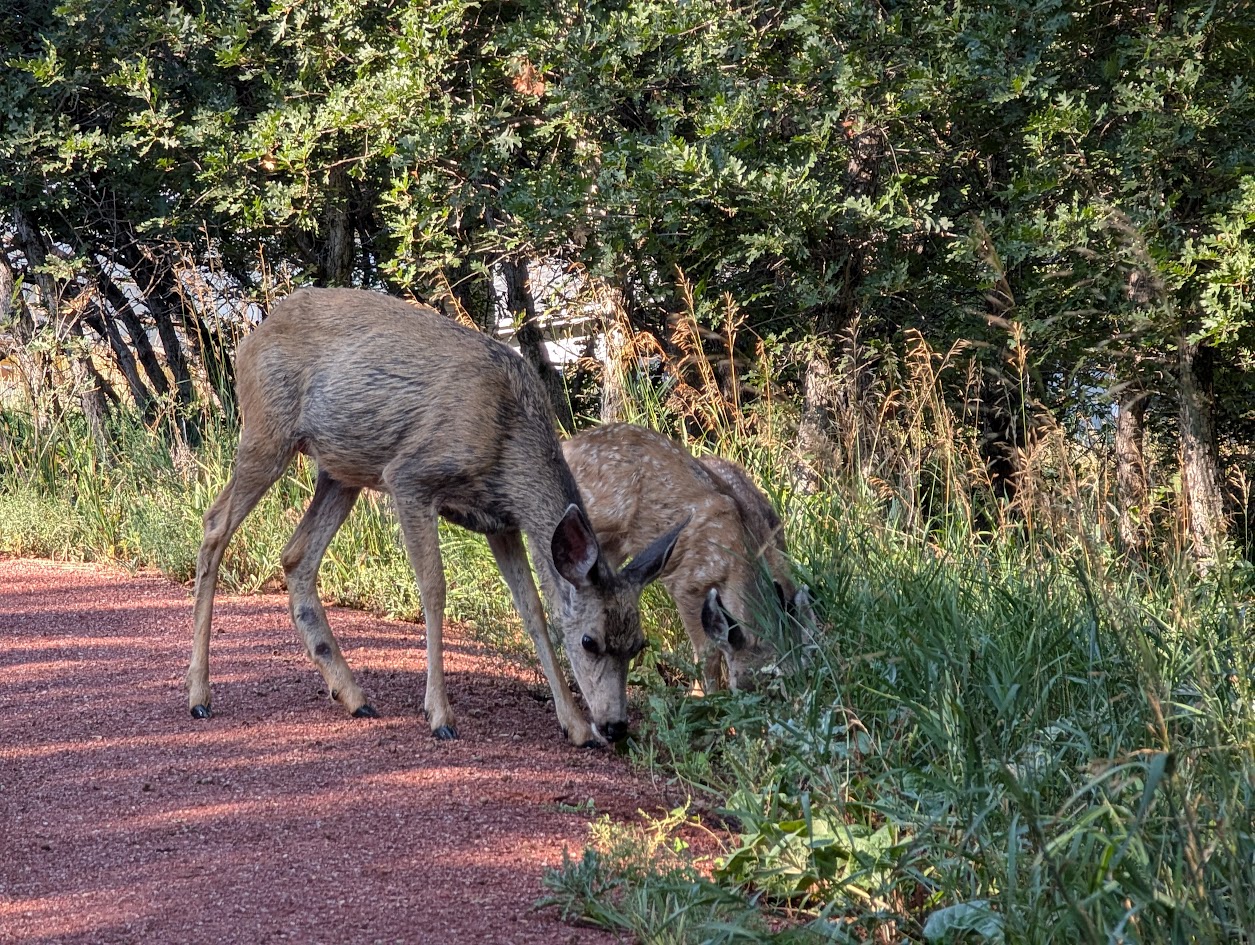
Bear Creek blends riparian corridors, prairie, and foothill terrain. Expect to see cottonwoods, scrub oak, ponderosa pines, and open meadows. Wildlife includes mule deer, coyotes, songbirds, raptors, and aquatic species near the creek. Seasonal bird migrations, wildflowers, and creekside reflections make the park especially scenic.
History
The land that now forms Bear Creek Regional Park has transitioned from historic poor farm and garden operations to one of the most loved open spaces in the region. Today the park is divided into East, Terrace, Dog Park, and Nature Center areas, balancing both active recreation and conservation.
Plan Your Visit
Location: Access via 21st Street and West Rio Grande for Bear Creek East, 21st Street and Argus for Bear Creek Terrace, and Bear Creek Road for the Nature Center. Hours: 5:00 a.m. to 9:00 p.m. daily Parking: Multiple parking lots serve the East, Terrace, Dog Park, and Nature Center areas. Tips:
Pets must be on leash in all areas except the dog park
Follow signage around the Nature Center as some trails have pet and bike restrictions
Check the Nature Center schedule for programs and events
Community garden plots are available seasonally through the Bear Creek Garden Association
Fountain Creek Regional Park
Fountain Creek Regional Park is one of El Paso County’s most beloved natural areas, stretching along the cottonwood-lined banks of Fountain Creek. Just south of Colorado Springs near Fountain, the park blends wetlands, meadows, and forest into a serene setting for walking, birdwatching, fishing, and family outings.
Trails and Recreation
The park features over 10 miles of interconnected trails, including a section of the Fountain Creek Regional Trail that links north toward Colorado Springs and south toward Fountain. Paved and natural-surface paths meander past ponds, marshes, and shady cottonwood groves, offering year-round opportunities for walking, running, cycling, and wildlife viewing. Anglers can cast a line in stocked ponds or in stretches of Fountain Creek, while families enjoy picnic areas, playgrounds, and open fields. There is also a dog park and a community garden.
Wildlife & Scenery
Fountain Creek is a hotspot for birdwatching—more than 300 species have been recorded here, including herons, red-winged blackbirds, hawks, and migrating waterfowl. Beavers and muskrats are often spotted in the ponds, while deer and foxes move quietly through the cottonwoods. In autumn, the park is alive with the golden hues of changing leaves, reflected in still waters.
History
The park sits along a historic travel corridor once used by Indigenous peoples, explorers, and settlers following the Arkansas River drainage. It was later preserved as part of El Paso County’s regional park system to protect valuable wetlands and provide a green corridor through fast-growing communities. Over the years, it has become a cornerstone of local conservation, recreation, and environmental education.
Plan Your Visit
Location: 2010 Duckwood Rd, Fountain, CO 80817 Hours: Dawn to dusk, year-round Parking: Multiple lots available near the Nature Center, ponds, and trailheads Know Before You Go: Trails can be muddy after heavy rains; bring binoculars for birdwatching and be prepared for abundant wildlife. Dogs must remain leashed to protect sensitive habitats.
Red Rock Canyon Open Space
Red Rock Canyon Open Space is a 1,470-acre city preserve on the west side of Colorado Springs, showcasing tilted red-sandstone hogbacks, former quarry walls, and big views toward Pikes Peak. A network of multi-use trails winds through canyons, mesas, and reclaimed quarry benches, making it a favorite for hikers, runners, cyclists, climbers, and dog owners.
Trails and Recreation
More than 15 miles of natural-surface trails link canyon floors to mesa-top overlooks and connect south to the Intemann Trail and Manitou’s trail system. Signature routes include Red Rock Canyon, Mesa, Greenlee, Sand Canyon, and Roundup—easy to moderate loops you can mix and match. A designated freeride/skills area offers bike features from beginner to advanced. Rock climbing is allowed on established routes (free annual City permit required); always check for any seasonal closures.
Amenities and Features
You’ll find restrooms, trail maps, and multiple parking areas at the main entrance. Two signed off-leash dog loops (Upper and Lower) give pups room to roam; elsewhere, dogs must be leashed. Picnic spots are tucked along the lower trails, and wayfinding is posted at major junctions.
Wildlife & Scenery
Expect classic Front Range scenery—red walls, juniper and piñon on sunny slopes, and cottonwoods along the drainages. Mule deer, foxes, raptors, and a wide variety of songbirds frequent the open space. Sunrise and sunset light the sandstone and quarry faces in deep oranges and reds—prime time for photos.
History
For more than a century, these canyons supported sandstone quarries, gravel pits, and other industry. The City purchased the property in 2003 using TOPS (Trails, Open Space and Parks) funds, opened it to the public in 2004, and later expanded it with adjacent parcels like White Acres. Today’s trails follow old quarry roads and bench cuts, turning a once-industrial landscape into a premier urban open space.
Plan Your Visit
Location: Main entrance at 3550 W High St, Colorado Springs, CO 80904 (access via S 31st St off US-24) Hours: Generally 5:00 a.m. – 9:00 p.m. (seasonal gate hours may vary) Parking: Primary lots at the W High St entrance; additional small lots serve southern access points Know Before You Go: Stay on designated trails to protect fragile soils; observe posted climbing rules and any wildlife closures; off-leash only in the signed dog loops.
Monument Valley Park
Monument Valley Park, stretching along Monument Creek in the heart of Colorado Springs, is one of the city’s most historic and beloved green spaces. Designed by city founder General William Jackson Palmer in the early 1900s, this urban park is a scenic retreat that blends gardens, recreation, trails and history—all within walking distance of downtown.
Trails and Recreation
The park features a variety of paved and soft-surface trails that connect with the Pikes Peak Greenway, making it a hub for cyclists, walkers, and runners. Recreational amenities include tennis courts, pickleball courts, sports fields, playgrounds, and a seasonal swimming pool. The shady paths and open lawns invite leisurely strolls or family outings.
Gardens and Natural Features
Monument Valley Park is home to several formal gardens, shady tree groves, and native landscapes along the creek. The Demonstration Gardens showcase water-wise plants, while tranquil ponds and stone walls & bridges provide classic spots for reflection and photography.
Wildlife & Scenery
The creekside habitats attract songbirds, waterfowl, and small mammals, offering peaceful moments for birdwatchers and nature lovers. In autumn, the cottonwoods and other trees paint the park with vibrant seasonal colors.
History
Established in 1907, Monument Valley Park was General Palmer’s gift to Colorado Springs, designed as a grand civic park. Over the years, it has been shaped by floods, restoration efforts, and community care. Many of its stone bridges, gardens, and historic structures still reflect early 20th-century design, giving the park a timeless charm.
Plan Your Visit
Location: 170 W. Cache La Poudre St, Colorado Springs, CO 80903 Hours: Open daily from 5:00 a.m. – 9:00 p.m. Parking: Multiple lots and street parking available near major entrances and amenities