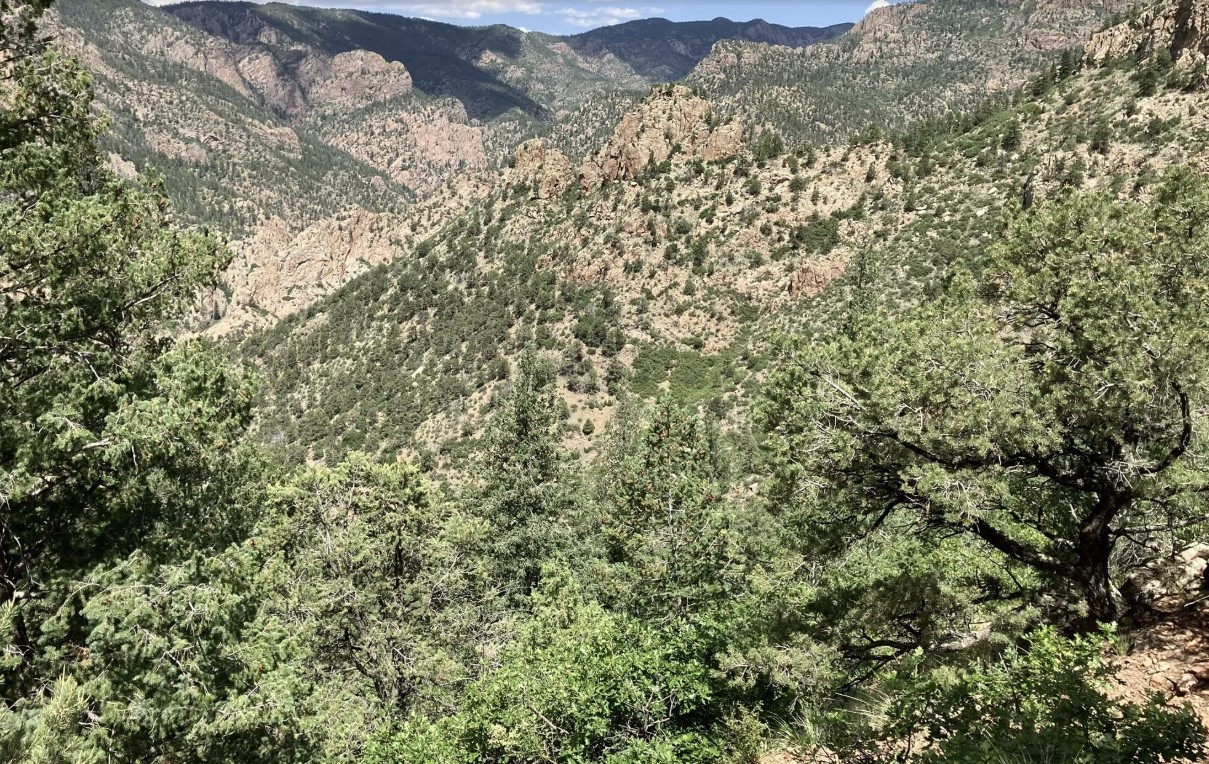
The Beaver Creek Wilderness Study Area (WSA) is a rugged and remote backcountry gem managed by the Bureau of Land Management. Spanning more than 27,000 acres, this wild landscape protects a dramatic mix of canyons, ridges, and rolling foothills where solitude, scenery, and backcountry adventure come together. The Beaver Creek WSA is located in Fremont, Teller, and El Paso counties, approximately 10 miles northeast of Cañon City and 12 miles southwest of Colorado Springs. The primary trailhead is located at the end of Fremont County Road 132.
Recreation and Trails
Beaver Creek WSA is a favorite destination for hikers, equestrians, and anglers seeking quiet trails far from crowds. The Beaver Creek Trail follows the namesake waterway through red-rock canyons and shady cottonwood groves, eventually climbing to sweeping views of the Wet Mountains and Pikes Peak. Several primitive routes connect to the trail, creating opportunities for longer backpacking trips. Anglers are drawn to Beaver Creek itself, a state-designated Wild Trout Stream, known for its naturally reproducing populations of brown and rainbow trout.
Wildlife and Scenery
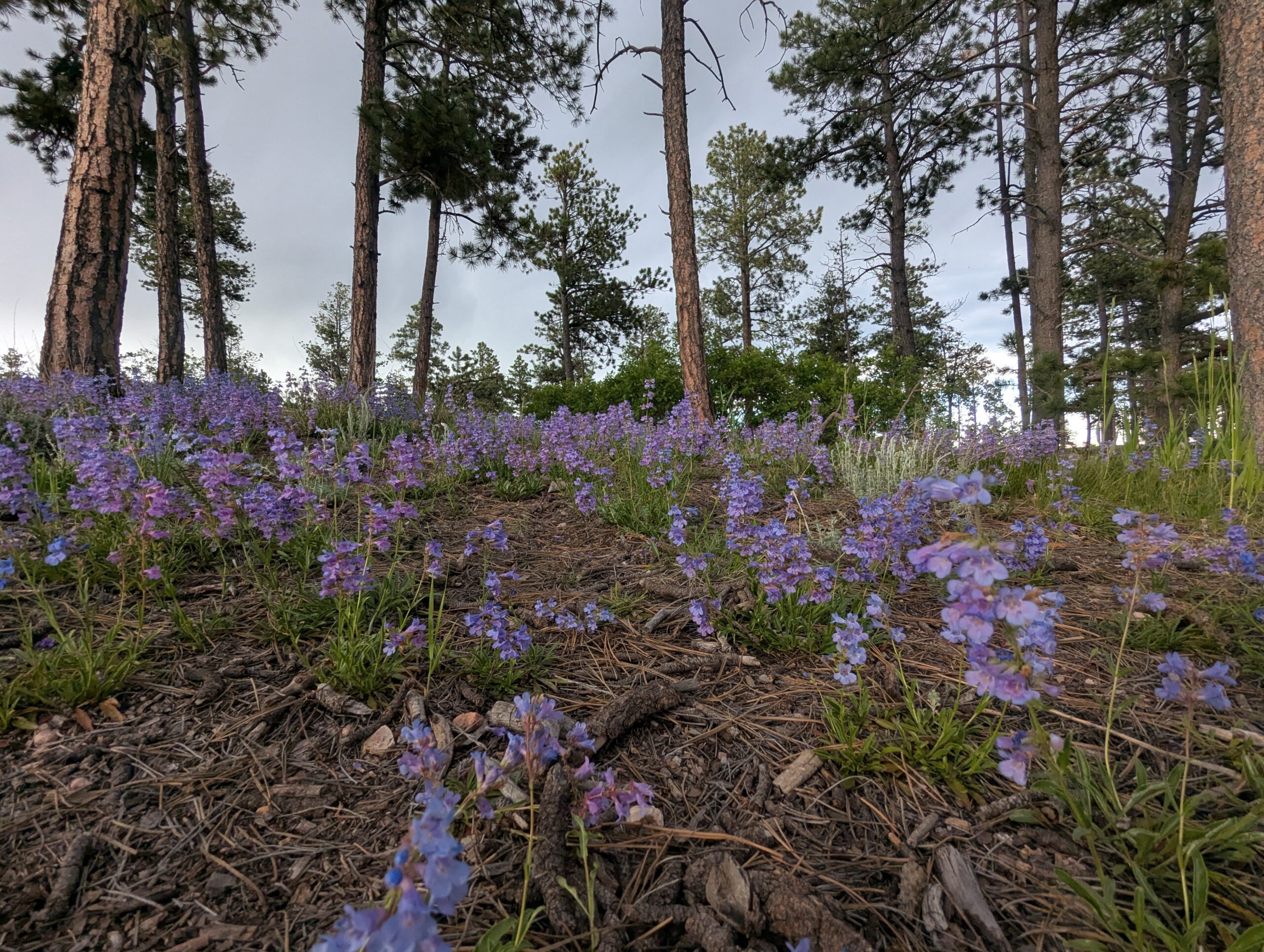
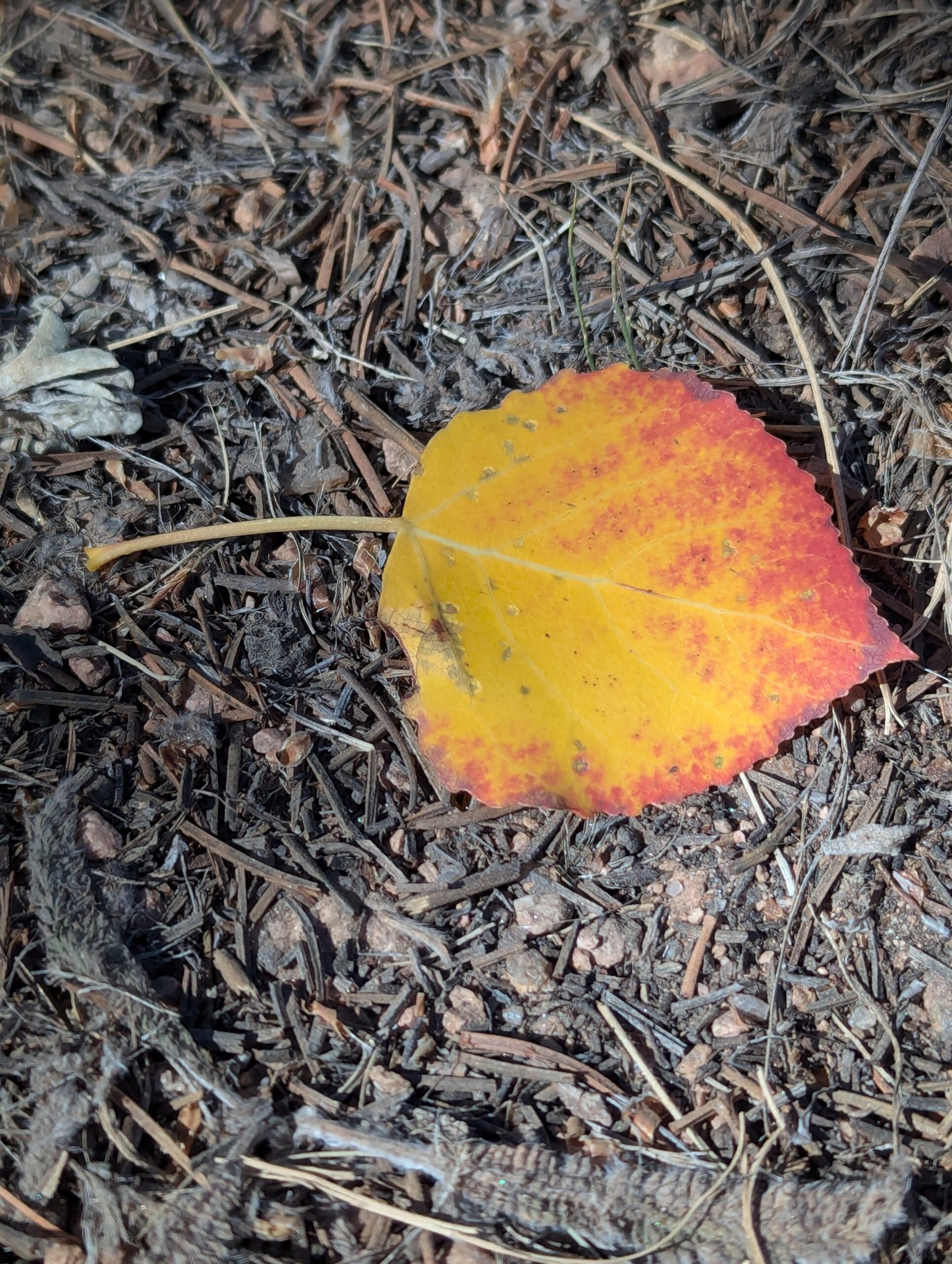
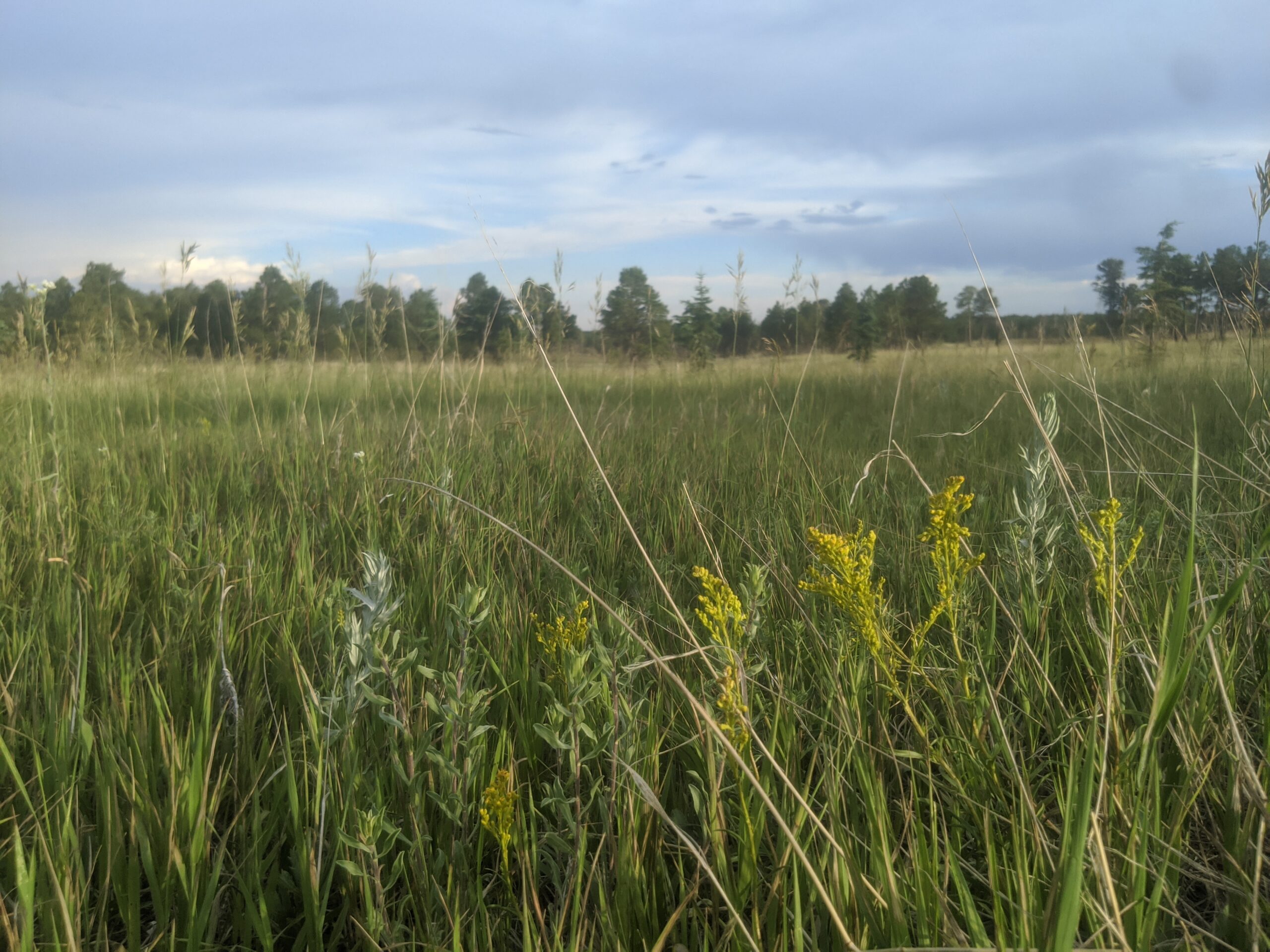
The varied terrain provides habitat for an impressive array of wildlife. Visitors may encounter bighorn sheep scaling cliffs, elk and mule deer grazing the meadows, or golden eagles riding canyon thermals. In spring, wildflowers brighten the slopes, while autumn paints the cottonwoods in vibrant yellows along the creek. The combination of rocky canyons, forested ridges, and wide-open skies makes the area a haven for photographers and nature lovers.
History
Beaver Creek has long been valued for its rugged beauty and ecological significance. Designated a Wilderness Study Area in 1980, it has been managed to preserve its wild character while Congress determines whether it will receive permanent wilderness status. The area also has ties to early homesteading and ranching, with remnants of old cabins and corrals still visible in some drainages.
Plan Your Visit
Location: Approximately 12 miles north of Cañon City, accessible via County Road 132 from Highway 115. Parking: Trailhead parking is available at the end of County Road 132; access roads can be rough, especially in wet weather. Hours: Open year-round, but access may be limited by snow or muddy road conditions. Fees: None. Tips:
This is a remote, rugged area—pack extra food, water, and navigation tools.
Trails are primitive and can be overgrown; be prepared for route finding.
Respect the wild character: leave no trace and pack out all trash.
With its wild canyons, clear streams, and unmatched solitude, the Beaver Creek Wilderness Study Area offers one of the most authentic backcountry experiences along Colorado’s Front Range.
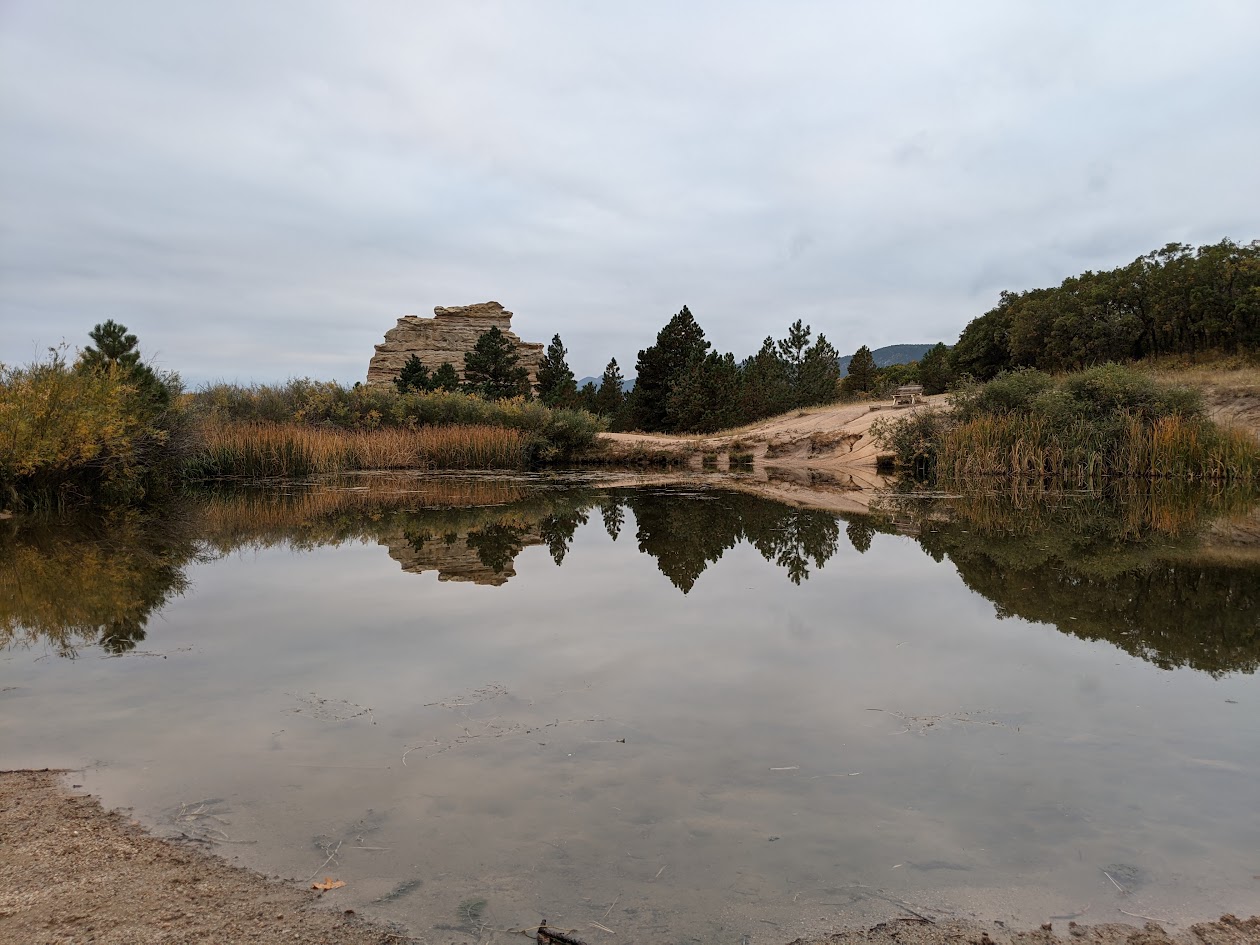
Located just west of the town of Monument, the Monument Preserve is a beloved local open space known for its extensive trail network, shady ponderosa pine forest, and strong sense of community stewardship. Once home to the historic Monument Nursery, which grew millions of trees for reforestation across the West, the preserve is now managed by the U.S. Forest Service as part of the Pike National Forest.
Recreation and Trails
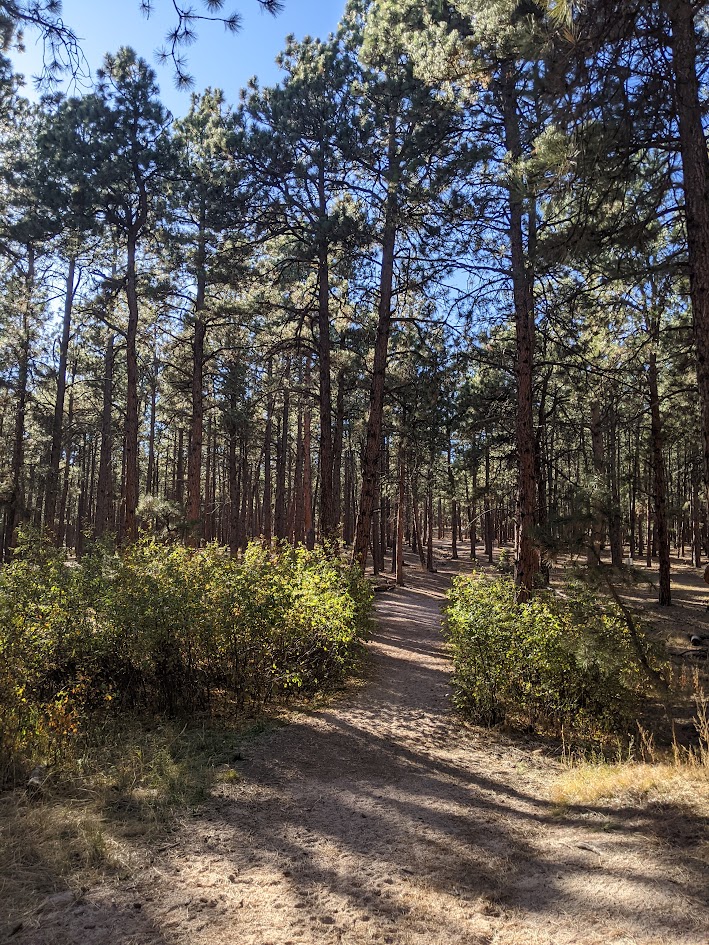
The Monument Preserve offers miles of interconnected trails perfect for hikers, mountain bikers, trail runners, and equestrians. The wide, rolling paths are popular for after-work exercise or family outings, while more technical singletrack challenges advanced riders and runners. A highlight for many visitors is the hike to Monument Rock, a striking sandstone formation that rises dramatically above the forest and offers stunning views of the Front Range. Trails also connect into Pike National Forest, allowing adventurous visitors to extend their trips into the backcountry.
Wildlife and Scenery
The preserve’s ponderosa pine and gambel oak woodlands provide habitat for mule deer, foxes, wild turkeys, and a wide variety of birds. In spring, wildflowers brighten the forest floor, while autumn brings warm golden tones. Its forested landscape provides year-round shade, making it a favorite spot in both summer heat and winter snow.
History
The site is steeped in history as the location of the Monument Nursery, established in 1907. For much of the 20th century, workers grew seedlings here that were planted across Colorado and beyond to restore landscapes damaged by wildfire, mining, and overgrazing. Remnants of this history, including old irrigation structures and foundations, can still be found throughout the preserve. Today, community groups continue the tradition of stewardship through regular trail maintenance and conservation efforts.
Plan Your Visit
Location: Access is available from Mount Herman Road, west of Monument, CO. Parking: A gravel lot is located near the main trailhead; roadside parking is also available at select points. Hours: Open daily, dawn to dusk. Fees: No entry fee. Tips:
Be aware of heavy trail use—yield appropriately and share the trails with other users.
Trails can be icy in winter; traction devices are recommended.
Respect historic features and leave them undisturbed.
With its welcoming trails, historic legacy, and iconic Monument Rock, the Monument Preserve is a treasured local open space that connects the community to both nature and history.
Cattail Marsh Wildlife Area
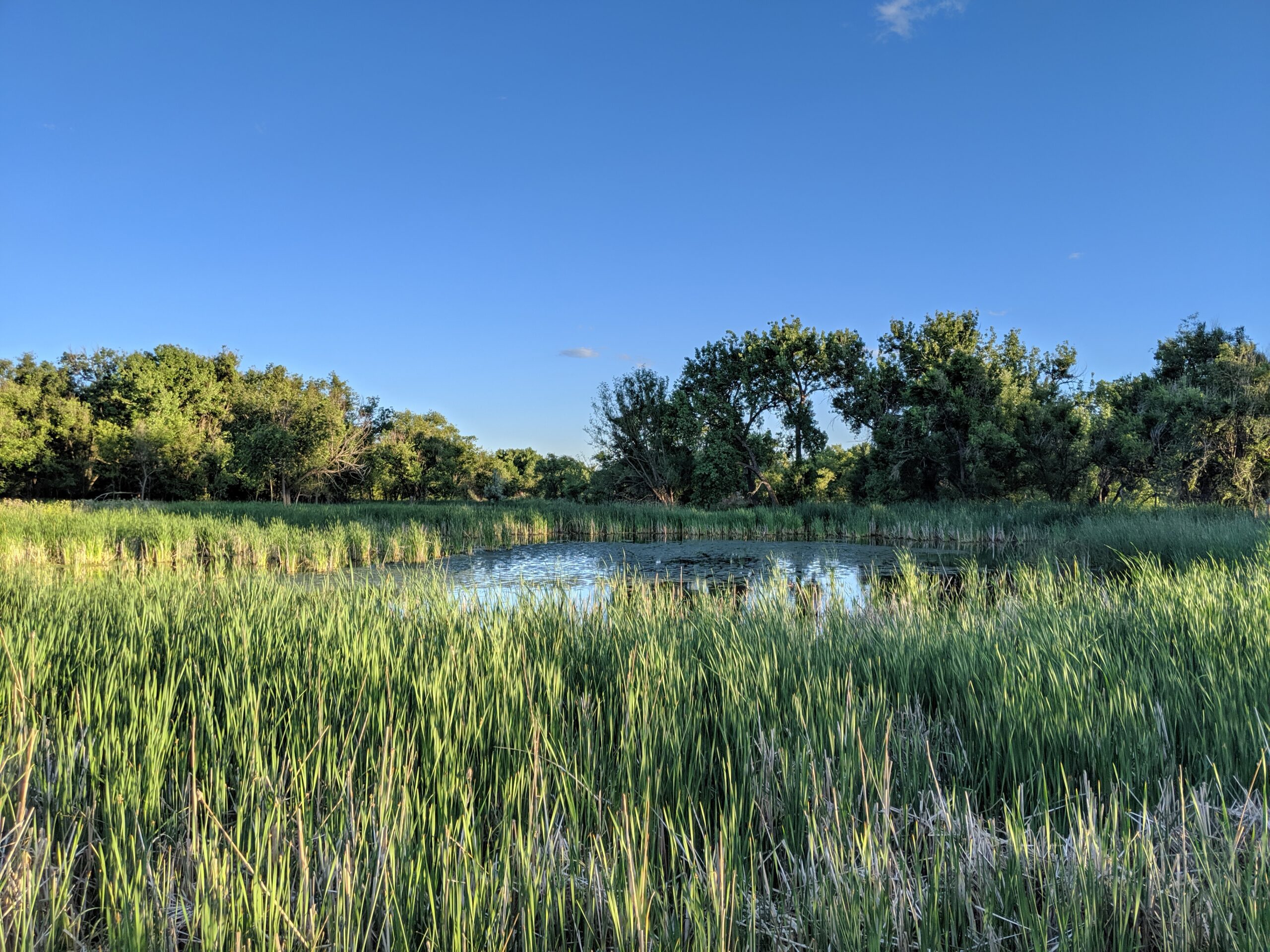
Cattail Marsh Wildlife Area in Fountain, CO is a quiet oasis tucked along the banks of Fountain Creek, offering one of the region’s best spots for birdwatching and nature observation. This wetland habitat, shaped by cattails, marsh grasses, and open water, provides an essential refuge for migratory birds and local wildlife while giving visitors a peaceful place to connect with nature.
Trails and Recreation
Visitors can enjoy a short network of natural-surface paths that weave through cattail stands and around marshy ponds. These trails are flat and easy, making them perfect for a leisurely walk, wildlife photography, or a quiet moment in nature. The area also links with the broader Fountain Creek Regional Trail system, offering opportunities for longer walks or bike rides.
Wildlife & Scenery
As its name suggests, the marsh is alive with wildlife. More than 200 bird species have been spotted here, including red-winged blackbirds, herons, egrets, ducks, and seasonal sandhill cranes. Turtles, frogs, and beavers also make their home in the wetlands, while deer and foxes are often seen at the edges. The cattail stands create striking reflections in the ponds, especially at sunrise and sunset.
Fountain Creek Nature Center
Located within Fountain Creek Regional Park next to the marsh, the Fountain Creek Nature Center serves as the gateway to the area. The center features interactive exhibits on wetlands ecology, wildlife displays, and panoramic windows overlooking the marsh. It also hosts year-round educational programs, guided hikes, and children’s activities that connect people of all ages to the importance of wetlands and riparian ecosystems.
History
Cattail Marsh was conserved as part of the broader effort to protect Fountain Creek’s riparian corridor and preserve valuable wetlands in southern El Paso County. These wetlands are not only scenic but also play a critical ecological role, filtering water and supporting biodiversity in an otherwise urbanizing landscape.
Plan Your Visit
Location: 320 Peppergrass Ln, Fountain, CO 80817 (adjacent to Fountain Creek Regional Park) Hours: Open daily from dawn to dusk Parking: Available at the Fountain Creek Nature Center and nearby trailheads Know Before You Go: Dogs must remain leashed to protect wildlife. Trails can be muddy in spring and after heavy rain—wear appropriate footwear and bring binoculars for the best birding experience.
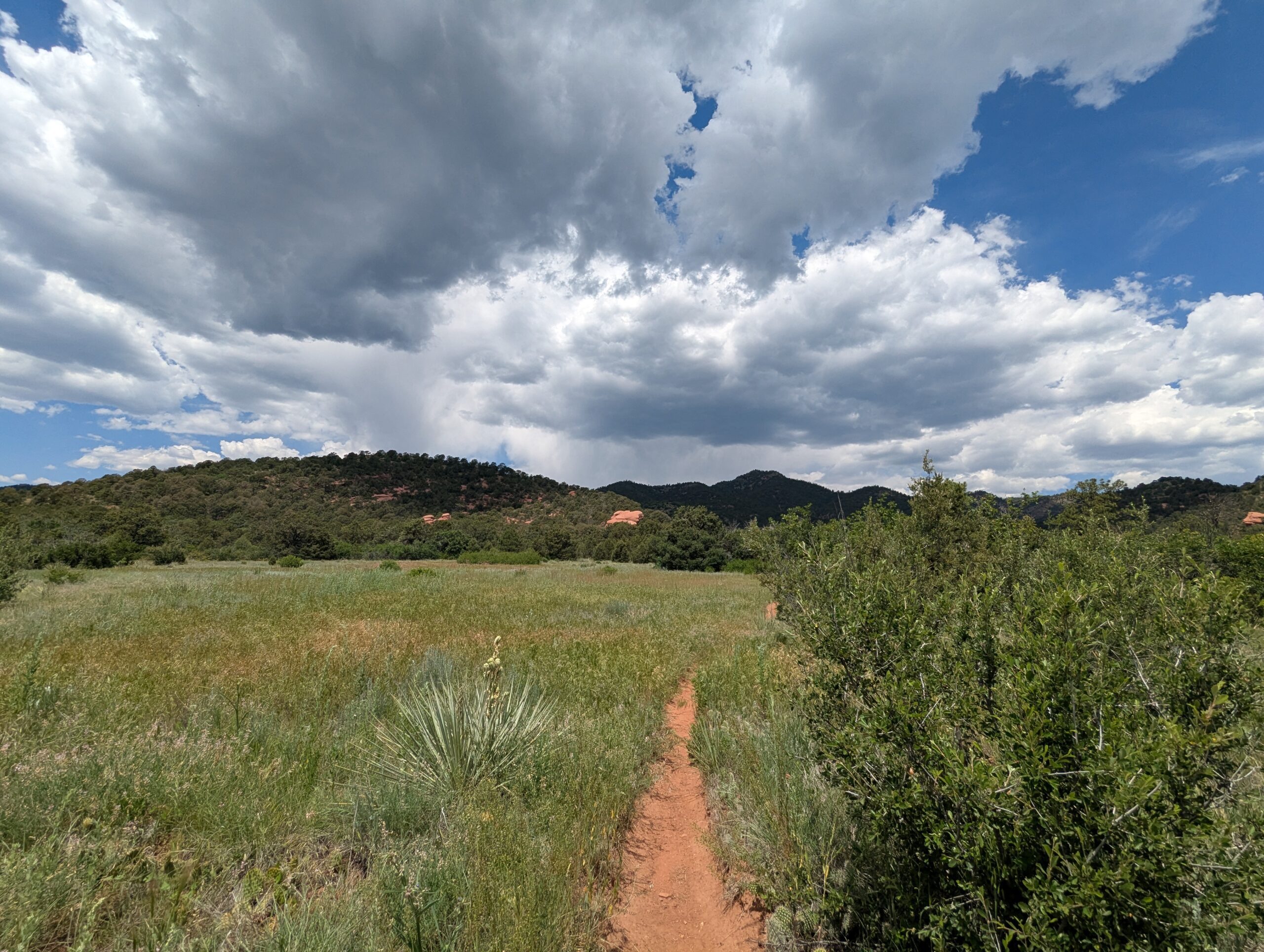
Aiken Canyon Preserve, located southwest of Colorado Springs near Fort Carson, is a 1,621-acre natural area managed by The Nature Conservancy. This hidden gem protects one of the last intact foothill ecosystems along Colorado’s Front Range, blending grasslands, shrublands, and woodlands into a landscape rich with biodiversity and scenic beauty.
Recreation and Amenities
The preserve features a 4-mile loop trail open to hikers and birdwatchers. The trail provides opportunities to experience rolling meadows, sandstone outcrops, and wooded canyons while offering sweeping views of the foothills and Pikes Peak. While amenities are minimal to preserve the natural character of the land, interpretive signage along the trail highlights the area’s unique geology, flora, and fauna.
Wildlife & Scenery
Aiken Canyon is a haven for wildlife, including elk, mule deer, coyotes, and more than 100 bird species. Birdwatchers may spot golden eagles, prairie falcons, and red-tailed hawks soaring above the canyon walls. Wildflowers brighten the meadows in spring and summer, while fall brings bursts of golden color to the oak and aspen groves.
History
Named after Dr. Charles Aiken, a 19th-century ornithologist who conducted extensive bird studies in the region, the canyon has long been recognized for its ecological value. The Nature Conservancy acquired the land in 1991 to prevent development and protect its rare foothill ecosystem. Today, it serves as both a refuge for wildlife and an outdoor classroom for conservation education.
Plan Your Visit
Location: Located off Highway 115, about 12 miles southwest of Colorado Springs. Hours: Open daily, sunrise to sunset. Fees: Free public access. Parking: Small gravel lot available at the trailhead.
Black Forest Regional Park, located in northern El Paso County, covers 385 acres of ponderosa pine forest and open meadows. Known for its peaceful setting and winding trails, the park is a popular destination for hikers, cyclists, and equestrians looking to enjoy the shade and serenity of Colorado’s Black Forest.
Trails and Recreation
The park offers more than 4 miles of multi-use trails, with options ranging from short loops to longer connections through dense pine stands and open fields. The rolling terrain provides a scenic backdrop for hiking, biking, horseback riding, and running.
Amenities and Features
Black Forest Regional Park features picnic pavilions, playgrounds, tennis courts, and athletic fields, making it both a community hub and a natural retreat. The park also includes a spacious dog park, offering plenty of room for pets to explore off-leash.
Wildlife & Scenery
The towering ponderosa pines create a rich habitat for songbirds, woodpeckers, and raptors. Visitors may also spot deer, foxes, or coyotes moving quietly through the trees. In the fall, the park’s mix of forest and meadow provides striking contrasts of golden grasses and evergreen canopies.
History
In 2013, the Black Forest Fire burned a significant portion of the park, leaving lasting impacts on its landscape. Since then, El Paso County Parks and community partners have worked to restore trails, rebuild facilities, and promote forest health. Today, the park stands as both a beloved recreation site and a symbol of resilience and recovery.
Plan Your Visit
Location: 4800 Shoup Road, Colorado Springs, CO 80908 Hours: April–October: 5:00 a.m. – 9:00 p.m. | November–March: 6:00 a.m. – 6:00 p.m. Parking: Multiple parking areas accessible from Shoup Road and Vollmer Road, with spaces near athletic fields, pavilions, and trailheads.
Fox Run Regional Park
Fox Run Regional Park, located in northern El Paso County near Black Forest, spans 417 acres of ponderosa pine forest, open meadows, and two picturesque lakes. A favorite for families, dog owners, and outdoor enthusiasts, the park blends natural beauty with well-designed amenities.
Trails and Recreation
The park offers about 4 miles of multi-use trails that weave through shaded pine stands and open areas, perfect for hiking, jogging, and biking. A scenic gazebo overlooking one of the lakes is a popular spot for quiet reflection or family photos.
Amenities and Features
Visitors will find two playgrounds, athletic fields, picnic pavilions, and large group shelters available by reservation. The park also features two fenced dog parks, making it a destination for pet owners. The combination of forests, ponds, and open fields makes Fox Run ideal for year-round outings.
Wildlife & Scenery
Fox Run’s lakes attract waterfowl such as ducks and geese, while the surrounding ponderosa pines provide habitat for woodpeckers, songbirds, squirrels, and deer. In the early morning or at dusk, it’s not uncommon to see herds of mule deer moving through the meadows. Seasonal wildflowers brighten the trails in spring and summer, while fall brings golden grasses and crisp air beneath towering pines.
History
Fox Run Regional Park opened in the late 1970s as one of El Paso County’s largest developed regional parks. Its creation helped meet the growing recreational needs of northern El Paso County as neighborhoods expanded around Black Forest. Today, it continues to serve as both a community gathering place and a natural retreat, preserving a slice of ponderosa pine forest amid rapid development.
Plan Your Visit
Location: 2110 Stella Drive, Colorado Springs, CO 80921 Hours: April–October: 5:00 a.m. – 9:00 p.m. | November–March: 6:00 a.m. – 6:00 p.m. Parking: Lots are accessible from Stella Drive and Roller Coaster Road, with spaces near playgrounds, fields, and trailheads.
South Slope Recreation Area on Pikes Peak
South Slope Recreation Area, located on the south side of Pikes Peak, is a high-alpine escape offering fishing, hiking, and solitude in one of Colorado’s most pristine mountain settings. Managed by Colorado Springs Utilities, this limited-access recreation area is known for its sparkling reservoirs, uncrowded trails, and unbeatable views of America’s Mountain.
Reservoirs and Recreation
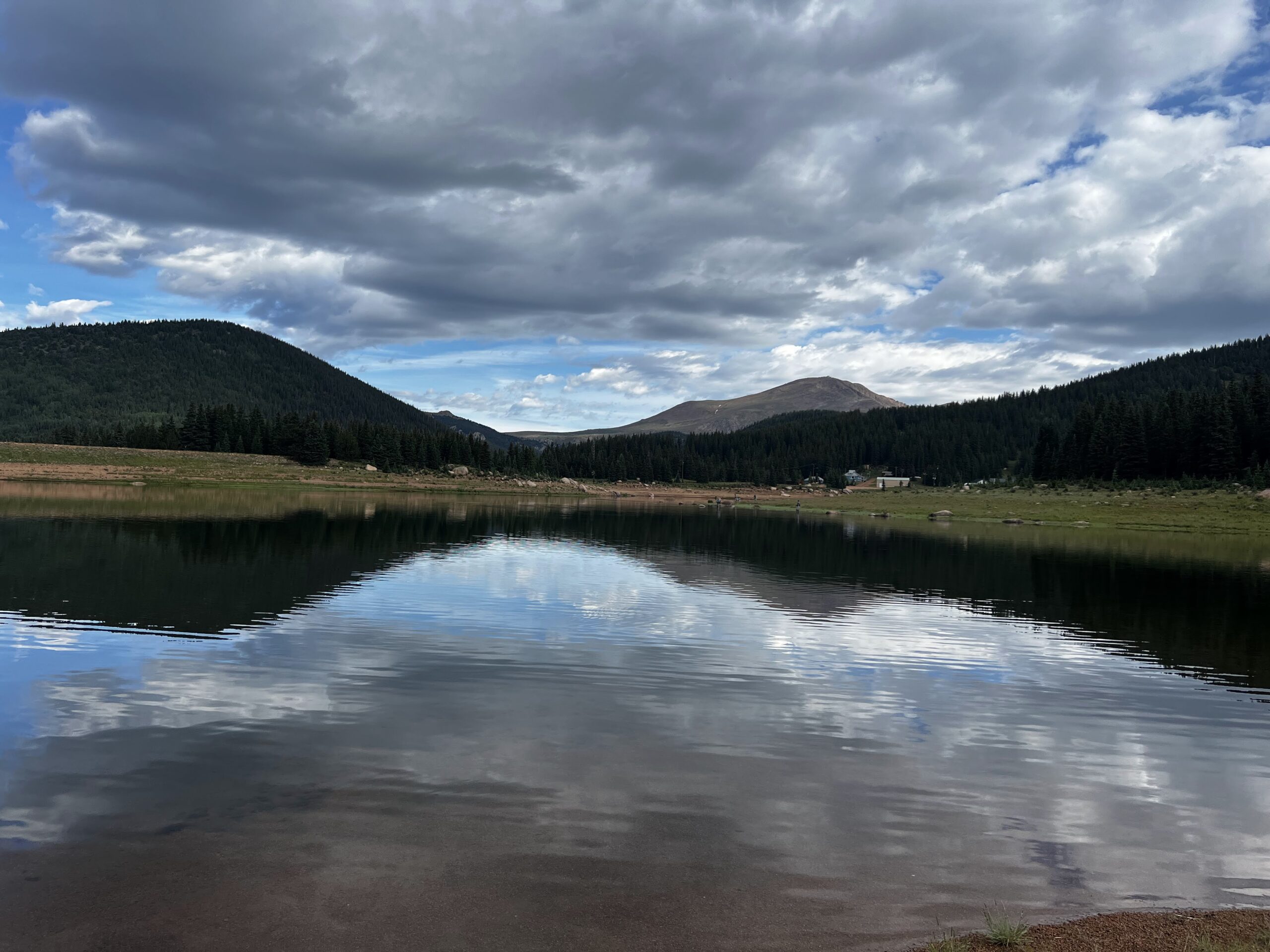
The South Slope includes two reservoirs—Mason Reservoir and McReynolds Reservoir—that are open to non-motorized boating and fishing. Anglers can try their luck for cutthroat and rainbow trout, while kayakers, canoeists, and paddleboarders enjoy calm waters surrounded by pine forest and rugged ridgelines. Fishing is regulated to protect water quality, so visitors should review posted guidelines before heading out.
Trails and Wildlife
Several scenic trails showcase the area’s alpine beauty. The Mason Trail offers moderate hiking along the reservoir shoreline, while higher-elevation routes climb toward stunning overlooks and connect to backcountry terrain. Wildlife is abundant—visitors may spot marmots, elk, mule deer, raptors, and even black bear. At over 11,000 feet in elevation, the South Slope is also a cool retreat during Colorado’s hot summer months.
Limited Access and Conservation
Unlike the busier North Slope Recreation Area, the South Slope is managed with limited daily permits to preserve its fragile alpine environment and protect the City’s drinking water supply. Reservations are required and visitor numbers are capped each day, making this one of the quietest and most exclusive outdoor experiences on Pikes Peak.
Plan Your Visit
Location: Accessed via Old Stage Road and Gold Camp Road, southwest of Colorado Springs.
Parking: A gravel parking lot is available near the Mason Reservoir trailhead. Space is limited and included with a valid day permit.
Hours: Open seasonally. Public access hours are limited.
Fees: Entry requires a daily permit, available online through Colorado Springs Utilities. A valid fishing license is required for anglers.
Tips: Dress in layers—weather changes quickly at 11,000 feet. Cell service is limited, so plan ahead. Pets are not allowed to protect sensitive wildlife and water quality.
With its serene reservoirs, alpine trails, and limited-access wilderness feel, South Slope Recreation Area is one of the most unique outdoor adventures on Pikes Peak.
Rock Ledge Ranch Historic Site
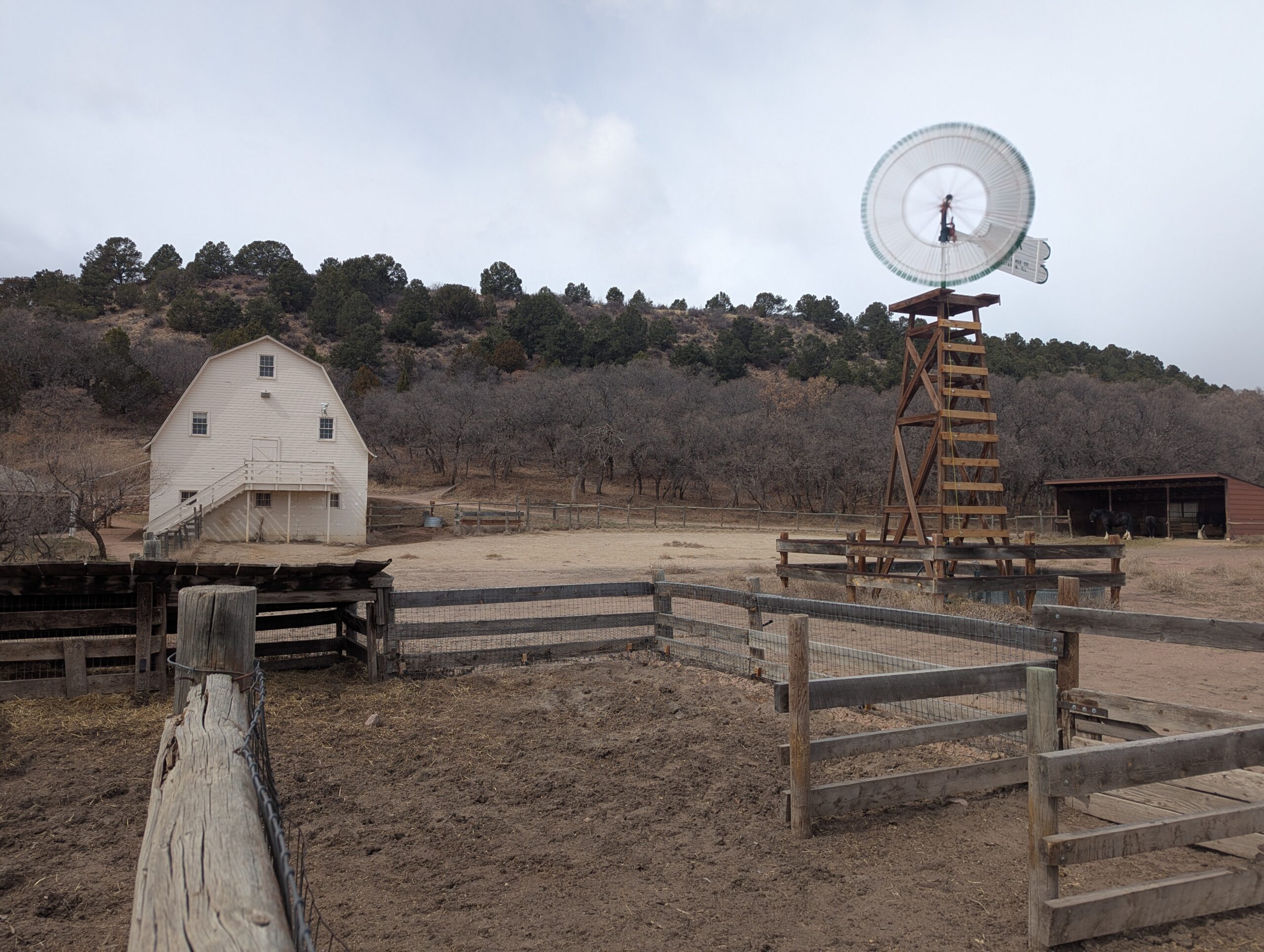
Rock Ledge Ranch Historic Site, located at the entrance to Garden of the Gods Park in Colorado Springs, is a living history museum that brings the story of the Pikes Peak region to life. Managed by the City of Colorado Springs, the ranch preserves over 200 years of local history, with costumed interpreters, historic structures, and seasonal events that connect visitors to Colorado’s cultural heritage.
History and Interpretation
The site spans four eras of history, each represented by authentic buildings and demonstrations:
1775 Ute Encampment – Explore the culture and traditions of the indigenous Ute people.
1860s Homestead Cabin – Step inside a frontier homestead and experience pioneer life.
1880s Chambers Farm & Rock Ledge House – Learn about farming, ranching, and daily life in the late 19th century.
1907 Edwardian Country Estate (Orchard House) – Tour an elegant estate that reflects Colorado Springs’ early resort era.
Through living history, demonstrations, and interpretive programming, Rock Ledge Ranch offers a unique chance to experience the challenges and triumphs of the region’s past.
Programs and Events
Rock Ledge Ranch is host to popular annual events including the Fourth of July Celebration, First People’s Day, Harvest Festival, and the Holiday Evening. These programs highlight historic traditions, cultural exchange, and community celebrations. Educational tours, field trips, and volunteer opportunities are also offered year-round.
Scenery and Location
Nestled against the dramatic red rock formations of Garden of the Gods, the ranch blends history with stunning natural beauty. Visitors can stroll the grounds, picnic in designated areas, or combine a ranch visit with a hike in the Garden of the Gods park next door.
Plan Your Visit
Location: 3105 Gateway Road, Colorado Springs, CO 80904
Parking: Free parking is available on-site in a large gravel lot adjacent to the ranch entrance.
Hours: Seasonal schedule, typically Memorial Day through Labor Day with select off-season events. Grounds are open dusk to dawn.
With its rich storytelling, hands-on demonstrations, and unbeatable setting beside Garden of the Gods, Rock Ledge Ranch Historic Site is one of Colorado Springs’ most unique destinations for history lovers, families, and visitors of all ages.
Jones Park
Jones Park Open Space is one of the crown jewels of El Paso County’s park system, offering more than 1,200 acres of rugged backcountry on the southwest slopes of Pikes Peak. Nestled in the Bear Creek watershed, Jones Park is a premier destination for hikers, mountain bikers, trail runners, anglers, and equestrians seeking a true wilderness experience just minutes from Colorado Springs.
Trails and Recreation
Jones Park is a trail hub, linking to legendary routes like the Cap’n Jack’s Trail, Bear Creek Trail, and the trail to Mt. Kineo. Visitors can explore alpine meadows, dense forests, and rocky ridgelines while enjoying panoramic views of the Front Range. Trails vary from easy forested paths to technical backcountry climbs, making the area popular with a wide range of outdoor enthusiasts.
Wildlife and Conservation
The Bear Creek watershed is critical habitat for the greenback cutthroat trout, Colorado’s state fish and a federally listed threatened species. Restoration projects and careful management ensure that Jones Park balances outdoor recreation with the protection of this fragile ecosystem. Wildlife sightings may include mule deer, black bear, wild turkey, and a variety of songbirds and raptors.
History
Jones Park has a long history as a backcountry recreation destination, once managed by the U.S. Forest Service before being conveyed to El Paso County in 2015. Over the years it has hosted cabin retreats, trailside gatherings, and countless outdoor adventures. Today, it remains a treasured landscape preserved for public use while safeguarding its ecological importance.
Plan Your Visit
Access to Jones Park is typically via Upper Gold Camp Road or trail connections from Cheyenne Cañon Park. The area is undeveloped, with no visitor facilities, so visitors should bring all needed supplies, follow Leave No Trace principles, and be prepared for changing weather conditions. Dogs are welcome but must remain leashed.
With its dramatic scenery, rich history, and vital wildlife habitat, Jones Park is a must-visit destination for those seeking true adventure in the Pikes Peak backcountry.
Pineries Open Space is one of the newest and most unique outdoor destinations in El Paso County, offering visitors a glimpse into the resilience of nature after wildfire. Located on Vollmer Road in the heart of the Black Forest, this 1,100-acre open space showcases rolling meadows, ponderosa pine stands, and sweeping views of Pikes Peak and the Rampart Range.
Trails
The highlight of the park is the Pineries Trail, a 9-mile loop open to hikers, runners, equestrians, and cyclists. The trail weaves through recovering forest, open grasslands, and ridgelines with panoramic views. For those seeking a shorter outing, the Farrar Trail provides a 3-mile route, offering a peaceful introduction to the area’s unique landscapes.
Wildlife
Pineries is home to a rich variety of wildlife. Mule deer and elk are often spotted in the meadows, while red-tailed hawks and great horned owls hunt along the forest edge. The open space also supports foxes, coyotes, and an impressive array of songbirds. Its mix of habitats makes it one of the best places in northern El Paso County for wildlife viewing and birdwatching.
History and the Black Forest Fire
The land that is now Pineries Open Space carries the scars—and the story—of the 2013 Black Forest Fire, the one of the most destructive wildfires in Colorado history. Portions of the trail still pass through burn scar areas where blackened tree trunks stand as reminders of the fire’s intensity. Today, new growth is visible everywhere: young ponderosa pine seedlings, wildflowers, and thriving grasses signal a powerful story of recovery and resilience.
Why Visit
Pineries Open Space offers an experience unlike any other in the region. Visitors can explore two distinct trails, observe wildlife in a variety of habitats, and witness firsthand the renewal of a forest after fire. Whether you are looking for a full-day adventure on the Pineries Trail or a short, family-friendly walk along Black Squirrel Creek, this open space delivers both beauty and meaning.