Florissant Fossil Beds National Monument in Teller County, Colorado, protects one of the richest fossil deposits in the world. Covering more than 6,000 acres, this National Park Service site offers visitors a rare opportunity to explore ancient history, dramatic geology, and the beauty of Colorado’s mountain landscape all in one place.
Trails and Recreation
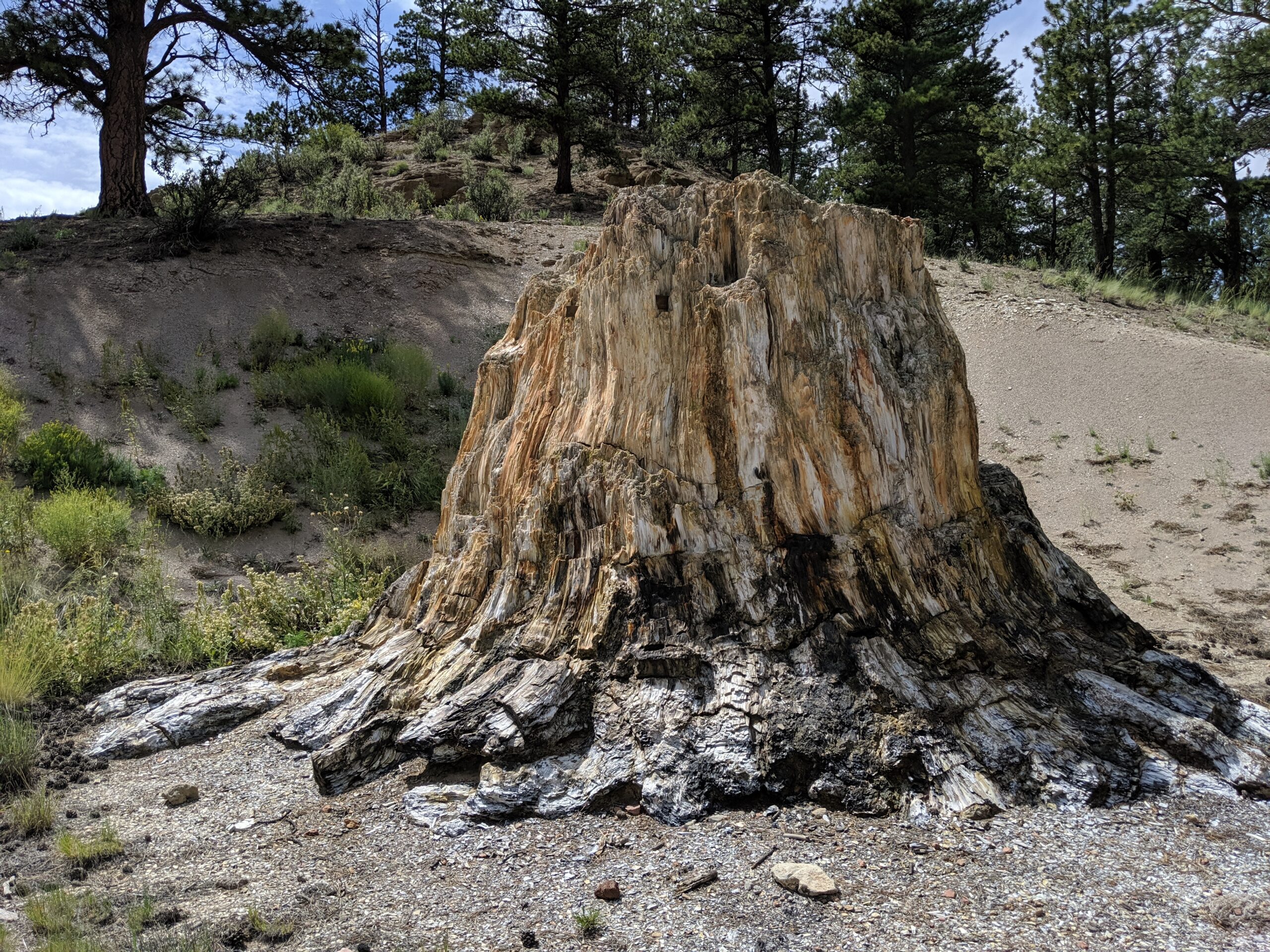
The Monument features 14 miles of hiking trails, ranging from short family-friendly loops to longer treks through forests, meadows, and past historic homesteads. Popular trails include the Petrified Forest Loop, which showcases massive fossilized redwood stumps, and the Hornbek Homestead Trail, offering a glimpse of 19th-century pioneer life. Ranger-led programs, fossil displays, and interactive exhibits at the visitor center make this a perfect stop for families, students, and curious explorers.
Fossils and Geology
The Florissant valley was once a subtropical ecosystem, home to towering redwoods, giant insects, and hundreds of plant species. Volcanic eruptions 34 million years ago buried the valley in ash, preserving thousands of fossils in fine-grained shale. Today, visitors can see petrified tree stumps up to 14 feet wide and view one of the most diverse insect fossil collections ever discovered.
Wildlife and Scenery
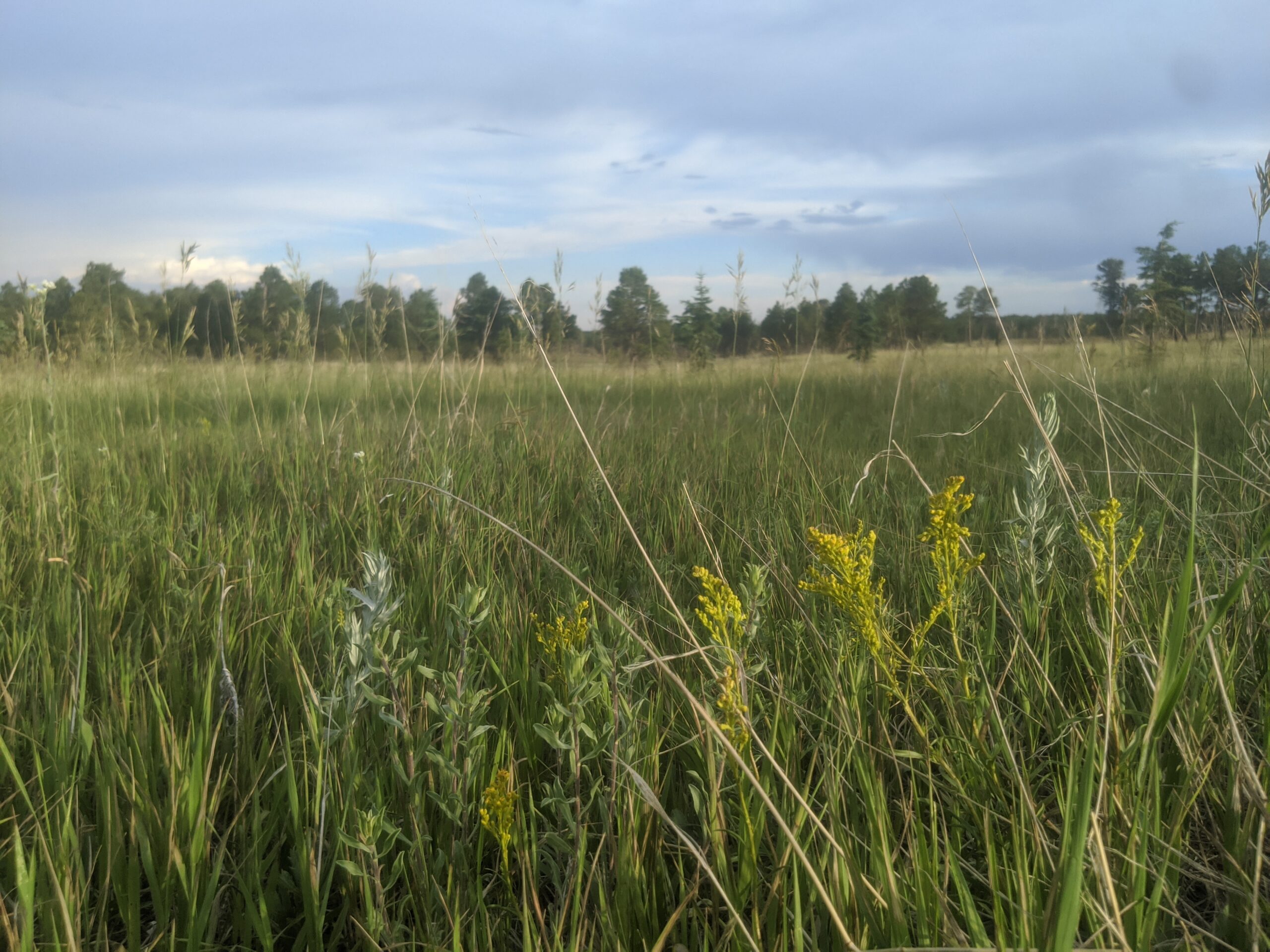
Beyond fossils, the Monument is a haven for wildlife. Elk, mule deer, black bear, and fox are frequently spotted, along with a wide variety of birds including mountain bluebirds and hummingbirds. Open meadows dotted with wildflowers and sweeping views of Pikes Peak provide a stunning backdrop year-round.
History
In addition to its prehistoric treasures, Florissant Fossil Beds preserves the Hornbek Homestead, a restored 1870s ranch house that tells the story of early Colorado pioneers. Archaeological evidence also shows that Native American groups, including the Ute, visited the valley for thousands of years.
Plan Your Visit
The Monument is located just west of the town of Florissant, Colorado, about 35 miles from Colorado Springs. The visitor center is open year-round (with seasonal hours), offering exhibits, a bookstore, and trail access. A small entrance fee is required; federal passes are accepted.
With its unique combination of world-class fossils, scenic hiking, and rich human history, Florissant Fossil Beds National Monument is one of Colorado’s most fascinating places to explore.
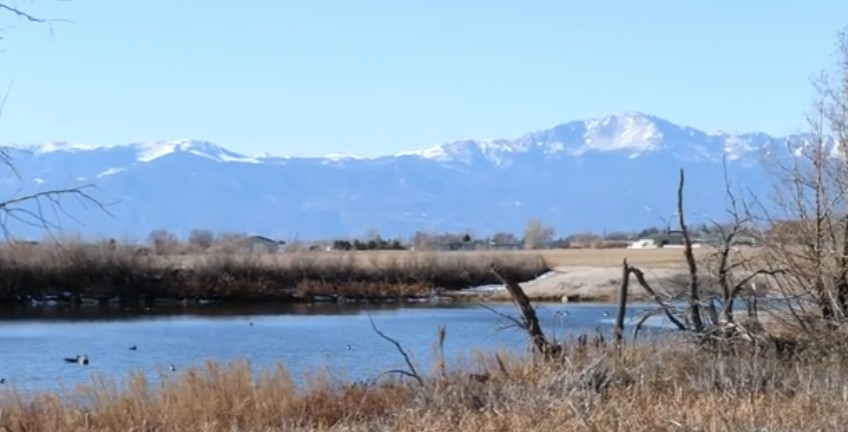
Drake Lake Open Space in Falcon, Colorado, is a hidden gem in El Paso County’s park system. Centered around a small lake and surrounded by open grasslands, this peaceful spot is perfect for birdwatching, walking, and enjoying nature close to home.
Trails and Recreation
While there is no formal trail system, visitors can walk along the shoreline and explore the surrounding open space. The lake itself attracts a variety of waterfowl, making it a favorite stop for local birders and wildlife photographers. Anglers also use the site, though fishing access is limited.
Wildlife
Drake Lake provides critical habitat for migratory birds and native wildlife. Depending on the season, you may spot ducks, geese, herons, and raptors soaring overhead. The surrounding prairie supports songbirds and small mammals, offering visitors a chance to experience Colorado’s shortgrass ecosystem.
History
Once private ranchland, the lake and surrounding area were preserved through El Paso County’s open space program to protect water resources and create a quiet natural refuge. The site remains relatively undeveloped, highlighting the county’s commitment to conservation alongside recreation.
Plan Your Visit
Located just east of Colorado Springs in Falcon, Drake Lake Open Space is easily accessible to residents of the fast-growing eastern plains. Parking is limited, and amenities are minimal—visitors should come prepared with water, sun protection, and sturdy shoes. Dogs are welcome but must remain leashed.
With its calm waters, open views, and abundant birdlife, Drake Lake Open Space is an ideal place to slow down, take in nature, and enjoy a quieter side of the Pikes Peak region.
Pineries Open Space is one of the newest and most unique outdoor destinations in El Paso County, offering visitors a glimpse into the resilience of nature after wildfire. Located on Vollmer Road in the heart of the Black Forest, this 1,100-acre open space showcases rolling meadows, ponderosa pine stands, and sweeping views of Pikes Peak and the Rampart Range.
Trails
The highlight of the park is the Pineries Trail, a 9-mile loop open to hikers, runners, equestrians, and cyclists. The trail weaves through recovering forest, open grasslands, and ridgelines with panoramic views. For those seeking a shorter outing, the Farrar Trail provides a 3-mile route, offering a peaceful introduction to the area’s unique landscapes.
Wildlife
Pineries is home to a rich variety of wildlife. Mule deer and elk are often spotted in the meadows, while red-tailed hawks and great horned owls hunt along the forest edge. The open space also supports foxes, coyotes, and an impressive array of songbirds. Its mix of habitats makes it one of the best places in northern El Paso County for wildlife viewing and birdwatching.
History and the Black Forest Fire
The land that is now Pineries Open Space carries the scars—and the story—of the 2013 Black Forest Fire, the one of the most destructive wildfires in Colorado history. Portions of the trail still pass through burn scar areas where blackened tree trunks stand as reminders of the fire’s intensity. Today, new growth is visible everywhere: young ponderosa pine seedlings, wildflowers, and thriving grasses signal a powerful story of recovery and resilience.
Why Visit
Pineries Open Space offers an experience unlike any other in the region. Visitors can explore two distinct trails, observe wildlife in a variety of habitats, and witness firsthand the renewal of a forest after fire. Whether you are looking for a full-day adventure on the Pineries Trail or a short, family-friendly walk along Black Squirrel Creek, this open space delivers both beauty and meaning.
Black Forest Section 16 Open Space is one of the most popular trails in northern El Paso County. Just off Burgess Road, this 90-acre property features a 4-mile loop trail through towering ponderosa pine and open meadows. The wide, mostly level path is ideal for hikers, runners, cyclists, families, and equestrians.
Originally State Trust Land, Section 16 was secured for public access by El Paso County Parks and has been a favorite community space for decades. Its blend of shaded forest, prairie views, and abundant wildlife makes it a unique natural retreat minutes from the city.
Parking is available at the trailhead, and dogs are welcome on leash. Whether you’re out for a morning jog, a family walk, or a peaceful ride, Black Forest Section 16 offers one of the best loop trails in Colorado Springs.
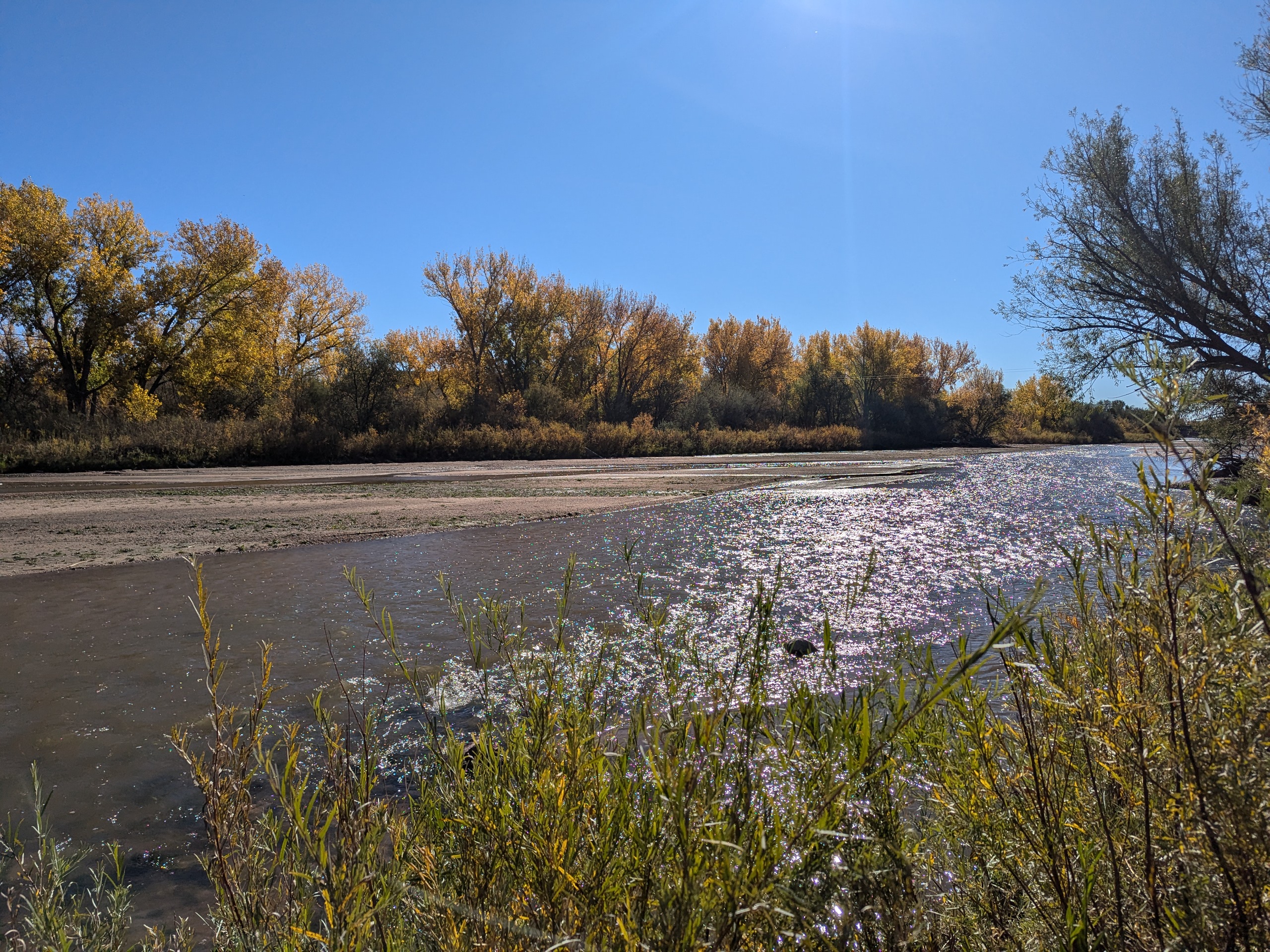
Clear Spring Ranch is a 930-acre open space in southern El Paso County, Colorado, just south of Fountain. Once part of a working ranch, the land is now protected and managed to safeguard Fountain Creek and provide outdoor recreation for the public. Visitors can explore open prairie, shaded cottonwood groves, and riparian habitat that make this site one of the best places for birdwatching in Colorado Springs, with regular sightings of hawks, herons, and migratory waterfowl.
The park features picnic areas, restrooms, and direct access to the Fountain Creek Regional Trail, a major connector in the regional trail system. Several multi-use trails within Clear Spring Ranch are open to hikers, cyclists, and equestrians, offering opportunities for both short outings and longer connections.
What makes Clear Spring Ranch unique is its quiet, wide-open landscape. Unlike busier foothill parks, this El Paso County open space offers a peaceful escape where visitors are more likely to encounter wildlife than crowds. Whether you are seeking a new hiking or biking route, a family-friendly picnic spot, or a chance to enjoy Colorado’s grassland and creek ecosystems, Clear Spring Ranch provides a hidden gem experience.
North Cheyenne Cañon Park is one of Colorado Springs’ most beloved outdoor destinations. Spanning more than 1,600 acres, the park is home to black bears, mountain lions, mule deer, and an abundance of bird species including the kingfisher, American dipper, and broad-tailed hummingbird. North Cheyenne Creek runs through the canyon, creating a lush corridor that draws hikers, bikers, runners, and nature enthusiasts throughout the year.
Park Amenities
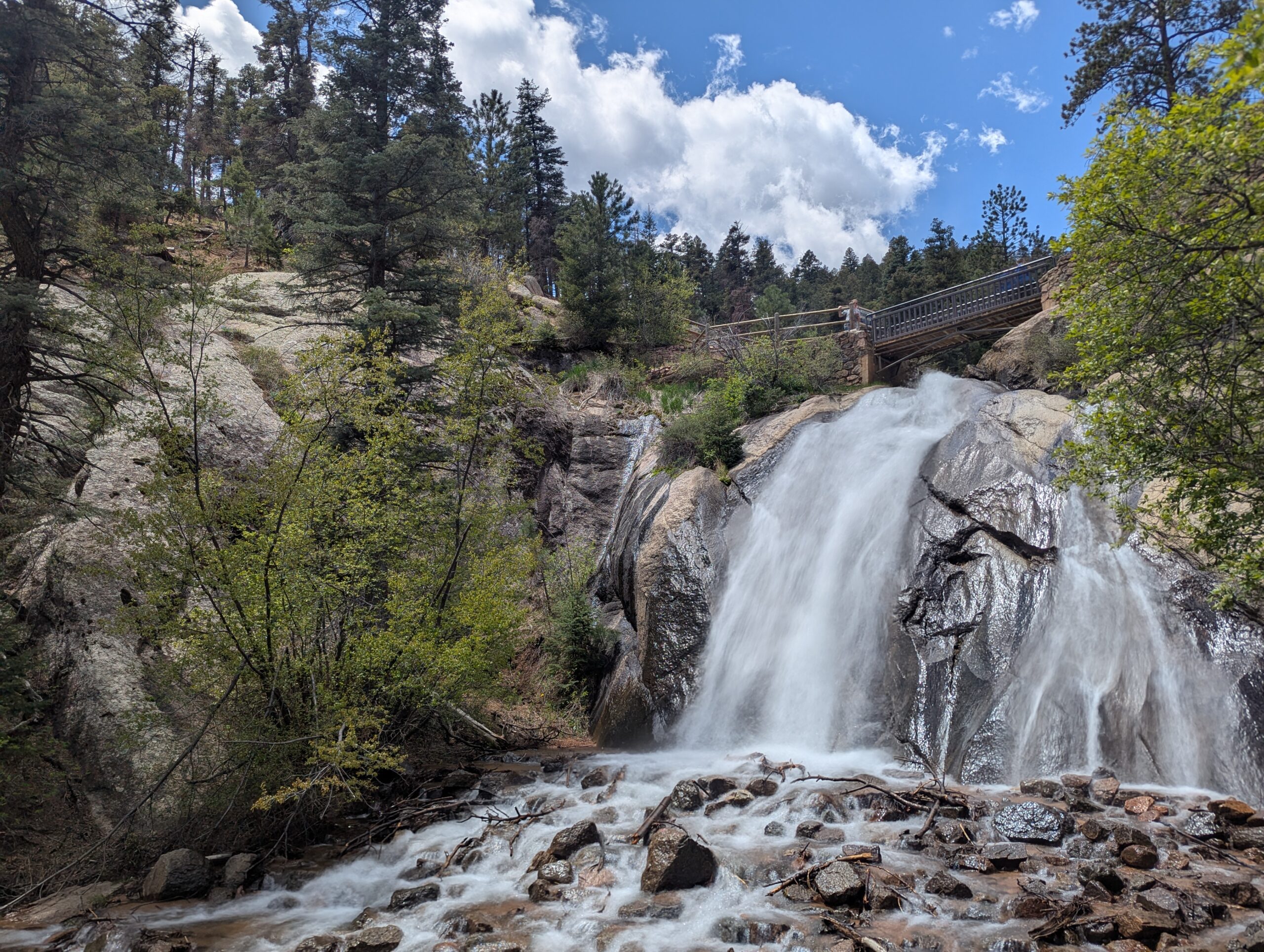
The park offers more than 15 miles of trails for multi-use recreation, along with designated picnic areas and two visitor centers. Dogs are welcome but must remain leashed. North Cheyenne Cañon also connects to nearby Stratton Open Space, expanding opportunities for exploration. A parking lot sits feet away from Colorado Springs’ most accessible waterfall, Helen Hunt Falls.
Visitor Centers
Starsmore Visitor and Nature Center serves as the gateway to the park, providing exhibits, trail maps, and educational programs.
Helen Hunt Falls Visitor Center is located at one of the park’s most popular natural landmarks. The falls are easily accessible by car and a short walk, and the visitor center offers exhibits, maps, and access to several hiking trails.
Trails
Helen Hunt Falls is one of the park’s most iconic features and serves as a starting point for multiple trails. Visitors can enjoy a short, family-friendly walk to Silver Cascade Falls or take on longer hikes that begin at the falls and climb higher into the canyon. In 2021, the Daniels Pass Trail System added nearly seven miles of new routes. These multi-use trails include Daniels Pass (2.0 miles), Sweetwater Canyon (3.07 miles), Middle Sweetwater (0.42 miles), and Bruin Trail (0.62 miles). Two short routes—Mt. Muscoco (0.33 miles) and Greenwood Path (0.18 miles)—are open to hiking only.
History
North Cheyenne Cañon Park was established through the vision of General William Jackson Palmer, the founder of Colorado Springs, who donated land for its creation. In 1885, local citizens voted to purchase an additional 640 acres to preserve the waterfalls, canyon walls, and forested trails. The Park Commission described it at the time as “by far the grandest and most popular of all the beautiful cañons near the city.”
Volunteer Opportunities
Community members can support the park by volunteering with the Friends of Cheyenne Cañon, a nonprofit partner that assists with stewardship, education, and advocacy.North Cheyenne Cañon Park is managed by the City of Colorado Springs Parks, Recreation and Cultural Services Department. For information, call (719) 385-5940.
Palmer Park
Palmer Park is one of Colorado Springs’ largest and most beloved urban parks, spanning more than 730 acres in the heart of the city. With rugged bluffs, panoramic overlooks, and miles of trails, the park feels like a wild escape just minutes from downtown.
Trails and Recreation
The park features over 25 miles of multi-use trails for hiking, running, mountain biking, and horseback riding. Popular routes like Yucca, Templeton, and Mesa Trails take visitors through sandstone formations, meadows, and forested ridges. The park also offers a dog park, playgrounds, and athletic fields, making it a favorite destination for families and outdoor adventurers alike.
Amenities and Features
Palmer Park is home to baseball and soccer fields, picnic shelters, restrooms, and wide-open spaces perfect for gatherings. The dog park is among the largest in the city, while Good Neighbors Meeting House (just outside the park) and nearby neighborhoods make it highly accessible. Overlooks such as Grandview Point provide sweeping views of Pikes Peak and the Front Range.
Wildlife & Scenery
From rugged sandstone spires to sweeping grasslands, Palmer Park offers an impressive variety of scenery. Visitors often spot mule deer, coyotes, rabbits, hawks, and songbirds while exploring the trails. Seasonal wildflowers add bursts of color in spring and summer, while the sandstone formations glow at sunrise and sunset.
History
Palmer Park was gifted to the city in 1902 by General William Jackson Palmer, the founder of Colorado Springs, as part of his vision to preserve natural lands for public enjoyment. For over a century, the park has served as both a community gathering space and a wilderness refuge within the city. Its size, history, and rugged beauty make it one of the crown jewels of Colorado Springs’ park system.
Plan Your Visit
Location: 3650 Maizeland Rd, Colorado Springs, CO 80909 Hours: 5:00 a.m. – 9:00 p.m. daily Parking: Multiple lots located at trailheads, Grandview Overlook, and sports fields.
Bluestem Prairie Open Space offers 646 acres of prairie grassland and bird watching paradise. Home to over 200 bird species and several mammal species, Bluestem Prairie Open Space has become a refuge for a variety of native wildlife and vegetation. Roughly 9 miles of flowing, dirt single track trail make it an ideal location for beginner mountain bikers. The area has no shade, bring plenty of water if you visit in the summer, we recommend visiting early in the morning or evening.
NOTE: No dogs allowed, due to native wildlife.
History: Located just south of the Colorado Springs Municipal Airport, this land once belonged to the Banning-Lewis Ranch. Here ranchers relied primarily on rich soils and thriving grasslands to survive. This land remains home to varied mammals such as the Pronghorn, the Black-tailed prairie dog and birds like the Red-tailed hawk, Burrowing owls and Migratory Shorebirds.
In the fall of 2000, the Trust for Public Land purchased the Big Johnson property from Cygnet Land, LLC and then conveyed the property to the City of Colorado Springs. The City used funds from its Trails, Open Space, and Parks (TOPS) sales tax and a grant from Great Outdoors Colorado (GOCO) to acquire the property. View BIG JOHNSON OPEN SPACE MASTER PLAN.
The namesake “bluestem” highlights the tallgrass species found in northwest portion of the property, while the more predominant shortgrass community in the bowl-shaped valley surrounds the privately-owned Big Johnson Reservoir. The Bluestem Prairie Open Space Management Plan was adopted by the Park and Recreation Advisory Board on March 10, 2016.
Located on the northwest side of Colorado Springs, Blodgett Open Space is a rugged foothills landscape that protects critical wildlife habitat, scenic views, and long term trail connectivity between the city and adjacent public lands. The open space is managed to balance conservation with carefully planned recreation in a challenging and ecologically sensitive environment.
Recreation and Access
Blodgett Open Space offers a steep, backcountry style experience close to the city and is best suited for experienced hikers, trail runners, and mountain users. Trails climb quickly through foothills terrain and are often rocky, narrow, and physically demanding. Elevation gain is significant, and trail conditions can vary widely depending on weather and season.
Trail access is provided through designated trailheads, and users are expected to remain on approved routes. Due to the steep terrain and sensitive resources, Blodgett Open Space is not intended for casual use, and visitors should be prepared for changing conditions and limited amenities.
Landscape and Wildlife
Blodgett Open Space supports a diverse mix of foothills ecosystems, including grasslands, scrub oak, and ponderosa pine forest. The area provides important habitat and movement corridors for mule deer, black bear, mountain lion, and a wide variety of bird species.
The landscape includes steep slopes, drainage corridors, and prominent ridgelines that offer expansive views of Colorado Springs and the eastern plains. These natural features contribute to both the ecological value of the open space and the challenging nature of recreation in the area.
History and Conservation
Blodgett Open Space consists of multiple parcels acquired by the City of Colorado Springs through the Trails, Open Space, and Parks (TOPS) program over more than two decades. Together, these acquisitions total 384 acres of protected open space.
The original Blodgett Open Space parcel was purchased in 2001 using TOPS funds and includes 167 acres with a designated trailhead along Woodmen Road. This parcel was master planned in 2003 and later guided by a forest management plan adopted in 2006.
In 2018, the City acquired an additional 64 acres known as the South Blodgett property. This parcel includes previously constructed access roads, designated trails, and areas impacted by user created trails. The property is protected by three conservation easements held by El Paso County, preserving scenic, open space, trail connection, wildlife, and ecological values. An interim use plan was developed in 2019 to allow public access while long term planning continued.
Between 2020 and 2021, the City expanded Blodgett Open Space through the acquisition of 153 additional acres known as the Pikeview frontage property. This land lies south of the original open space and west of the Oak Valley neighborhood. Portions of the property reflect historic disturbance associated with stormwater facilities and adjacent quarry operations, and include areas subject to reclamation requirements. These parcels strengthen regional connectivity while supporting long term restoration and conservation goals.
Additional dedicated open space parcels include the 5 acre Peregrine Open Space near the North Blodgett Trailhead and the nearly 10 acre Oak Valley Ranch Open Space along the North Douglas Creek corridor. Together, these lands provide important ecological connections, protect drainageways, and support future trail and habitat planning.
Plan Your Visit
Location: Northwest Colorado Springs, near Woodmen Road and Centennial Boulevard Parking: Limited parking at designated trailheads Hours: Open daily, dawn to dusk Fees: No entry fee
Tips:
Be prepared for steep terrain and limited amenities
Stay on designated trails to protect sensitive resources
Carry adequate water and plan for changing weather
Blodgett Open Space reflects a long term community investment in conserving Colorado Springs’ foothills landscapes. Through thoughtful acquisition, conservation easements, and ongoing management planning, the open space protects critical natural resources while allowing for carefully managed recreation close to the city.
Austin Bluffs Open Space – Colorado Springs, CO
Austin Bluffs Open Space is a rugged and scenic natural area on the northeast side of Colorado Springs, known for its dramatic rock formations, sweeping city views, and strong sense of wildness within an urban setting. Rising above surrounding neighborhoods, this open space offers a quieter, more contemplative outdoor experience while playing an important role in habitat protection and community access to nature.
One of the most recognizable landmarks within Austin Bluffs Open Space is Pulpit Rock, a striking volcanic rock formation that has become a local icon and viewpoint.
Trails and Recreation
Austin Bluffs Open Space features a network of informal and designated trails that wind through grasslands, rocky outcrops, and rolling terrain. These trails are popular for hiking, trail running, and short neighborhood outings, offering expansive views of Colorado Springs and the Front Range.
A primary destination within the open space is Pulpit Rock, where visitors are rewarded with panoramic views after a steady climb. The terrain varies from gradual paths to steeper, rocky sections near the rock formations, making it accessible to a range of users while still feeling adventurous. Because of the sensitive landscape, visitors are encouraged to stay on established trails to reduce erosion and protect habitat.
Geology and Landscape
Austin Bluffs Open Space is defined by its unique volcanic geology, with rock formations like Pulpit Rock standing out dramatically against the surrounding grasslands. These features offer insight into the region’s geologic past while creating natural landmarks that shape the character of the open space.
The elevated bluffs provide sweeping views across the city, Garden of the Gods, and toward Pikes Peak, making the area especially popular at sunrise and sunset.
Wildlife and Habitat
The open space supports native plant communities and provides important habitat for urban wildlife. Visitors may encounter mule deer, foxes, rabbits, hawks, and a variety of songbirds. Native grasses and seasonal wildflowers contribute to both ecological health and scenic beauty.
As development continues around the area, Austin Bluffs Open Space serves as a critical refuge for wildlife and a reminder of the importance of conserving natural landscapes within city limits.
Stewardship and Conservation
Austin Bluffs Open Space is managed with an emphasis on balancing recreation and conservation. Stewardship efforts focus on trail management, erosion control, habitat protection, and community education. Public involvement and responsible use are essential to maintaining the health and accessibility of the area.
Ongoing planning and community engagement help guide how Austin Bluffs is protected and enjoyed today and into the future.
Plan Your Visit
Location: Northeast Colorado Springs, near Austin Bluffs Parkway and surrounding neighborhoods Access: Multiple neighborhood access points lead into the open space Parking: Limited roadside and neighborhood parking near trail access points Hours: Open daily, dawn to dusk More Information: https://coloradosprings.gov/austinbluffsopenspace
Tips:
Stay on designated trails, especially near Pulpit Rock
Bring water and sun protection—shade is limited
Pack out all trash and respect wildlife
Expect uneven and rocky terrain in some areas
Austin Bluffs Open Space, anchored by the iconic Pulpit Rock, offers a rare blend of wild landscape, scenic views, and everyday access to nature—making it an essential part of Colorado Springs’ open space system.