Cottonwood Creek Park

Cottonwood Creek Park is one of the largest community parks in northeast Colorado Springs, offering more than 70 acres of recreation and open space. This popular destination combines athletic facilities, playgrounds, trails, and wide open lawns, making it a hub for families, athletes, and anyone looking to enjoy the outdoors in the heart of the city.

Amenities and Recreation

The park features a wide variety of facilities, including:

  • Cottonwood Creek Recreation Center with an indoor pool, gymnasium, and fitness classes.

  • Sports fields for soccer, football, and baseball.

  • Tennis courts, basketball courts, and a skate park.

  • Playgrounds and picnic areas perfect for families.

  • Dog park where pups can run off-leash.

Trails and Natural Features

A paved section of the Cottonwood Creek Trail runs through the park, connecting to the larger Pikes Peak Greenway Trail system. The trail is popular with walkers, cyclists, and runners, offering a scenic corridor along the creek with mountain views to the west. Open fields and shady spots make it a great place to enjoy nature without leaving the city.

Location and Access

  • Address: 3920 Dublin Blvd, Colorado Springs, CO 80918

  • Parking: Multiple paved lots are available around the park and recreation center, with ADA-accessible spaces. Parking is free.

  • Hours: The park is open daily from 5:00 a.m. to 11:00 p.m.; recreation center hours vary seasonally.

With its blend of recreation facilities, community events, and natural beauty, Cottonwood Creek Park is a top destination for families, athletes, and trail users in Colorado Springs.

Clear Spring Ranch is a 930-acre open space in southern El Paso County, Colorado, just south of Fountain. Once part of a working ranch, the land is now protected and managed to safeguard Fountain Creek and provide outdoor recreation for the public. Visitors can explore open prairie, shaded cottonwood groves, and riparian habitat that make this site one of the best places for birdwatching in Colorado Springs, with regular sightings of hawks, herons, and migratory waterfowl.

The park features picnic areas, restrooms, and direct access to the Fountain Creek Regional Trail, a major connector in the regional trail system. Several multi-use trails within Clear Spring Ranch are open to hikers, cyclists, and equestrians, offering opportunities for both short outings and longer connections.

What makes Clear Spring Ranch unique is its quiet, wide-open landscape. Unlike busier foothill parks, this El Paso County open space offers a peaceful escape where visitors are more likely to encounter wildlife than crowds. Whether you are seeking a new hiking or biking route, a family-friendly picnic spot, or a chance to enjoy Colorado’s grassland and creek ecosystems, Clear Spring Ranch provides a hidden gem experience.

North Cheyenne Cañon Park (City of Colorado Springs)

Nestled at the base of Pikes Peak on the southwest edge of Colorado Springs, North Cheyenne Cañon Park is a 1,600-acre natural area known for its steep canyon walls, cascading streams, and dense forests of pine and fir. Established in 1885, it is one of the region’s oldest and most beloved parks, offering a dramatic gateway into the mountains while protecting critical wildlife habitat and watershed resources.


Recreation and Trails

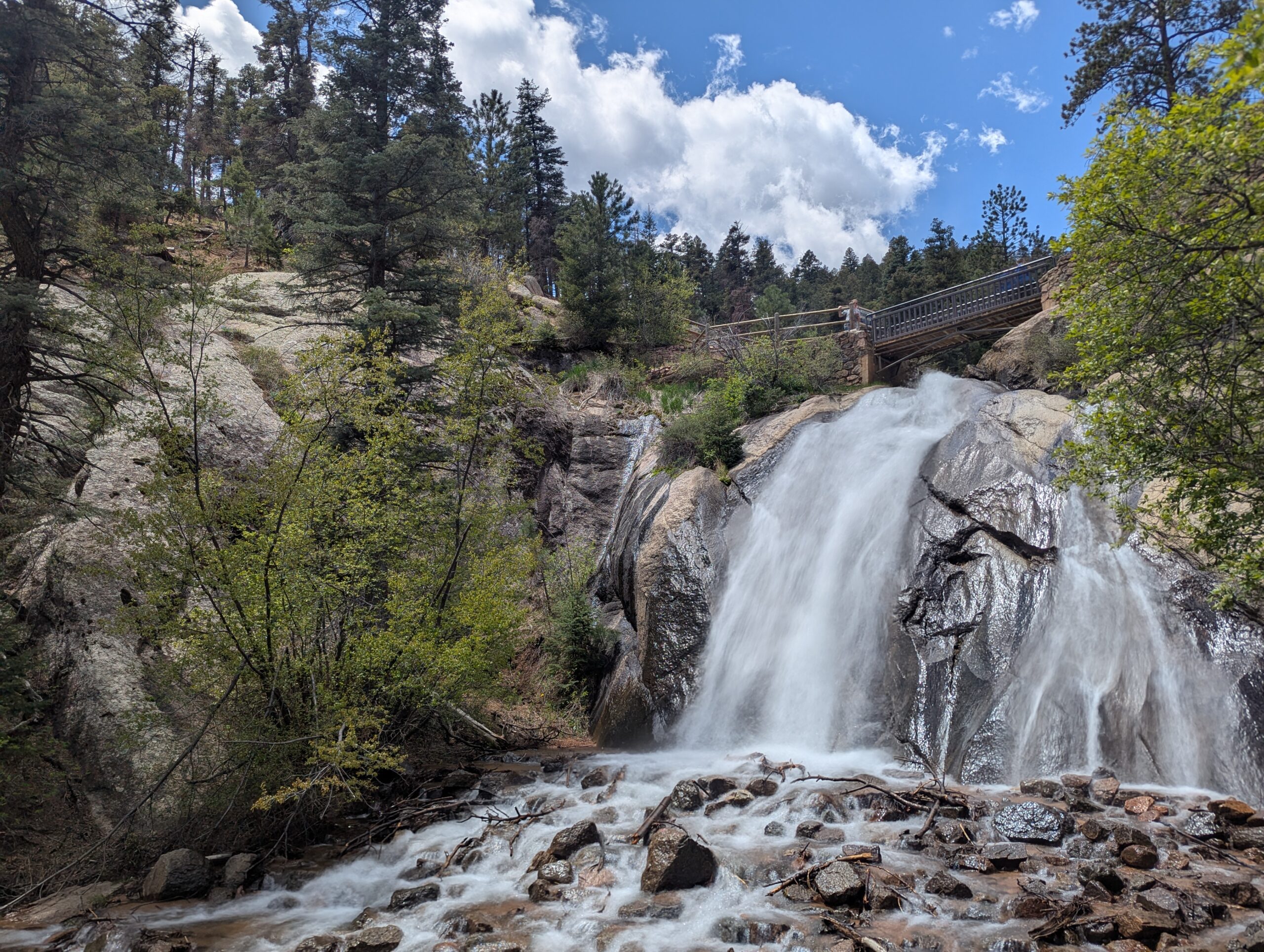
North Cheyenne Cañon Park features over 20 miles of trails for hikers, runners, and mountain bikers, with access to longer backcountry routes extending into surrounding forest lands. Popular destinations include Helen Hunt Falls, one of the most accessible waterfalls in the region, and the Seven Bridges Trail, a scenic route that follows a creek through a shaded canyon.

The park is also home to two key visitor hubs: the Starsmore Visitor and Nature Center, which offers exhibits, educational programs, and trail information, and the Helen Hunt Falls Visitor Center, where visitors can learn about the canyon’s geology, ecology, and history while enjoying views of the falls. The park also connects to Gold Camp Road, a historic corridor offering both recreational access and expansive views.


Wildlife and Scenery

The canyon’s varied terrain supports a wide range of wildlife, including mule deer, black bears, foxes, and numerous bird species. Streams flowing through the canyon create lush riparian zones, while higher elevations transition into dense conifer forests. Seasonal changes bring vibrant wildflowers in spring, cool shaded hikes in summer, golden aspen in fall, and quiet snow-covered landscapes in winter.


History

For generations, Indigenous peoples traveled through this canyon before it became a destination for early settlers and visitors seeking mountain scenery. North Cheyenne Cañon was officially established as a city park in 1885 through land donations by General William Jackson Palmer and others. Over time, the park became a cornerstone of Colorado Springs’ park system, preserving both natural beauty and access to the mountains for the community.


Plan Your Visit

Location: 2120 S. Cheyenne Canyon Rd, Colorado Springs, CO 80906
Parking: Multiple parking areas throughout the canyon, including at trailheads, the Starsmore Visitor and Nature Center, and Helen Hunt Falls
Hours: Open daily, typically 5:00 AM to 9:00 PM (seasonal variations may apply)
Fees: No entry fee

Tips:

  • Stop at the Starsmore Visitor and Nature Center for maps, exhibits, and current trail conditions
  • Visit early, especially on weekends, as parking fills quickly
  • Stay on designated trails to protect sensitive habitat
  • Bring layers—temperatures can vary significantly in the canyon

With its towering canyon walls, flowing waterfalls, and educational visitor centers, North Cheyenne Cañon Park offers a classic Colorado experience just minutes from downtown.

Palmer Park

Palmer Park is one of Colorado Springs’ largest and most beloved urban parks, spanning more than 730 acres in the heart of the city. With rugged bluffs, panoramic overlooks, and miles of trails, the park feels like a wild escape just minutes from downtown.

Trails and Recreation

The park features over 25 miles of multi-use trails for hiking, running, mountain biking, and horseback riding. Popular routes like Yucca, Templeton, and Mesa Trails take visitors through sandstone formations, meadows, and forested ridges. The park also offers a dog park, playgrounds, and athletic fields, making it a favorite destination for families and outdoor adventurers alike.

Amenities and Features

Palmer Park is home to baseball and soccer fields, picnic shelters, restrooms, and wide-open spaces perfect for gatherings. The dog park is among the largest in the city, while Good Neighbors Meeting House (just outside the park) and nearby neighborhoods make it highly accessible. Overlooks such as Grandview Point provide sweeping views of Pikes Peak and the Front Range.

Wildlife & Scenery

From rugged sandstone spires to sweeping grasslands, Palmer Park offers an impressive variety of scenery. Visitors often spot mule deer, coyotes, rabbits, hawks, and songbirds while exploring the trails. Seasonal wildflowers add bursts of color in spring and summer, while the sandstone formations glow at sunrise and sunset.

History

Palmer Park was gifted to the city in 1902 by General William Jackson Palmer, the founder of Colorado Springs, as part of his vision to preserve natural lands for public enjoyment. For over a century, the park has served as both a community gathering space and a wilderness refuge within the city. Its size, history, and rugged beauty make it one of the crown jewels of Colorado Springs’ park system.

Plan Your Visit

Location: 3650 Maizeland Rd, Colorado Springs, CO 80909
Hours: 5:00 a.m. – 9:00 p.m. daily
Parking: Multiple lots located at trailheads, Grandview Overlook, and sports fields.

Templeton Gap Trail – Colorado Springs, CO

Templeton Gap Trail is an important east west multi use trail in central Colorado Springs that follows the Templeton Gap Floodway. The trail provides a key connection between neighborhoods, parks, open spaces, and several major trail corridors, making it a popular route for both recreation and transportation.


Trail Experience

Templeton Gap Trail is approximately 4 miles long and runs primarily east to west alongside the Templeton Gap Floodway. The trail begins near Mark Dabling Boulevard at the Goose Gossage Youth Sports Complex and continues west to Palmer Park, with a northern fork extending toward Union Meadows Open Space near Austin Bluffs Boulevard and Union Boulevard.

The trail surface is primarily concrete, with some sections of asphalt and gravel. Elevation changes are generally mild, though users should expect a few moderate hills along the route.


Road Crossings and Navigation

Templeton Gap Trail includes several street crossings, including a major crossing at North Nevada Avenue. A short discontinuity exists near North Hancock Avenue by Portal Park. The trail runs on both sides of the floodway; however, to pass under Union Boulevard near Hancock Avenue, it is recommended to remain on the south side of the floodway for a more continuous route.


Connections

Templeton Gap Trail connects directly to the Pikes Peak Greenway at Goose Gossage Youth Sports Complex. From this location, users can also access Sinton Trail to continue west. On the eastern end, the trail links to Austin Bluffs Trail near North Union Boulevard, providing access toward the University of Colorado Colorado Springs campus. Additional connections include Greencrest Trail into Palmer Park and easy access to Union Meadows Open Space.

Cottonwood Creek Trail – Colorado Springs, CO

Cottonwood Creek Trail is a major east west urban trail in northern Colorado Springs and a key connector within the city’s trail system. Following Cottonwood Creek, the trail links neighborhoods, parks, and regional trail corridors while providing a smooth and accessible route for everyday recreation and transportation.


Location: Northern Colorado Springs, following Cottonwood Creek from Powers Boulevard to the Pikes Peak Greenway near I 25


Trail Experience

Cottonwood Creek Trail is just over 6 miles long and features a smooth concrete surface throughout. The trail runs east to west along Cottonwood Creek, beginning near Frank Castello Park at Powers Boulevard and continuing west to connect with the Pikes Peak Greenway and Front Range Trail near I 25.

The trail is generally flat with gentle elevation changes, making it accessible for walkers, runners, cyclists, families, and users of mobility devices. The corridor offers a mix of riparian habitat, open space, and neighborhood views, with long straight segments that are well suited for longer outings or commuting. Benches, trail access points, and nearby amenities allow users to easily tailor trips to their preferred distance and pace.

A dirt trail alternative runs between Union Boulevard and Rangewood Drive, providing a more natural surface option and forming a pleasant 3 mile loop with convenient parking at Cottonwood Creek Community Park.


Road Crossings and Navigation

Cottonwood Creek Trail includes one major street crossing at Union Boulevard. Trail users should use the marked crosswalk at Woodland Hills Drive when crossing Union Boulevard. The trail passes alongside Frank Castello Park and includes a spur connection to Dublin Park; however, accessing Dublin Park requires crossing Dublin Boulevard, which currently does not have a designated pedestrian crossing.


Connections

Cottonwood Creek Trail connects directly to the Pikes Peak Greenway and Front Range Trail just south of the Woodmen Road and Rockrimmon Boulevard area. Multiple neighborhood access points provide easy connections to Cottonwood Creek Community Park, nearby residential areas, and the YMCA. The trail also links to Woodmen Trail and other local trail segments, strengthening north south and east west connectivity across northern Colorado Springs.

Skyline Trail – Colorado Springs, CO

Skyline Trail is a neighborhood focused urban trail in northern Colorado Springs that provides an important north south connection through the Briargate area. Often referred to locally as the Powerline Trail due to its alignment with overhead powerlines, Skyline Trail is well used by nearby residents for walking, running, and biking.


Location: Briargate area, northern Colorado Springs


Trail Experience

Skyline Trail is approximately 2 miles long and features a mix of wide concrete and dirt trail surfaces. South of Research Parkway, the trail is smooth concrete, while the segment north of Research Parkway transitions to a dirt surface. Rolling terrain creates noticeable elevation gain and loss, giving the trail a moderate difficulty rating.

The trail includes several distinctive switchbacks near Mirage Drive that offer views across the surrounding neighborhoods and open spaces. Despite its urban setting, the corridor provides a sense of separation from nearby roads and is popular for short neighborhood outings as well as longer connected trips.


Road Crossings and Navigation

Skyline Trail includes several street crossings and users should proceed with caution at all crosswalks. Major crossings occur at Briargate Boulevard and Research Parkway. When crossing Research Parkway, users should use the signalized intersection at Chapel Hills Drive for improved safety. Trail signage varies by segment, and awareness is recommended when navigating transitions between surfaces.


Connections

Skyline Trail transitions into Woodmen Trail at Briargate Boulevard, allowing users to continue east west through northern Colorado Springs. A spur trail provides access to Rampart Community Park, which includes a disc golf course, sports courts and fields, and a dog park. The trail passes near High Plains Elementary School and offers views of Reflection Pond, which can be accessed via sidewalks on Parliament Drive.

Sidewalk connections along Briargate Parkway allow access to John Venezia Community Park and the Briargate Trail. Multiple neighborhood access points along the route make Skyline Trail easy to reach from surrounding residential areas.


Skyline Trail plays an important role in connecting neighborhoods, parks, and trails across northern Colorado Springs while offering a moderately challenging route with varied terrain and strong local use.


Sand Creek Trail – Colorado Springs, CO

Sand Creek Trail is an evolving multi segment trail system in Colorado Springs that follows Sand Creek through residential areas, parks, and open spaces. When complete, the trail will serve as an important east west and north south connector, linking neighborhoods to recreation facilities and the city’s larger trail network.


Location: Eastern and southeastern Colorado Springs, following Sand Creek from Woodmen Road to Airport Road


Trail Experience

Sand Creek Trail is currently made up of two primary segments that are not yet connected. Each segment is approximately 4 miles in length and offers a different trail experience depending on location and surface type.

The southern segment runs diagonally through southeast Colorado Springs, beginning near El Pomar Youth Sports Park and extending east toward Wildflower Park. From Wildflower Park, the main trail continues north of Airport Road, while the East Fork Sand Creek spur heads east and ends just before Powers Boulevard. This section is largely concrete and offers a mild, accessible route for walking and biking. Users should expect two major street crossings at Hancock Expressway and Chelton Road.

A short central section of Sand Creek Trail was constructed between Platte Avenue and Galley Road as part of the Patriot Park development, creating a partial link through the corridor.

The northern segment of the trail runs north south alongside Sand Creek between Woodmen Road and Barnes Road. This section features mostly hardpacked natural surface, with a concrete segment between Barnes Road and Stetson Hills Boulevard. The northern portion offers a more natural setting, with open views and access to nearby parks and open space.


Connections

Sand Creek Trail connects directly to the Pikes Peak Greenway at El Pomar Youth Sports Park, providing access to the larger Front Range trail system. The trail also offers convenient access to the Southeast Family Center YMCA and surrounding neighborhoods.

The northern segment connects to Stetson Park and Stetson Hills Open Space, expanding recreational opportunities and linking users to additional trail and open space experiences.


Sand Creek Trail represents a growing investment in trail connectivity for Colorado Springs. As additional segments are completed, it will continue to strengthen access to parks, neighborhoods, and regional trail corridors across the city.

Rock Island Trail – Colorado Springs, CO

The Rock Island Trail in Colorado Springs follows a historic railroad corridor through the heart of the city, providing an easy, accessible east west route that connects neighborhoods, parks, and major trail systems. Built along the former Rock Island Railroad bed, the trail reflects the city’s transportation history while serving modern recreation and commuting needs.


Location: Central Colorado Springs, running east west alongside Constitution Avenue from Weber Street to Powers Boulevard


Trail Experience

The Colorado Springs segment of the Rock Island Trail is approximately 6 miles long. It runs east west from Weber Street to Powers Boulevard, generally paralleling Constitution Avenue. The trail surface is a mix of concrete and asphalt, creating a smooth and accessible experience for walking, biking, and other non motorized uses.

The trail has a gentle grade, with a gradual uphill slope when traveling east. Several at grade street crossings occur along the route, so users should exercise caution at intersections. The corridor passes through residential areas and urban landscapes, offering a practical and well used route for everyday recreation and transportation.


Connections

Rock Island Trail connects directly to the Shooks Run Trail, creating a continuous north south and east west trail link through the city. With limited street or sidewalk travel, users can also connect to the Pikes Peak Greenway, Homestead Trail, and Palmer Park, making this trail an important part of Colorado Springs’ broader urban trail network.

Midland Trail – Colorado Springs, CO

The Midland Trail is a key east west urban corridor in Colorado Springs, following Fountain Creek and the historic Midland rail alignment. The trail provides a smooth, accessible route through the city, connecting downtown destinations, parks, and major trail systems while offering views of the creek and surrounding landscape.


Location: West and central Colorado Springs, paralleling U.S. Highway 24 (Cimarron Street) from America the Beautiful Park to Ridge Road


Trail Experience

The Midland Trail is approximately 8 miles long and runs east west along Fountain Creek. The trail begins near America the Beautiful Park in downtown Colorado Springs and continues west to Ridge Road. The surface is primarily concrete, making it suitable for walking, biking, and other non motorized uses.

The trail features a mild grade, with a gradual downhill slope when traveling east. Several at grade street crossings occur along the route, with pedestrian signals at major crossings including 31st Street and 8th Street. There is a short gap in the trail between 21st Street and 25th Street, where users are directed to use Naegele Road, a lightly traveled roadway.

The corridor blends urban scenery with riparian habitat along Fountain Creek and passes through areas of public art and community investment. An art bench created by Concrete Couch can be found near 17th Street and serves as a unique landmark along the trail.


Connections

Midland Trail connects directly to the Pikes Peak Greenway, America the Beautiful Park, and the U.S. Olympic and Paralympic Museum. With limited street or sidewalk travel, users can also reach the Foothills Trail, Red Rock Canyon Open Space, and the City of Manitou Springs, making the Midland Trail an important link between urban and foothills recreation.


The Midland Trail plays a central role in Colorado Springs’ trail network, providing access to cultural destinations, regional trails, and everyday outdoor recreation along Fountain Creek.

Translate »