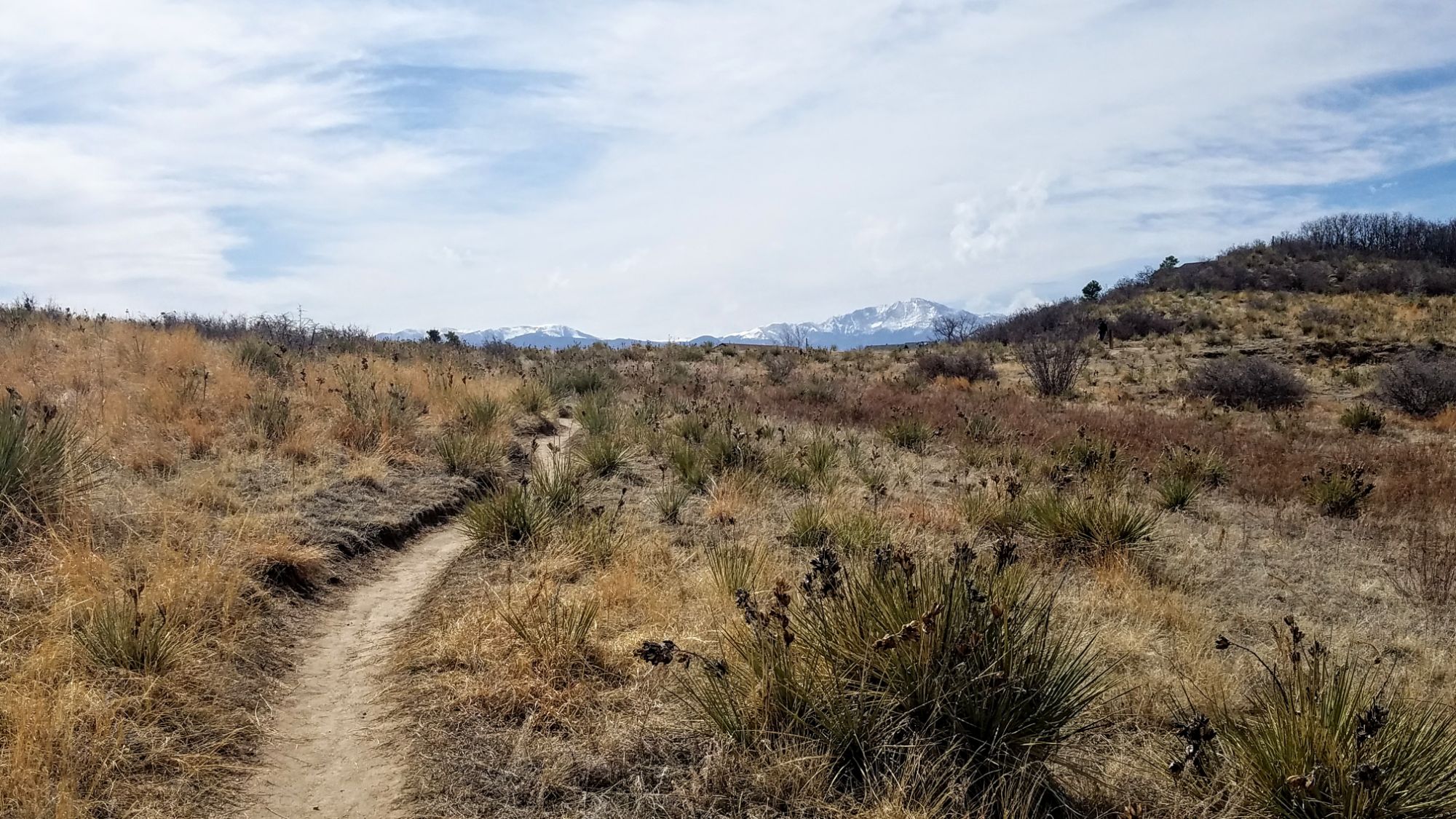
High Chaparral Open Space is 54 acres on the eastern side of Colorado Springs, characterized by a prominent ridgeline vegetated with scrub oak, shrubland patches and mixed-grass prairie. Views from the crest of the ridge, the highest point in eastern Colorado Springs, include the Spanish Peaks and Wet Mountains to the south, the Black Forest to the north, and an uninterrupted view of Colorado Springs mountain backdrop to the west. High Chaparral Open Space provides wildlife habitat, recreational opportunities, and a visual buffer to a fast-growing section of the City.
Figure 8 trail system is about 2 miles. Preview the area and see why people love to walk, ride and bird watch at High Chaparral! Parking lot at Stetson Hills also provides great access to Homestead Trail.
Corral Bluffs
Located east of Colorado Springs, Corral Bluffs is a nationally significant landscape known for its fossil resources, sweeping plains, and dramatic views of the Front Range. The area is managed for conservation and scientific research and is not open to the general public, helping protect sensitive paleontological and natural resources.
Recreation and Access
Corral Bluffs is closed to unsupervised public access. Entry is only permitted during special guided hikes and educational programs, which are offered periodically in partnership with land managers and conservation organizations. These guided experiences provide a rare opportunity to explore the landscape, learn about its geology and fossils, and understand why long term protection is critical.
Because access is limited, visitors should not attempt to enter Corral Bluffs outside of permitted programs. Doing so can damage sensitive resources and may result in enforcement action.
Landscape and Scientific Significance
Corral Bluffs is internationally recognized for its fossil beds, which have contributed to scientific understanding of life following the mass extinction event that ended the age of dinosaurs. The area contains layered rock formations, prairie ecosystems, and wide open vistas that illustrate millions of years of natural history.
In addition to its paleontological value, Corral Bluffs provides important habitat for grassland species and plays a role in regional conservation efforts aimed at protecting open landscapes east of Colorado Springs.
History and Conservation
Protection of Corral Bluffs has been driven by decades of collaboration among scientists, conservation organizations, and public agencies. The area has become a model for balancing research, conservation, and carefully managed public education.
Guided access programs allow the public to engage with this extraordinary landscape while ensuring fossils and fragile ecosystems remain intact for future study and stewardship.
Plan Your Visit
Location: Eastern El Paso County, east of Colorado Springs Access: Not open to the public; guided hikes only Parking: Provided only for permitted guided programs Fees: Vary by program
Tips:
Watch for announcements about guided hikes and educational events
Never collect fossils or remove natural materials
Respect closures and posted boundaries at all times
Corral Bluffs is a reminder that some of the most important places are protected by limiting access. Through guided experiences and continued conservation, this remarkable landscape is preserved for science, education, and future generations.
Bluestem Prairie Open Space offers 646 acres of prairie grassland and bird watching paradise. Home to over 200 bird species and several mammal species, Bluestem Prairie Open Space has become a refuge for a variety of native wildlife and vegetation. Roughly 9 miles of flowing, dirt single track trail make it an ideal location for beginner mountain bikers. The area has no shade, bring plenty of water if you visit in the summer, we recommend visiting early in the morning or evening.
NOTE: No dogs allowed, due to native wildlife.
History: Located just south of the Colorado Springs Municipal Airport, this land once belonged to the Banning-Lewis Ranch. Here ranchers relied primarily on rich soils and thriving grasslands to survive. This land remains home to varied mammals such as the Pronghorn, the Black-tailed prairie dog and birds like the Red-tailed hawk, Burrowing owls and Migratory Shorebirds.
In the fall of 2000, the Trust for Public Land purchased the Big Johnson property from Cygnet Land, LLC and then conveyed the property to the City of Colorado Springs. The City used funds from its Trails, Open Space, and Parks (TOPS) sales tax and a grant from Great Outdoors Colorado (GOCO) to acquire the property. View BIG JOHNSON OPEN SPACE MASTER PLAN.
The namesake “bluestem” highlights the tallgrass species found in northwest portion of the property, while the more predominant shortgrass community in the bowl-shaped valley surrounds the privately-owned Big Johnson Reservoir. The Bluestem Prairie Open Space Management Plan was adopted by the Park and Recreation Advisory Board on March 10, 2016.
Located on the northwest side of Colorado Springs, Blodgett Open Space is a rugged foothills landscape that protects critical wildlife habitat, scenic views, and long term trail connectivity between the city and adjacent public lands. The open space is managed to balance conservation with carefully planned recreation in a challenging and ecologically sensitive environment.
Recreation and Access
Blodgett Open Space offers a steep, backcountry style experience close to the city and is best suited for experienced hikers, trail runners, and mountain users. Trails climb quickly through foothills terrain and are often rocky, narrow, and physically demanding. Elevation gain is significant, and trail conditions can vary widely depending on weather and season.
Trail access is provided through designated trailheads, and users are expected to remain on approved routes. Due to the steep terrain and sensitive resources, Blodgett Open Space is not intended for casual use, and visitors should be prepared for changing conditions and limited amenities.
Landscape and Wildlife
Blodgett Open Space supports a diverse mix of foothills ecosystems, including grasslands, scrub oak, and ponderosa pine forest. The area provides important habitat and movement corridors for mule deer, black bear, mountain lion, and a wide variety of bird species.
The landscape includes steep slopes, drainage corridors, and prominent ridgelines that offer expansive views of Colorado Springs and the eastern plains. These natural features contribute to both the ecological value of the open space and the challenging nature of recreation in the area.
History and Conservation
Blodgett Open Space consists of multiple parcels acquired by the City of Colorado Springs through the Trails, Open Space, and Parks (TOPS) program over more than two decades. Together, these acquisitions total 384 acres of protected open space.
The original Blodgett Open Space parcel was purchased in 2001 using TOPS funds and includes 167 acres with a designated trailhead along Woodmen Road. This parcel was master planned in 2003 and later guided by a forest management plan adopted in 2006.
In 2018, the City acquired an additional 64 acres known as the South Blodgett property. This parcel includes previously constructed access roads, designated trails, and areas impacted by user created trails. The property is protected by three conservation easements held by El Paso County, preserving scenic, open space, trail connection, wildlife, and ecological values. An interim use plan was developed in 2019 to allow public access while long term planning continued.
Between 2020 and 2021, the City expanded Blodgett Open Space through the acquisition of 153 additional acres known as the Pikeview frontage property. This land lies south of the original open space and west of the Oak Valley neighborhood. Portions of the property reflect historic disturbance associated with stormwater facilities and adjacent quarry operations, and include areas subject to reclamation requirements. These parcels strengthen regional connectivity while supporting long term restoration and conservation goals.
Additional dedicated open space parcels include the 5 acre Peregrine Open Space near the North Blodgett Trailhead and the nearly 10 acre Oak Valley Ranch Open Space along the North Douglas Creek corridor. Together, these lands provide important ecological connections, protect drainageways, and support future trail and habitat planning.
Plan Your Visit
Location: Northwest Colorado Springs, near Woodmen Road and Centennial Boulevard Parking: Limited parking at designated trailheads Hours: Open daily, dawn to dusk Fees: No entry fee
Tips:
Be prepared for steep terrain and limited amenities
Stay on designated trails to protect sensitive resources
Carry adequate water and plan for changing weather
Blodgett Open Space reflects a long term community investment in conserving Colorado Springs’ foothills landscapes. Through thoughtful acquisition, conservation easements, and ongoing management planning, the open space protects critical natural resources while allowing for carefully managed recreation close to the city.
Austin Bluffs Open Space – Colorado Springs, CO
Austin Bluffs Open Space is a rugged and scenic natural area on the northeast side of Colorado Springs, known for its dramatic rock formations, sweeping city views, and strong sense of wildness within an urban setting. Rising above surrounding neighborhoods, this open space offers a quieter, more contemplative outdoor experience while playing an important role in habitat protection and community access to nature.
One of the most recognizable landmarks within Austin Bluffs Open Space is Pulpit Rock, a striking volcanic rock formation that has become a local icon and viewpoint.
Trails and Recreation
Austin Bluffs Open Space features a network of informal and designated trails that wind through grasslands, rocky outcrops, and rolling terrain. These trails are popular for hiking, trail running, and short neighborhood outings, offering expansive views of Colorado Springs and the Front Range.
A primary destination within the open space is Pulpit Rock, where visitors are rewarded with panoramic views after a steady climb. The terrain varies from gradual paths to steeper, rocky sections near the rock formations, making it accessible to a range of users while still feeling adventurous. Because of the sensitive landscape, visitors are encouraged to stay on established trails to reduce erosion and protect habitat.
Geology and Landscape
Austin Bluffs Open Space is defined by its unique volcanic geology, with rock formations like Pulpit Rock standing out dramatically against the surrounding grasslands. These features offer insight into the region’s geologic past while creating natural landmarks that shape the character of the open space.
The elevated bluffs provide sweeping views across the city, Garden of the Gods, and toward Pikes Peak, making the area especially popular at sunrise and sunset.
Wildlife and Habitat
The open space supports native plant communities and provides important habitat for urban wildlife. Visitors may encounter mule deer, foxes, rabbits, hawks, and a variety of songbirds. Native grasses and seasonal wildflowers contribute to both ecological health and scenic beauty.
As development continues around the area, Austin Bluffs Open Space serves as a critical refuge for wildlife and a reminder of the importance of conserving natural landscapes within city limits.
Stewardship and Conservation
Austin Bluffs Open Space is managed with an emphasis on balancing recreation and conservation. Stewardship efforts focus on trail management, erosion control, habitat protection, and community education. Public involvement and responsible use are essential to maintaining the health and accessibility of the area.
Ongoing planning and community engagement help guide how Austin Bluffs is protected and enjoyed today and into the future.
Plan Your Visit
Location: Northeast Colorado Springs, near Austin Bluffs Parkway and surrounding neighborhoods Access: Multiple neighborhood access points lead into the open space Parking: Limited roadside and neighborhood parking near trail access points Hours: Open daily, dawn to dusk More Information: https://coloradosprings.gov/austinbluffsopenspace
Tips:
Stay on designated trails, especially near Pulpit Rock
Bring water and sun protection—shade is limited
Pack out all trash and respect wildlife
Expect uneven and rocky terrain in some areas
Austin Bluffs Open Space, anchored by the iconic Pulpit Rock, offers a rare blend of wild landscape, scenic views, and everyday access to nature—making it an essential part of Colorado Springs’ open space system.
Woodmen Trail – Colorado Springs, CO
Woodmen Trail is a neighborhood focused urban trail in northern Colorado Springs that provides an important east west connection through the Briargate area. Following a powerline corridor, this paved trail offers a convenient option for walking, running, biking, and everyday recreation for nearby residents.
Trail Experience
Woodmen Trail is approximately 2.5 miles long and is constructed of smooth concrete. The trail runs east to west between Woodmen Road and Briargate Boulevard, beginning just west of Austin Bluffs Parkway and extending to just past Union Boulevard. Rolling hills along the corridor create noticeable elevation gain and loss, giving the trail a moderate rating despite its relatively short length.
The trail is popular with local users, is stroller friendly, and includes several benches along the route for resting and enjoying the surroundings. Wildflowers fill the fields around the trail in late summer.
Road Crossings and Safety
Users should expect a mix of neighborhood street crossings and larger roadway crossings along Woodmen Trail. Major crossings include Union Boulevard, Rangewood Drive, and Lexington Drive. The Union Boulevard crossing is accessed via the signalized intersection at Briargate Boulevard. Rangewood Drive includes a marked crosswalk, though vehicles may not consistently yield. Lexington Drive features a signalized pedestrian crossing.
Connections
Woodmen Trail transitions into Skyline Trail near the intersection of Briargate Boulevard and Union Boulevard, where the route shifts north. An unmarked connection to Briargate Trail occurs near Yellowwood Drive, allowing users to continue north. Multiple neighborhood access points are available along the length of the trail.
Management
Woodmen Trail is managed by the City of Colorado Springs Parks, Recreation and Cultural Services Department. Phone: 719 385 5940
Skyline Trail – Colorado Springs, CO
Skyline Trail is a neighborhood focused urban trail in northern Colorado Springs that provides an important north south connection through the Briargate area. Often referred to locally as the Powerline Trail due to its alignment with overhead powerlines, Skyline Trail is well used by nearby residents for walking, running, and biking.
Skyline Trail is approximately 2 miles long and features a mix of wide concrete and dirt trail surfaces. South of Research Parkway, the trail is smooth concrete, while the segment north of Research Parkway transitions to a dirt surface. Rolling terrain creates noticeable elevation gain and loss, giving the trail a moderate difficulty rating.
The trail includes several distinctive switchbacks near Mirage Drive that offer views across the surrounding neighborhoods and open spaces. Despite its urban setting, the corridor provides a sense of separation from nearby roads and is popular for short neighborhood outings as well as longer connected trips.
Road Crossings and Navigation
Skyline Trail includes several street crossings and users should proceed with caution at all crosswalks. Major crossings occur at Briargate Boulevard and Research Parkway. When crossing Research Parkway, users should use the signalized intersection at Chapel Hills Drive for improved safety. Trail signage varies by segment, and awareness is recommended when navigating transitions between surfaces.
Connections
Skyline Trail transitions into Woodmen Trail at Briargate Boulevard, allowing users to continue east west through northern Colorado Springs. A spur trail provides access to Rampart Community Park, which includes a disc golf course, sports courts and fields, and a dog park. The trail passes near High Plains Elementary School and offers views of Reflection Pond, which can be accessed via sidewalks on Parliament Drive.
Sidewalk connections along Briargate Parkway allow access to John Venezia Community Park and the Briargate Trail. Multiple neighborhood access points along the route make Skyline Trail easy to reach from surrounding residential areas.
Skyline Trail plays an important role in connecting neighborhoods, parks, and trails across northern Colorado Springs while offering a moderately challenging route with varied terrain and strong local use.
Sand Creek Trail – Colorado Springs, CO
Sand Creek Trail is an evolving multi segment trail system in Colorado Springs that follows Sand Creek through residential areas, parks, and open spaces. When complete, the trail will serve as an important east west and north south connector, linking neighborhoods to recreation facilities and the city’s larger trail network.
Location: Eastern and southeastern Colorado Springs, following Sand Creek from Woodmen Road to Airport Road
Trail Experience
Sand Creek Trail is currently made up of two primary segments that are not yet connected. Each segment is approximately 4 miles in length and offers a different trail experience depending on location and surface type.
The southern segment runs diagonally through southeast Colorado Springs, beginning near El Pomar Youth Sports Park and extending east toward Wildflower Park. From Wildflower Park, the main trail continues north of Airport Road, while the East Fork Sand Creek spur heads east and ends just before Powers Boulevard. This section is largely concrete and offers a mild, accessible route for walking and biking. Users should expect two major street crossings at Hancock Expressway and Chelton Road.
A short central section of Sand Creek Trail was constructed between Platte Avenue and Galley Road as part of the Patriot Park development, creating a partial link through the corridor.
The northern segment of the trail runs north south alongside Sand Creek between Woodmen Road and Barnes Road. This section features mostly hardpacked natural surface, with a concrete segment between Barnes Road and Stetson Hills Boulevard. The northern portion offers a more natural setting, with open views and access to nearby parks and open space.
Connections
Sand Creek Trail connects directly to the Pikes Peak Greenway at El Pomar Youth Sports Park, providing access to the larger Front Range trail system. The trail also offers convenient access to the Southeast Family Center YMCA and surrounding neighborhoods.
The northern segment connects to Stetson Park and Stetson Hills Open Space, expanding recreational opportunities and linking users to additional trail and open space experiences.
Sand Creek Trail represents a growing investment in trail connectivity for Colorado Springs. As additional segments are completed, it will continue to strengthen access to parks, neighborhoods, and regional trail corridors across the city.
Rock Island Trail – Colorado Springs, CO
The Rock Island Trail in Colorado Springs follows a historic railroad corridor through the heart of the city, providing an easy, accessible east west route that connects neighborhoods, parks, and major trail systems. Built along the former Rock Island Railroad bed, the trail reflects the city’s transportation history while serving modern recreation and commuting needs.
Location: Central Colorado Springs, running east west alongside Constitution Avenue from Weber Street to Powers Boulevard
Trail Experience
The Colorado Springs segment of the Rock Island Trail is approximately 6 miles long. It runs east west from Weber Street to Powers Boulevard, generally paralleling Constitution Avenue. The trail surface is a mix of concrete and asphalt, creating a smooth and accessible experience for walking, biking, and other non motorized uses.
The trail has a gentle grade, with a gradual uphill slope when traveling east. Several at grade street crossings occur along the route, so users should exercise caution at intersections. The corridor passes through residential areas and urban landscapes, offering a practical and well used route for everyday recreation and transportation.
Connections
Rock Island Trail connects directly to the Shooks Run Trail, creating a continuous north south and east west trail link through the city. With limited street or sidewalk travel, users can also connect to the Pikes Peak Greenway, Homestead Trail, and Palmer Park, making this trail an important part of Colorado Springs’ broader urban trail network.
Midland Trail – Colorado Springs, CO
The Midland Trail is a key east west urban corridor in Colorado Springs, following Fountain Creek and the historic Midland rail alignment. The trail provides a smooth, accessible route through the city, connecting downtown destinations, parks, and major trail systems while offering views of the creek and surrounding landscape.
Location: West and central Colorado Springs, paralleling U.S. Highway 24 (Cimarron Street) from America the Beautiful Park to Ridge Road
Trail Experience
The Midland Trail is approximately 8 miles long and runs east west along Fountain Creek. The trail begins near America the Beautiful Park in downtown Colorado Springs and continues west to Ridge Road. The surface is primarily concrete, making it suitable for walking, biking, and other non motorized uses.
The trail features a mild grade, with a gradual downhill slope when traveling east. Several at grade street crossings occur along the route, with pedestrian signals at major crossings including 31st Street and 8th Street. There is a short gap in the trail between 21st Street and 25th Street, where users are directed to use Naegele Road, a lightly traveled roadway.
The corridor blends urban scenery with riparian habitat along Fountain Creek and passes through areas of public art and community investment. An art bench created by Concrete Couch can be found near 17th Street and serves as a unique landmark along the trail.
Connections
Midland Trail connects directly to the Pikes Peak Greenway, America the Beautiful Park, and the U.S. Olympic and Paralympic Museum. With limited street or sidewalk travel, users can also reach the Foothills Trail, Red Rock Canyon Open Space, and the City of Manitou Springs, making the Midland Trail an important link between urban and foothills recreation.
The Midland Trail plays a central role in Colorado Springs’ trail network, providing access to cultural destinations, regional trails, and everyday outdoor recreation along Fountain Creek.